

Sharp-Lobed Hepatica
hepatica acutiloba
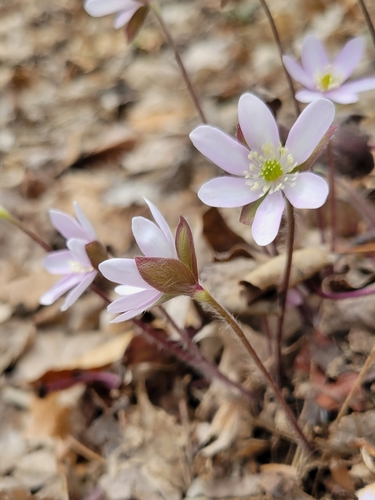
Sharp-lobed hepatica is one of the most delightful and earliest wildflowers to greet the spring in the deciduous forests of eastern North America. Emerging long before the dense tree canopy leafs out, this charming perennial puts on a brilliant, low-growing display of delicate white, pink, or pale purple blooms. Because they bloom so early in the season, these resilient plants serve as a vital source of pollen for emerging native bees and early spring insects that desperately need fuel. What makes the sharp-lobed hepatica especially interesting is its remarkable survival strategy. Instead of dropping its foliage in autumn, it holds onto its thick, leathery leaves throughout the winter. These winter-persistent leaves are often beautifully mottled with bronze or deep purple, allowing the plant to photosynthesize on warm winter days and quickly generate the energy needed to produce its early spring flowers. Spotting a cluster of sharp-lobed hepatica pushing through last year's fallen leaves is a true hallmark of the changing seasons.
Habitat: Found in rich deciduous woodlands, often on shaded slopes or rocky ravines with limestone soils.
Sharp-lobed hepatica is easily identified by its distinctive, basal leaves which have three prominent, sharply pointed lobes. These leathery leaves, measuring about 5 to 7 centimeters across, are dark green and frequently mottled with reddish-purple or bronze, especially during the winter and early spring. The plant forms a low-growing clump standing 5 to 15 centimeters tall. Its elegant, solitary flowers are held on fuzzy stems and feature 5 to 12 petal-like sepals that range in color from brilliant white to soft pink, lavender, and pale blue. Directly beneath each flower sit three small, leaf-like bracts that mimic true sepals, completing the characteristic appearance of this woodland ephemeral.
Category
PlantsRarity
Common
Danger
1/5 · Very low
Snaps
4
According to the historical 'Doctrine of Signatures,' early medical practitioners mistakenly believed the plant's liver-like leaves meant it could cure liver ailments.
Sharp-lobed hepatica does not produce any nectar at all; it exclusively offers high-quality pollen as a reward to early spring insect visitors.
The colorful 'petals' of the flower are technically sepals that have evolved to look like petals, while three leaf-like bracts underneath serve the protective function of typical sepals.
The name 'Hepatica' originates from the Latin word for liver, as its distinctive three-lobed leaves were thought to resemble the shape of a human liver.
The plant produces seeds with tiny, nutrient-rich appendages called elaiosomes that attract ants, which carry the seeds back to their nests to feed their larvae, inadvertently planting the seeds.
Unlike most deciduous forest plants, it retains thick, leathery leaves over winter, allowing it to photosynthesize on sunny winter days and store energy for its early spring bloom.
The flowers are heliotropic, meaning they open fully on sunny days and track the sun's movement, but close tightly at night or during rainy weather to protect their pollen.
As a photosynthetic plant, it derives its energy from sunlight and synthesizes its own food utilizing minerals from rich, moist woodland soil.

Aphaenogaster rudis
Ants are attracted to the lipid-rich elaiosomes on the seeds, dispersing them across the forest floor.
.jpg&width=800)
Colletes inaequalis
Early spring solitary bees rely heavily on the pollen of the hepatica as one of the earliest available food sources.
.jpg&width=800)
Tamias striatus
Small woodland rodents occasionally forage on the seeds and young leaves of the plant.
No trait badges are assigned for this object yet.
No aliases listed yet.
Collections for this object will appear here as more themes are added.
Danger
1/5 · Very low
No special safety notes yet.
The easiest way to identify Sharp-Lobed Hepatica is to use the Snappit nature identifier app.
5-15 cm
5-50 years
As a photosynthetic plant, it derives its energy from sunlight and synthesizes its own food utilizing minerals from rich, moist woodland soil.
Found in rich deciduous woodlands, often on shaded slopes or rocky ravines with limestone soils.
10-25
60-90 days
Zoom in to split clusters and explore where this object has been snapped.
Iowa, US
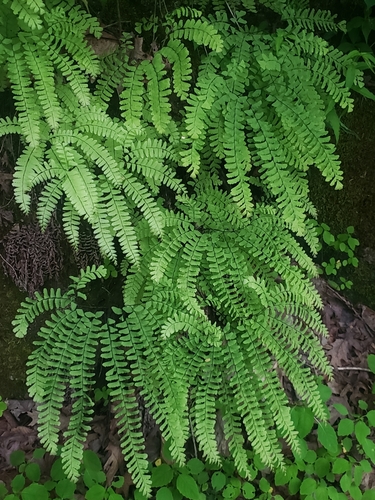
You might spot Northern Maidenhair Fern and Wood Nettle.
View guide →

Massachusetts, US
You might spot Hemlock Woolly Adelgid, Eastern Newt, and Red Trillium.
View guide →
Ohio, US
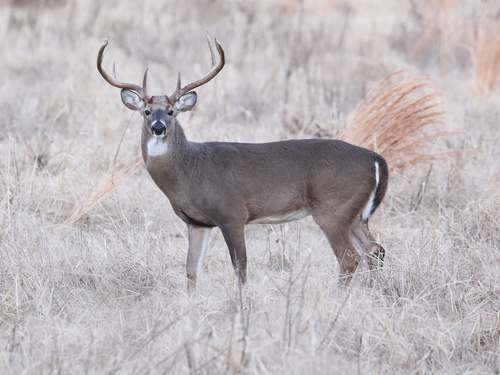
You might spot White-Tailed Deer, Mayapple, and American Beech.
View guide →

New Jersey, US
You might spot American Wintergreen, Wild Geranium, and Mayapple.
View guide →

Iowa, US
You might spot False Rue Anemone, Sharp-Lobed Hepatica, and Common Shiner.
View guide →

Kentucky, US
You might spot Large White Trillium and Sharp-Lobed Hepatica.
View guide →
Take the discovery with you
Snap it with Snappit to identify it, learn what makes it special, and add the discovery to your collection.












.jpg&width=800)



_001.jpg&width=800)




