


Shiny Blueberry
vaccinium myrsinites
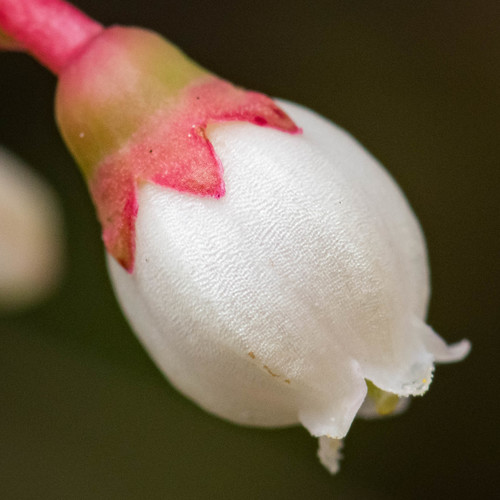
The Shiny Blueberry (Vaccinium myrsinites) is a charming, low-growing evergreen shrub native to the southeastern United States. Thriving in the sandy soils of pine flatwoods, dry prairies, and sandhills, this resilient plant plays a vital role in its fire-prone ecosystem. Known for its glossy green leaves and delicate bell-shaped flowers, it produces small, sweet, edible berries that are a critical food source for local wildlife. In addition to its ecological importance, the Shiny Blueberry is highly adapted to survive wildfires. When fire sweeps through its habitat, the shrub utilizes its extensive underground rhizomes to quickly resprout, making it one of the first plants to bring life back to charred landscapes.
Habitat: Found in dry, sandy soils of pine flatwoods, scrublands, sandhills, and open oak woodlands.
This low-lying, multi-branched shrub typically stands between 20 to 100 centimeters tall, forming dense ground cover. Its leaves are small, oval, and distinctly shiny with finely-toothed margins, maintaining a rich green color year-round that can turn slightly reddish in winter. In early spring, it produces clusters of small, bell-shaped flowers ranging from white to soft pink. These blossoms give way to small, globose berries that ripen from green to a deep, glossy blue-black, measuring about 5 to 8 millimeters in diameter.
Category
PlantsRarity
Common
Danger
1/5 · Very low
Snaps
Be the first to snap!
Its berries are deeply appreciated by wildlife, serving as an important food source for everything from songbirds and black bears to gopher tortoises.
The plant spreads extensively underground via rhizomes, meaning an entire patch of shiny blueberries might actually be a single, interconnected clonal organism.
Unlike many other wild blueberries that drop their leaves in autumn, the shiny blueberry is an evergreen, retaining its glossy foliage throughout the winter.
Following a wildfire, the plant quickly regenerates from its protected underground rhizomes, allowing it to dominate post-burn landscapes.
The thick, waxy cuticle on its small leaves prevents excessive water loss, helping the plant thrive in nutrient-poor, sandy soils.
Its flowers are specially shaped to release pollen only when vibrated at specific frequencies by native bees.
As a photoautotrophic plant, the shiny blueberry synthesizes its own food using sunlight, water, carbon dioxide, and soil nutrients.

Gopherus polyphemus
Feeds on the fallen berries and spreads the seeds through its droppings.
Habropoda laboriosa
Pollinates the flowers using specialized buzz pollination.

Colinus virginianus
Feeds on the small berries and uses the low-lying shrubbery for nesting cover.
No trait badges are assigned for this object yet.
No aliases listed yet.
Collections for this object will appear here as more themes are added.
Danger
1/5 · Very low
No special safety notes yet.
Compare how the fruit is clustered, the leaves and their arrangement, the stems and any thorns. Red, blue and black fruits grow on lots of unrelated plants, and the same color can show up on both edible and poisonous species. Berry Identifier: upload a photo and compare the visible details.
20+ cm
10+ years
As a photoautotrophic plant, the shiny blueberry synthesizes its own food using sunlight, water, carbon dioxide, and soil nutrients.
Found in dry, sandy soils of pine flatwoods, scrublands, sandhills, and open oak woodlands.
Zoom in to split clusters and explore where this object has been snapped.
Recent snaps will appear here as new observations are added.
Take the discovery with you
Snap it with Snappit to identify it, learn what makes it special, and add the discovery to your collection.


















