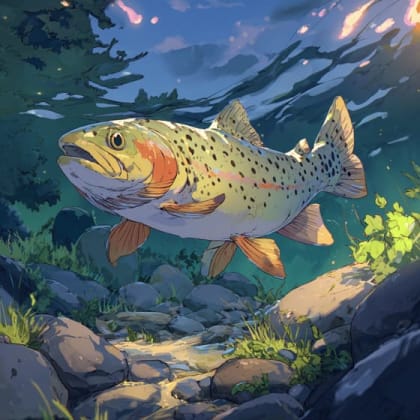
Shovelnose Sturgeon
scaphirhynchus platorynchus
The Shovelnose Sturgeon has a unique flat snout that helps it dig in the riverbed for food! These fish can grow quite large and are known for their ancient lineage, dating back millions of years.
Habitat: Shovelnose Sturgeons are found in the Mississippi River and its tributaries, preferring sandy or muddy river bottoms.
The Shovelnose Sturgeon has a distinctive flattened, shovel-like snout and a slender body covered in bony plates called scutes, not scales. Its coloration ranges from mottled brown to gray, helping it blend into riverbeds. Four sensory barbels hang in front of its mouth, aiding in bottom foraging.
Category
FishRarity
Common
Danger
1/5 · Very low
Snaps
1
Instead of scales, this fish has five rows of tough, bony plates covering its body!
Shovelnose Sturgeon are the smallest of all North American sturgeon species!
Their eggs are so valuable they're considered a type of black caviar!
They are often called 'living fossils' because their ancestors swam with dinosaurs!
Shovelnose Sturgeon has rows of bony plates called scutes that help them protect against predators and rough river environments.
Shovelnose Sturgeon can live in strong river currents because of its streamlined body and powerful tail that helps them swim against the flow.
Shovelnose Sturgeon has a skeleton made mostly of cartilage, allowing them flexibility to maneuver around river obstacles.
These bottom-dwelling fish use their specialized mouths to vacuum up aquatic insects and crustaceans from riverbeds.

Hexagenia limbata
larvae are a primary food source
Cambarus diogenes
feeds on crustaceans from river bottom
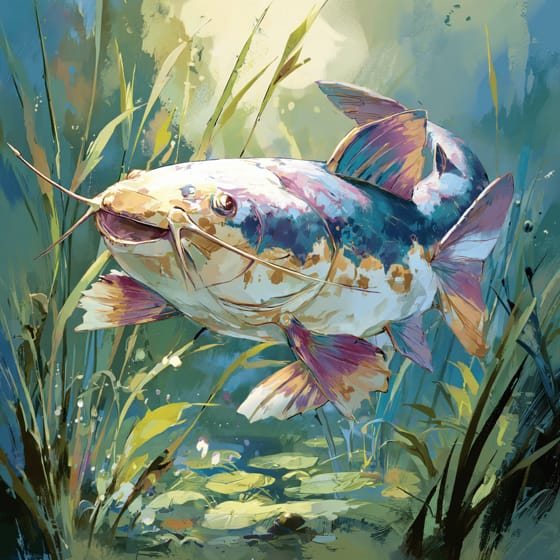
Ictalurus punctatus
eggs and young fish are often preyed upon
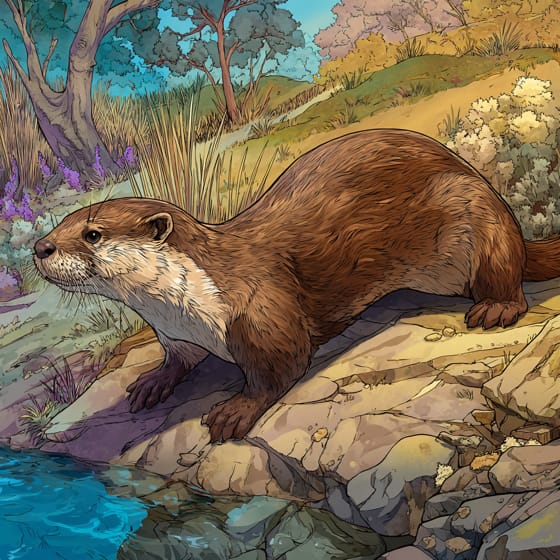
Lutra canadensis
preys on juvenile sturgeon in rivers
Solitary animals live alone for most of their lives, only interacting with others for mating or parental care.
Filter feeders obtain nutrients by straining suspended food particles and small organisms from water.
This trait identifies organisms whose diet consists entirely or primarily of animal tissue.
Aquatic habitats encompass environments where organisms live predominantly in water, including oceans, rivers, lakes, and wetlands.

Marine habitats encompass all saltwater environments of the Earth's oceans, supporting an immense diversity of aquatic life.
Danger
1/5 · Very low
No special safety notes yet.
The easiest way to identify Shovelnose Sturgeon is to use the Snappit nature identifier app.
50-80 cm
0.5-2.5 kg
10-25 years
These bottom-dwelling fish use their specialized mouths to vacuum up aquatic insects and crustaceans from riverbeds.
20 km/h
Shovelnose Sturgeons are found in the Mississippi River and its tributaries, preferring sandy or muddy river bottoms.
Foraging
Zoom in to split clusters and explore where this object has been snapped.
Take the discovery with you
Snap it with Snappit to identify it, learn what makes it special, and add the discovery to your collection.