





showy milkweed
Asclepias speciosa
Showy milkweed is a beautiful flower with bright pink blooms. It attracts butterflies and bees, making gardens lively and colorful. This plant is also important for caterpillars, especially monarchs, who love to munch on its leaves!
Habitat: Grasslands
The showy milkweed has stout stems and large, fuzzy blue-green leaves. Its most distinctive feature is dense, globe-like clusters of star-shaped, rose-pink to purplish flowers that stand out vividly in open spaces.
Category
PlantsRarity
Common
Danger
1/5 · Very low
Snaps
24
If you break a leaf, a white, milky liquid oozes out, which is why it's called 'milkweed'!
Its seeds float on silky parachutes, traveling far on the wind to find new homes!
The scientific name, Asclepias, comes from the Greek god of medicine, Asclepius!
The special shape of its flowers can sometimes trap insect legs briefly, ensuring they take pollen!
Showy milkweed has milky, sticky sap that oozes out when damaged, protecting it from hungry herbivores.
This plant has unique flower structures that gently grasp insect legs, ensuring efficient pollen transfer.
Showy milkweed can spread widely using underground stems, helping it survive and colonize new areas.
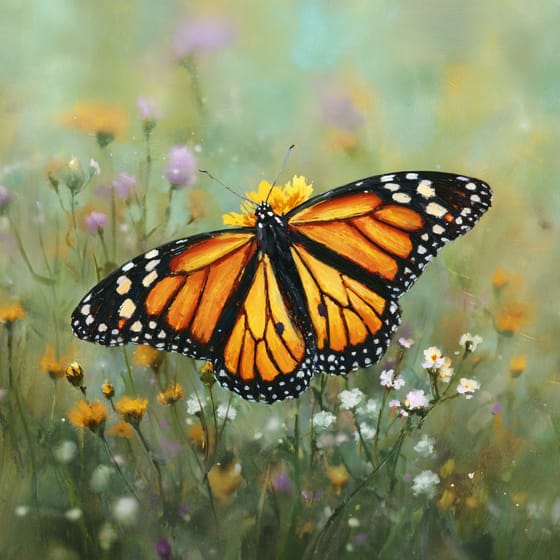
Danaus plexippus
Caterpillars feed exclusively on its leaves
Bombus impatiens
Visits flowers to collect nectar and pollen
Apis mellifera
Important nectar source for honey production
.jpg&width=800)
Tetraopes tetrophthalmus
Feeds on milkweed leaves and stems
Deciduous plants periodically shed all their leaves, typically during autumn or dry seasons.
Flowering plants are any plants that produce flowers as part of their reproductive cycle.
Summer blooming plants produce their flowers during the summer season, often providing vibrant color when many other plants have finished.
Fragrant flowers emit a pleasant aroma, often to attract pollinators or for defense.

Colorful describes organisms or objects displaying a wide range of bright and distinct colors.

Grassland habitats are terrestrial biomes dominated by grasses and herbaceous plants, supporting a variety of grazing animals.

Describes plants that are particularly attractive and beneficial to a wide range of pollinating organisms.

Describes a species whose presence and role have a disproportionately large effect on its environment.
No aliases listed yet.
Danger
1/5 · Very low
Always look but don't touch the plants unless a grown-up says it's okay.
The easiest way to identify showy milkweed is to use the Snappit nature identifier app.
30-150 cm
30-60 cm
1-2 cm
Summer
No
Moderate
Perennial
Zoom in to split clusters and explore where this object has been snapped.

Maryland, US
You might spot Osprey, Duck, and Spotted Lanternfly.
View guide →

Colorado, US
You might spot Eastern Fox Squirrel, Bee, and Duck.
View guide →

Colorado, US
You might spot Common Side-Blotched Lizard and Eastern Collared Lizard.
View guide →

Colorado, US
You might spot Common Starlily and Wholeleaf Paintbrush.
View guide →
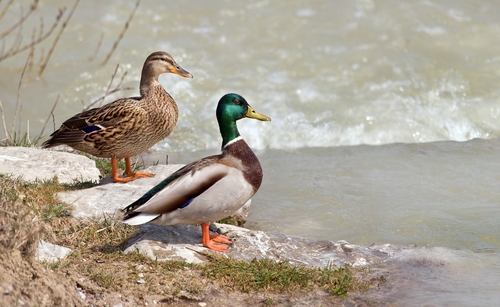
Maryland, US
You might spot Duck, American Toad, and Eastern Bluebird.
View guide →

Nebraska, US
You might spot Showy Milkweed and Straight-Lined Wave.
View guide →
Take the discovery with you
Snap it with Snappit to identify it, learn what makes it special, and add the discovery to your collection.







.jpg&width=800)


_001.jpg&width=800)




