





golden currant
Ribes aureum
Golden currants are sweet, small berries that grow on bushes. They are bright yellow to golden in color and can be found in many gardens and wild areas.
Habitat: Forests and gardens
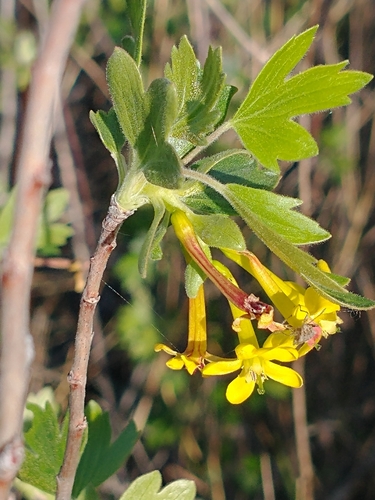
The golden currant is a medium-sized deciduous shrub with clusters of bright yellow, trumpet-shaped flowers. Its lobed leaves resemble small maple leaves and often turn reddish in fall. The berries mature from yellow to orange, red, and finally to a dark purplish-black.
Category
PlantsRarity
Common
Danger
1/5 · Very low
Snaps
5
Hummingbirds love to sip nectar from its trumpet-shaped flowers.
Its bright yellow flowers smell deliciously like cloves!
Native Americans used these berries for food and even dyes!
The berries change color from yellow to dark purple as they ripen.
Golden currant can grow deep roots that help it find water in dry soils, allowing it to thrive where other plants struggle.
Golden currant has sweet-smelling yellow flowers that bloom early in spring, providing vital nectar for hungry pollinators.
Golden currant produces juicy, edible berries that attract birds and other animals, helping to spread its seeds far.
Apis mellifera
Drinks nectar from its flowers

Archilochus alexandri
Feeds on nectar from its blossoms
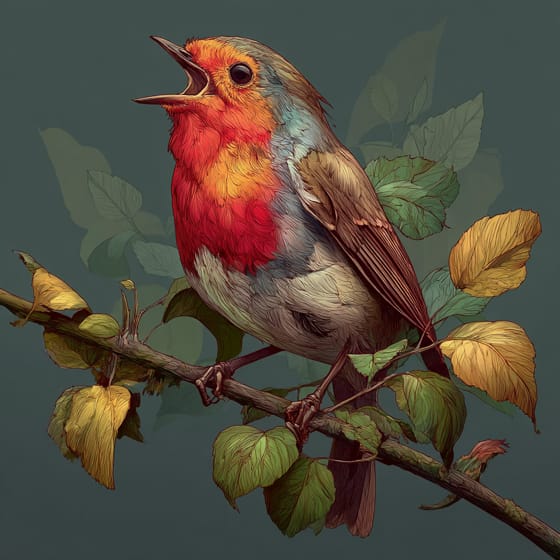
Turdus migratorius
Eats the ripe, dark berries
Ursus americanus
Forages on the fruit clusters
Deciduous plants periodically shed all their leaves, typically during autumn or dry seasons.
A shrub is a woody plant smaller than a tree, typically with multiple stems branching from or near the ground.
Spring blooming plants produce their flowers during the spring season, often signifying the end of winter and the start of new growth.
Fruit-bearing plants produce fruits, which are the mature ovaries of flowering plants containing seeds.

Medicinal plants possess chemical compounds that can be used for therapeutic purposes to treat illnesses or maintain health.

Edible plants are those parts of a plant that are considered safe for human consumption.

Describes plants that are particularly attractive and beneficial to a wide range of pollinating organisms.

Forest habitats are terrestrial environments dominated by dense tree cover, supporting a high diversity of plant and animal life.

This habitat trait indicates species that can coexist with humans in urban and suburban environments, utilizing man-made structures and green spaces.
Danger
1/5 · Very low
Always ask an adult before picking or eating wild berries.
The easiest way to identify golden currant is to use the Snappit nature identifier app.
100-300 cm
100-250 cm
0.5-1.5 cm
Spring to early summer
Yes
None
Perennial
Zoom in to split clusters and explore where this object has been snapped.
May 24, 2026
Cherry County CourthousePhoto attribution
(c) Tom Norton, some rights reserved (CC BY)
License: CC BY 4.0 ↗
Image may be shown cropped inside the card frame.

Colorado, US
You might spot Black-Billed Magpie and Twinberry Honeysuckle.
View guide →
Nevada, US
You might spot African Lion, Tiger, and Zebra.
View guide →

Nebraska, US
You might spot Canada Goose, Blue Dasher, and Eastern Pondhawk.
View guide →

Idaho, US
You might spot Duck, Canada Goose, and Eastern Fox Squirrel.
View guide →

Washington, US
You might spot Duck, Common Alkanet, and Arrowleaf Balsamroot.
View guide →

California, US
You might spot Western Fence Lizard, Eastern Fox Squirrel, and Bee.
View guide →
Take the discovery with you
Snap it with Snappit to identify it, learn what makes it special, and add the discovery to your collection.







.jpg&width=800)



_001.jpg&width=800)



