





Silvery Blue
Glaucopsyche lygdamus
The Silvery Blue is a small, beautiful butterfly with shiny blue wings. It loves to flutter around flowers and is often seen in sunny places during spring and summer.
Habitat: Meadows
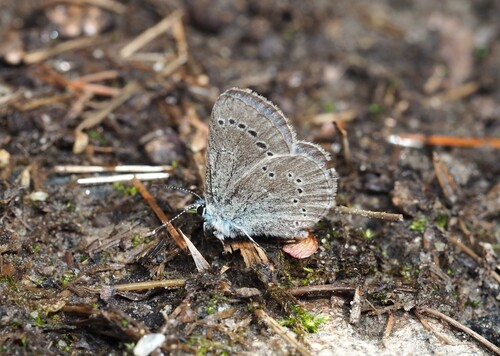
The Silvery Blue has iridescent violet-blue upper wings in males, while females are duller brown with a touch of blue near their body. Their undersides are a pale silvery-blue to gray with a row of small, dark spots, often with a hint of green, making them visually distinct.
Category
InsectsRarity
Common
Danger
1/5 · Very low
Snaps
7
Adult Silvery Blues use their long, straw-like tongues to sip sweet nectar from many different flowers.
After hatching, their caterpillars munch on leaves from peas, beans, and clover plants!
Only male Silvery Blues have bright, iridescent blue upper wings; females are mostly brownish!
Silvery Blue caterpillars are slug-shaped and often hide inside flowers or seed pods!
Silvery Blue caterpillars can produce sweet honeydew that attracts and rewards ants, making the ants protect them from predators.
The Silvery Blue caterpillar has a green, camouflaged body that helps it blend perfectly with its host plants, hiding from hungry birds.
Male Silvery Blues have tiny wing scales that scatter light, creating their dazzling iridescent blue color to attract mates.
Tiny caterpillars eat plants, while adult butterflies sip nectar from flowers.
Age differences: Larvae (caterpillars) eat plant leaves, while adults only consume flower nectar.
Formica fusca
Ants protect caterpillars in exchange for sweet honeydew.

Trifolium repens
Caterpillars feed on its leaves and flowers; adults drink nectar.
Lupinus polyphyllus
A key host plant for Silvery Blue caterpillars to eat.
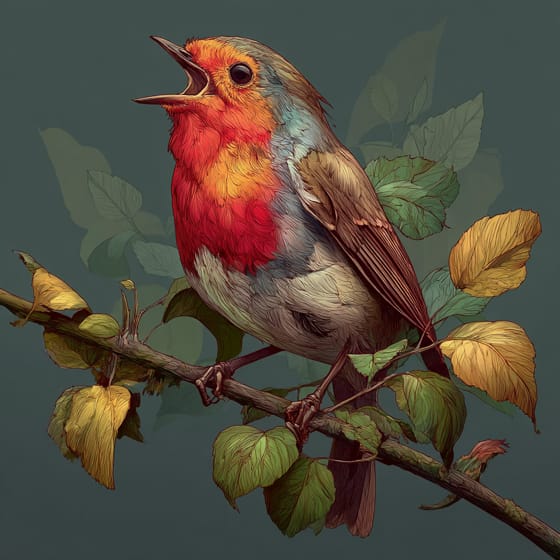
Turdus migratorius
Robins are generalist insectivores that may prey on adults.
Solitary animals live alone for most of their lives, only interacting with others for mating or parental care.
Colorful describes organisms or objects displaying a wide range of bright and distinct colors.
This trait characterizes organisms whose diet consists entirely or primarily of plant material.
Describes plants that are particularly attractive and beneficial to a wide range of pollinating organisms.

Diurnal animals are primarily active during daylight hours, typically resting or sleeping at night.

Describes organisms that transfer pollen, enabling the fertilization and reproduction of plants.
No aliases listed yet.
Danger
1/5 · Very low
Butterflies are gentle and safe to watch, but don't touch them too much.
The easiest way to identify Silvery Blue is to use the Snappit nature identifier app.
20-32 mm
10-15 mm
10-20 days
Tiny caterpillars eat plants, while adult butterflies sip nectar from flowers.
Meadows
Foraging
6
Zoom in to split clusters and explore where this object has been snapped.
May 28, 2026
Rhododendron State ParkPhoto attribution
no rights reserved
License: CC0 1.0 ↗
Image may be shown cropped inside the card frame.

Wyoming, US
You might spot Moose, Uinta Ground Squirrel, and American Bison.
View guide →

Oregon, US
You might spot Mule Deer, Song Sparrow, and Northern Yellow Warbler.
View guide →

Maine, US
You might spot Pink Lady's Slipper, Wood Lily, and Great Blue Heron.
View guide →

New Hampshire, US
You might spot Eastern Newt, Common Loon, and Hickory Tussock Moth.
View guide →

Wyoming, US
You might spot Moose, Uinta Ground Squirrel, and American Bison.
View guide →

Wyoming, US
You might spot Uinta Ground Squirrel, Moose, and Mountain Bluebird.
View guide →
Take the discovery with you
Snap it with Snappit to identify it, learn what makes it special, and add the discovery to your collection.







.jpg&width=800)



