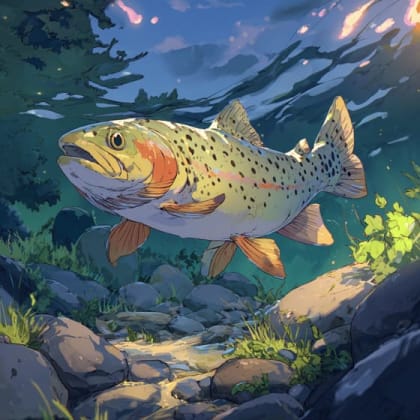
Slippery Dick
halichoeres bivittatus
The Slippery Dick is a colorful fish that loves to swim around coral reefs! Its playful nature makes it fun to watch as it darts in and out of the rocks.
Habitat: Coral reefs and rocky areas in warm ocean waters.
The Slippery Dick is a slender reef fish, typically white or yellowish, marked by two distinctive dark horizontal stripes. Its elongated body and pointed snout give it a streamlined appearance, often with greenish hues in older males.
Category
FishRarity
Common
Danger
0/5 · No known danger
Snaps
Be the first to snap!
Every night, these fish completely bury themselves in the sand to sleep soundly!
Their quirky name comes from their incredibly slick and slippery skin!
These clever fish sometimes follow larger fish to snatch up food they disturb!
They can start life as females and later transform into males!
Slippery Dick has the ability to change its sex from female to male because this helps them optimize reproduction in their social groups.
Slippery Dick can dive headfirst into the sand to bury itself completely, which helps them hide from predators and sleep safely at night.
Slippery Dick has a special slimy mucus coating that helps them avoid capture by predators and protects their skin from parasites.
Slippery Dick can quickly dart between corals using powerful pectoral fins, which helps them expertly navigate complex reef environments.
This fish loves to munch on small critters like crabs, shrimps, and worms found on the reef!
Age differences: Young fish eat smaller invertebrates, while adults consume a wider variety of reef critters.
Sphyraena barracuda
A large, fast predator that hunts smaller fish on the reef.
Lutjanus griseus
This common reef predator ambushes fish like the Slippery Dick.
Pempheris schomburgkii
Slippery Dicks clean parasites from schooling fish, benefiting both.
Social animals live in organized groups, cooperating for survival benefits such as foraging, defense, and raising offspring.
Colorful describes organisms or objects displaying a wide range of bright and distinct colors.
This trait identifies organisms whose diet consists entirely or primarily of animal tissue.
Aquatic habitats encompass environments where organisms live predominantly in water, including oceans, rivers, lakes, and wetlands.

Marine habitats encompass all saltwater environments of the Earth's oceans, supporting an immense diversity of aquatic life.
Danger
0/5 · No known danger
No special safety notes yet.
The easiest way to identify Slippery Dick is to use the Snappit nature identifier app.
10-30 cm
0.05-0.3 kg
3-5 years
This fish loves to munch on small critters like crabs, shrimps, and worms found on the reef!
8 km/h
Coral reefs and rocky areas in warm ocean waters.
Foraging
Zoom in to split clusters and explore where this object has been snapped.
Recent snaps will appear here as new observations are added.
Take the discovery with you
Snap it with Snappit to identify it, learn what makes it special, and add the discovery to your collection.