





Southern Toad
Anaxyrus terrestris
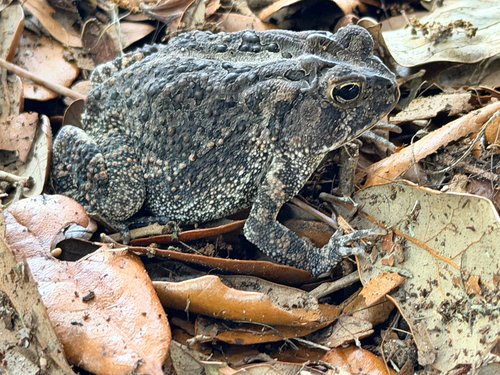
The Southern Toad is a small, bumpy toad that loves to hop around in the warm sun. They have a special call that sounds like a musical trill, especially during rainy nights.
Habitat: Wetlands
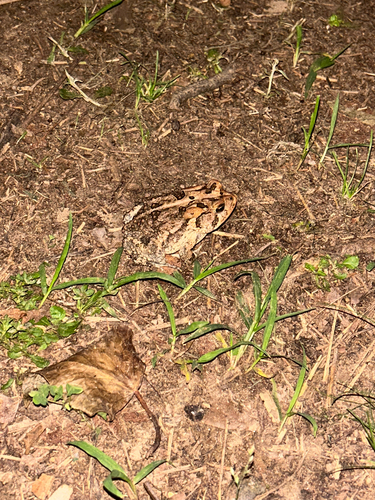
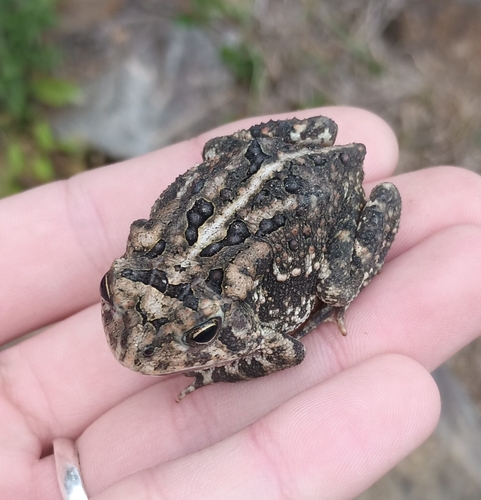
The Southern Toad is typically brown, gray, or reddish with dark spots and often has a distinct light stripe down its back. It has warty, dry skin and two large, prominent glands behind its eyes, which distinguish it from many frogs.
Category
AmphibiansRarity
Common
Danger
1/5 · Very low
Snaps
42
A group of Southern Toads hanging out together is surprisingly called a "knot" of toads.
Males have a super loud, trilling "werrrr" call to attract mates from far away.
Southern Toads swallow food by pulling their eyeballs inward to help push it down!
Unlike us, these toads absorb all the water they need right through their skin!
Southern Toads have special glands behind their eyes that squirt a bad-tasting poison to warn off predators.
Southern Toads can dig themselves backward into the soil with their strong hind legs to hide from danger or stay cool.
Southern Toads can subtly change their skin color to better match their surroundings, helping them hide from sharp-eyed predators.
Southern Toads can shoot out their long, sticky tongue incredibly fast to snatch up insects and other small prey.
These toads are expert insect hunters, using their sticky tongues to catch all sorts of small critters.
Age differences: Tadpoles eat algae and plant bits, but adults are hunters of insects and small invertebrates.
Thamnophis sirtalis
Common Garter Snakes frequently prey on Southern Toads and their young.

Procyon lotor
Raccoons often hunt and eat toads they find foraging at night.
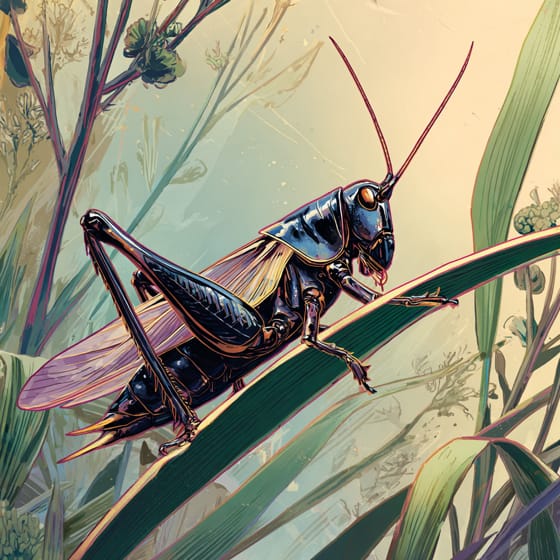
Gryllus assimilis
Southern Toads frequently catch and eat field crickets using their sticky tongues.

Arion ater
Slugs, like the black slug, are a common food source for these toads.
Solitary animals live alone for most of their lives, only interacting with others for mating or parental care.
Singing animals produce complex vocalizations, often for purposes of attracting mates, defending territory, or communicating within their species.
Camouflaged describes organisms that possess coloring or patterns that allow them to blend into their environment.
This trait identifies organisms whose diet primarily consists of insects and other small invertebrates.

This trait characterizes organisms with an exceptionally long lifespan compared to others of their kind.

This habitat trait identifies species found in wetlands, which are areas of land saturated with water, either permanently or seasonally, including marshes, swamps, and bogs.

Poisonous organisms produce toxins that can cause harm when ingested, inhaled, or absorbed through contact.

Nocturnal animals are primarily active during the nighttime hours, typically resting or sleeping during the day.
Danger
1/5 · Very low
Always wash your hands after touching a toad, as their skin can be sensitive.
The easiest way to identify Southern Toad is to use the Snappit nature identifier app.
5-11 cm
0.02-0.07 kg
5-10 years
2 km/h
These toads are expert insect hunters, using their sticky tongues to catch all sorts of small critters.
Wetlands
Ambush
Zoom in to split clusters and explore where this object has been snapped.
Jun 18, 2026
St. Augustine Town Plan Historic DistrictPhoto attribution
(c) Karen M. Janszen, some rights reserved (CC BY-SA)
License: CC BY-SA 4.0 ↗
Image may be shown cropped inside the card frame.
Jun 6, 2026
Columbia Historic District IPhoto attribution
no rights reserved
License: CC0 1.0 ↗
Image may be shown cropped inside the card frame.
May 1, 2026
Columbia CanalPhoto attribution
(c) Raven Dandridge, some rights reserved (CC BY)
License: CC BY 4.0 ↗
Image may be shown cropped inside the card frame.
Jun 17, 2026

Virginia, US
You might spot Cope's Gray Tree Frog and Basilica Orbweaver.
View guide →

Alabama, US
You might spot Anole, Eastern Gray Squirrel, and Asian Lady Beetle.
View guide →

Florida, US
You might spot Atala, Monarch, and Brown Anole.
View guide →

Georgia, US
You might spot Brown Anole, Anole, and Gulf Fritillary.
View guide →

South Carolina, US
You might spot Brown Pelican, Boat-Tailed Grackle, and Great Egret.
View guide →

South Carolina, US
You might spot Great Blue Heron, Spanish Moss, and Cahaba Lily.
View guide →
Take the discovery with you
Snap it with Snappit to identify it, learn what makes it special, and add the discovery to your collection.








.JPG&width=800)



.jpg&width=800)
