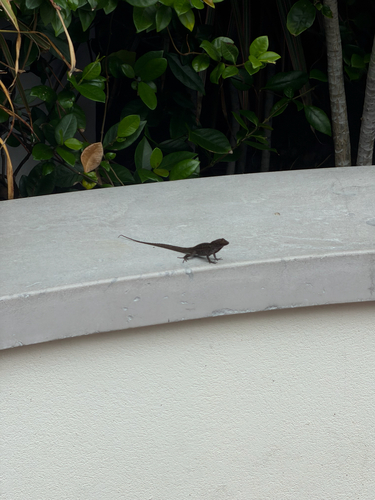
Brown Anole

The St. Augustine Town Plan Historic District offers an unparalleled journey into America's oldest European-established city.
This National Historic Landmark District preserves the original 16th-century Spanish colonial town plan, making it a living museum of early European urban design in the continental United States. Its narrow, winding streets, central plaza, and historic buildings offer a captivating glimpse into over 450 years of history, reflecting Spanish, British, and American influences that have shaped its unique character.
Wander through a mosaic of architectural styles, from robust Spanish Colonial structures built with coquina stone to opulent Gilded Age masterpieces by Henry Flagler, such as Flagler College (originally the Hotel Ponce de Leon) and the Lightner Museum (formerly the Hotel Alcazar). Iconic landmarks like the formidable Castillo de San Marcos and the spiritual heart of the city, the Cathedral Basilica of St. Augustine, beckon visitors to explore their stories. You can also discover the charm of pedestrian-only St. George Street, the ancient Aviles Street, or the quaint Oldest Wooden School House, each offering a distinct photographic opportunity.
Visiting this district is an immersive historical experience, offering more than just sightseeing; it's a chance to walk through centuries of stories. Whether marveling at the Tiffany glass in Flagler College, exploring the oldest masonry fort, or simply soaking in the ambiance of a city that predates Jamestown and Plymouth Rock, the St. Augustine Town Plan Historic District leaves an indelible mark on every traveler. Be ready to snap and learn! Get the Snappit app to identify any nature species you find here.
St. Augustine, founded by Spain in 1565 by Don Pedro Menéndez de Avilés, holds the distinction of being the oldest continuously occupied European settlement in the continental United States. Its town plan, a defining feature of the historic district, was meticulously laid out according to 16th-century Spanish colonial planning principles, specifically the 1573 Laws of the Indies. The central Plaza de la Constitución, still present today, served as the civic and religious core, surrounded by important public buildings. Throughout its history, St. Augustine experienced periods of Spanish and British control, each leaving its architectural and cultural imprint. The construction of the Castillo de San Marcos, beginning in 1672, was crucial for protecting this strategic Spanish stronghold. In the late 19th century, industrialist Henry Flagler transformed St. Augustine into a luxurious winter resort, adding magnificent Spanish Renaissance and Moorish Revival-style hotels that profoundly shaped the city's aesthetic during the Gilded Age.
Each card links to a full Explore page with photos, traits, and fun facts.
Start with the big picture, then zoom in to explore individual wildlife observations around this place.
Wear comfortable shoes
You'll be doing a lot of walking on historic, sometimes uneven, cobblestone streets.
Stay hydrated
Especially during warmer months, carry water as you explore outdoors.
Consider a guided tour
Carriage tours, trolley tours, or walking tours can provide valuable historical context and insights.
Park smartly
Parking can be limited; consider parking garages or lots outside the immediate pedestrian zone and walking in. The city actively works on improving parking and promoting a walkable environment.
Visit early or late
To avoid the largest crowds, particularly on St. George Street and popular attractions, start your day early or explore later in the afternoon/evening.
Explore side streets
Venture off the main thoroughfares like St. George Street to discover hidden courtyards, unique shops, and quieter historic lanes.
Jun 19, 2026
Photo attribution
(c) Ryan McMinds, some rights reserved (CC BY)
License: CC BY 4.0 ↗
Image may be shown cropped inside the card frame.
Jun 18, 2026
Photo attribution
(c) Ryan McMinds, some rights reserved (CC BY)
License: CC BY 4.0 ↗
Image may be shown cropped inside the card frame.
Jun 18, 2026
Photo attribution
(c) Ryan McMinds, some rights reserved (CC BY)
License: CC BY 4.0 ↗
Image may be shown cropped inside the card frame.
Jun 18, 2026
Photo attribution
(c) Ryan McMinds, some rights reserved (CC BY)
License: CC BY 4.0 ↗
Image may be shown cropped inside the card frame.
Jun 18, 2026
Photo attribution
(c) Ryan McMinds, some rights reserved (CC BY)
License: CC BY 4.0 ↗
Image may be shown cropped inside the card frame.

Maryland, US
You might spot White-Tailed Deer and Eastern Gray Squirrel.
View guide →
.jpg)
District of Columbia, US
You might spot Eastern Gray Squirrel, Duck, and House Sparrow.
View guide →

Illinois, US
You might spot American Robin, Canada Goose, and House Sparrow.
View guide →

Virginia, US
You might spot Spotted Lanternfly and Northern Cardinal.
View guide →
Take the discovery with you
Identify the wildlife you spot, learn as you go, and keep a collection of the adventure.