





Spotted Pine Sawyer
Monochamus clamator
The Spotted Pine Sawyer is a special beetle with beautiful spots on its body. It loves to live in pine trees and helps break down dead wood, making way for new life in the forest.
Habitat: Forests
The Spotted Pine Sawyer has a long, slender body that is dull grayish-brown or black. Its elytra (wing covers) are marked with distinct white or yellowish spots and patches, helping it camouflage. It is easily recognized by its extremely long antennae, often longer than its body.
Category
InsectsRarity
Common
Danger
1/5 · Very low
Snaps
1
Baby sawyers are mighty wood-munchers, living inside pine trees for years!
Male sawyers might 'sing' by rubbing their legs to attract a mate!
Their super long antennae can be up to twice their body length!
These beetles create tunnels that woodpeckers love to explore for food!
Spotted Pine Sawyer larvae can 'Wood Sculpt' by tunneling deep into dead pine trees, helping them find food and shelter for years.
The Spotted Pine Sawyer has 'Super Sensors' with long antennae that help them detect chemical signals from pine trees and mates from afar.
Adult Spotted Pine Sawyers can 'Tree-Top Navigate' using their wings to fly between pine trees, helping them find mates and new egg-laying sites.
Adults nibble on pine needles; larvae are wood-eating masters!
Age differences: Larvae eat dead pine wood; adults consume pine needles and sap.
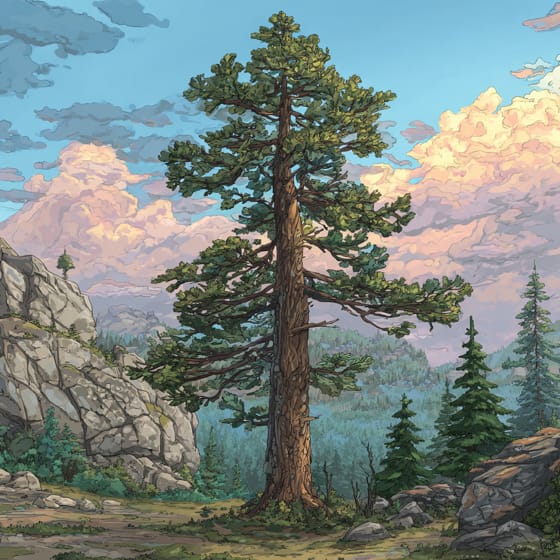
Pinus ponderosa
Larvae bore into its wood for food and shelter.
Pinus contorta
Larvae also develop within its decaying wood.
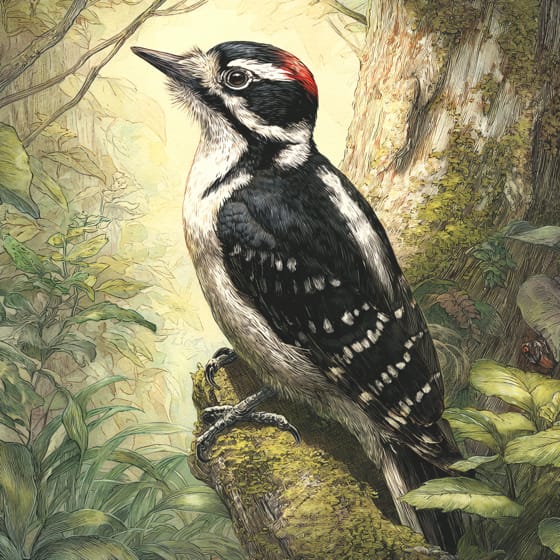
Picoides villosus
Woodpeckers extract larvae from infested trees.
Marked with spots or patches of a different color.
Solitary animals live alone for most of their lives, only interacting with others for mating or parental care.
Arboreal animals live primarily in trees, utilizing them for shelter, food, and protection from predators.
Colorful describes organisms or objects displaying a wide range of bright and distinct colors.

This trait characterizes organisms whose diet consists entirely or primarily of plant material.

Describes organisms that break down dead organic material, recycling nutrients back into the ecosystem.

Forest habitats are terrestrial environments dominated by dense tree cover, supporting a high diversity of plant and animal life.

Describes a species whose presence and role have a disproportionately large effect on its environment.
No aliases listed yet.
Danger
1/5 · Very low
It's best to look at beetles from a distance and not touch them.
The easiest way to identify Spotted Pine Sawyer is to use the Snappit nature identifier app.
30-70 mm
16-35 mm
30-90 days
10 km/h
Adults nibble on pine needles; larvae are wood-eating masters!
Forests
Foraging
Zoom in to split clusters and explore where this object has been snapped.
Take the discovery with you
Snap it with Snappit to identify it, learn what makes it special, and add the discovery to your collection.





.jpg)




.jpg&width=800)

