





Stoneflies
Plecoptera
Stoneflies are special insects that live near clean, cool water. They have long bodies and delicate wings, and they help keep streams healthy by breaking down leaves.
Habitat: Wetlands
The Stoneflies has a flattened body, often dull in color (brown, grey, or black), with two long antennae and two prominent tail-like cerci. Their four membranous wings fold flat over their back, often extending past their abdomen.
Category
InsectsRarity
Common
Danger
1/5 · Very low
Snaps
Be the first to snap!
Even though most stoneflies have wings, some species are surprisingly unable to fly at all!
Some stonefly nymphs can live underwater for up to four years before finally changing into an adult!
Stonefly nymphs are a favorite snack for hungry fish, like trout, making them key food in rivers!
They are an ancient insect group, having fluttered around on Earth since before the dinosaurs roamed!
Stoneflies can only thrive in clean, unpolluted water that helps them act as natural indicators of water quality.
Stoneflies can breathe underwater using feathery gills on their nymphs that helps them absorb oxygen from cold, fast-flowing streams.
Stoneflies have flattened bodies as nymphs that helps them cling tightly to rocks and hide from predators in fast currents.
Some adult Stoneflies do not feed because they have vestigial mouthparts that helps them focus all energy on mating.
Nymphs munch on algae and decaying plants, but many adult stoneflies don't eat anything!
Age differences: Nymphs feed on various organic matter, but many adult stoneflies have undeveloped mouthparts and do not feed, focusing on reproduction.
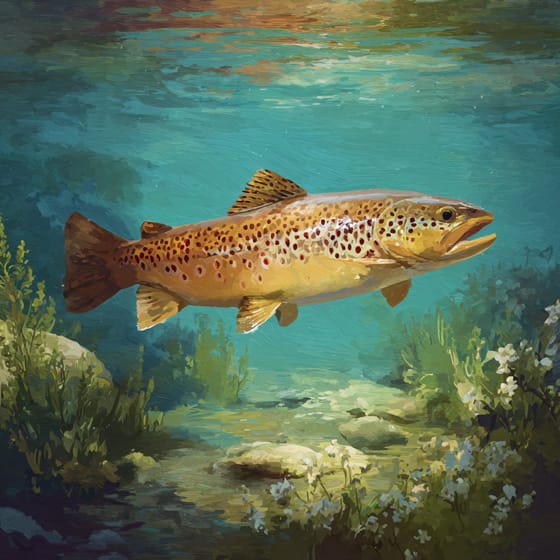
Salmo trutta
A primary food source for these fish, especially during their nymph stage.

Cinclus cinclus
These aquatic birds dive to catch stonefly nymphs and adults from riverbeds.
Diatoma vulgaris
Many stonefly nymphs graze on diatoms found on submerged rocks and plants.
Rana temporaria
Adult stoneflies can become food for frogs dwelling near water.
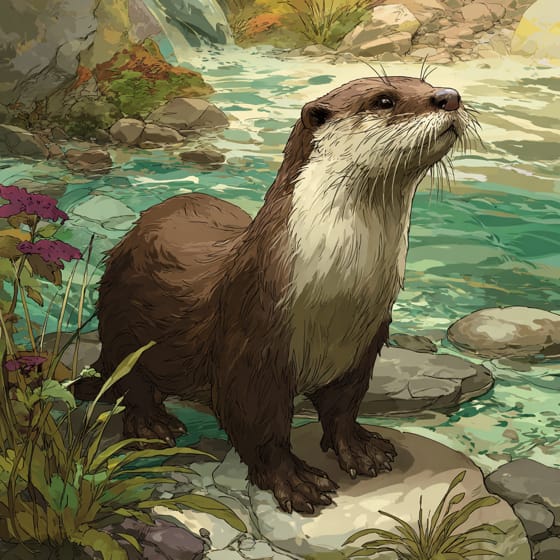
Lutra lutra
Otters rely on healthy fish populations, which in turn depend on abundant stoneflies.
Solitary animals live alone for most of their lives, only interacting with others for mating or parental care.
This trait characterizes organisms whose diet consists entirely or primarily of plant material.
Describes organisms that break down dead organic material, recycling nutrients back into the ecosystem.
This trait characterizes organisms with an exceptionally long lifespan compared to others of their kind.

This habitat trait identifies species found in wetlands, which are areas of land saturated with water, either permanently or seasonally, including marshes, swamps, and bogs.

Diurnal animals are primarily active during daylight hours, typically resting or sleeping at night.

Freshwater habitats include non-saline aquatic environments such as rivers, lakes, ponds, and wetlands, vital for numerous species.

Describes a species whose presence and role have a disproportionately large effect on its environment.
No aliases listed yet.
Danger
1/5 · Very low
Always be careful near water and ask an adult before exploring.
The easiest way to identify Stoneflies is to use the Snappit nature identifier app.
10-60 mm
5-80 mm
5-30 days
1-5 km/h
Nymphs munch on algae and decaying plants, but many adult stoneflies don't eat anything!
Wetlands
Foraging
Zoom in to split clusters and explore where this object has been snapped.
Recent snaps will appear here as new observations are added.
Take the discovery with you
Snap it with Snappit to identify it, learn what makes it special, and add the discovery to your collection.








.jpg&width=800)



