Strongylocentrotus purpuratus
Strongylocentrotus purpuratus
The purple sea urchin is a spiky little creature that lives in the ocean. It has a hard shell covered in sharp spines, which helps protect it from hungry animals.
Habitat: Coastal areas
The Strongylocentrotus purpuratus is a spherical echinoderm covered in sharp, movable spines that range from deep purple to reddish-brown. It has a hard, spiny shell called a test, making it look like a prickly underwater ball. Its spines are relatively short and uniform, unlike some long-spined urchin species.
Category
InvertebrateRarity
Common
Danger
3/5 · Moderate
Snaps
2
Each urchin has five-fold symmetry, meaning it's almost perfectly star-shaped inside!
Purple sea urchins can survive for hours out of water if kept moist.
Their spines are not poisonous but can give a painful poke if stepped on.
They use tiny tube feet with suction cups to slowly crawl across the seafloor.
Strongylocentrotus purpuratus can regrow lost spines and even damaged body parts because it has remarkable regenerative capabilities that help it recover from injuries.
Strongylocentrotus purpuratus has hundreds of tiny tube feet that help them cling tightly to rocks and surfaces, even in strong currents, preventing them from being washed away.
Strongylocentrotus purpuratus has a unique mouth called 'Aristotle's lantern' equipped with five hard teeth that help them scrape algae off rocks for food.
Strongylocentrotus purpuratus can detect chemical cues in the water, which helps them find food, avoid predators, and even locate mates.
These spiky creatures love to munch on algae and kelp, keeping ocean habitats clean.
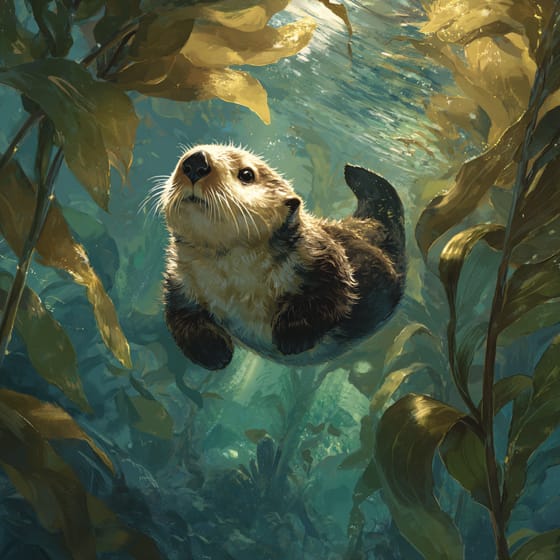
Enhydra lutris
Sea otters are a major predator that crush urchins with their strong jaws.

Pycnopodia helianthoides
Sunflower sea stars can engulf and digest sea urchins with their many arms.
Macrocystis pyrifera
Urchins graze on giant kelp, sometimes leading to 'urchin barrens' when populations boom.
Semicossyphus pulcher
California sheephead fish use their powerful jaws to crush sea urchins for food.
Solitary animals live alone for most of their lives, only interacting with others for mating or parental care.
Colorful describes organisms or objects displaying a wide range of bright and distinct colors.
This trait characterizes organisms whose diet consists entirely or primarily of plant material.
This trait characterizes organisms with an exceptionally long lifespan compared to others of their kind.

Possessing sharp, pointed projections or spines on the body or surface.

Coastal habitats are dynamic environments located along the interface between land and sea, influenced by tides, waves, and saltwater.

Describes a species whose presence and role have a disproportionately large effect on its environment.

Marine habitats encompass all saltwater environments of the Earth's oceans, supporting an immense diversity of aquatic life.

Endangered status indicates a species is at a very high risk of extinction in the wild in the near future.
Danger
3/5 · Moderate
Be careful around sea urchins, as their spines can be sharp and hurt if touched.
The easiest way to identify Strongylocentrotus purpuratus is to use the Snappit nature identifier app.
4-10 cm
0.05-0.2 kg
30-70 years
0.006 km/h
These spiky creatures love to munch on algae and kelp, keeping ocean habitats clean.
Coastal areas
Grazing
Zoom in to split clusters and explore where this object has been snapped.

California, US
You might spot Sunburst Anemone, Ochre Sea Star, and Striped Shore Crab.
View guide →

California, US
You might spot Harbor Seal, Ochre Sea Star, and Sea Thrift.
View guide →

California, US
You might spot Hilton's Aeolid and Opalescent Nudibranch.
View guide →

California, US
You might spot Sunburst Anemone and Striped Shore Crab.
View guide →

California, US
You might spot Northern Elephant Seal, Gumboot Chiton, and Ochre Sea Star.
View guide →

California, US
You might spot Ochre Sea Star, Giant Green Anemone, and Sunburst Anemone.
View guide →
Take the discovery with you
Snap it with Snappit to identify it, learn what makes it special, and add the discovery to your collection.