




Snappit logo
Snappit
Get App

Suffolk Sheep

Ovis aries

The Suffolk is a British breed of domestic sheep (Ovis aries) with a white fleece and a black face and legs that carry no wool. It was bred in the late 1700s around Bury St Edmunds in Suffolk, England, by crossing Norfolk Horn ewes with Southdown rams. Today it is raised mainly for meat, and Suffolk rams are widely used as terminal sires: the fathers of fast-growing lambs.

Also known as Suffolk, Southdown Norfolk (historical), Black face (old local name)

Loading the 3D suffolk sheep…
Suffolk Sheep (Ovis aries)
furry trait badgesocial trait badgeherbivorous trait badge
Suffolk Sheep

Rarity: Common

Ewe

Suffolk sheep abilities

  • Up to 306° field of view

  • 4 stomach compartments

  • 50 faces remembered for 2+ years

  • Timbre the ID code in each bleat

  • Smell the only ID check at the udder

  • < 2 min per sheep for a pro shearer

  • 142–152 days of pregnancy

  • ⅓ stretch before the crimp springs back

Real Suffolk sheep

Photos from Wikimedia Commons. Pick a photo with a 3D button to change the model.

  • Suffolk ram with a black face and thick white fleece standing in a straw-filled show pen
    RamAdult male. Same black face and legs, and no horns either.The breed's main job: Suffolk rams sire fast-growing lambs for meatA Suffolk ram at the Paris International Agricultural Show, 2019. Photo: Thomon, CC BY-SA 4.0
  • Two black-faced Suffolk ewes grazing in a green field
    EweAdult female. White fleece, black wool-free face and legs, no horns.Suffolk ewes averaged 80 kg in one studySuffolk ewes in a field in Ribadeo, Galicia, Spain. Photo: Fernando Losada Rodríguez, CC BY-SA 4.0
  • Young Suffolk ram lamb with a black face and legs standing in long grass
    LambYoung sheep with the same black face and legs. Lambs live on milk until the rumen starts working at 50–60 days.Suffolk lambs grow fast and are often ready for market earlyA 7-month-old Suffolk ram lamb. Photo: J gareth p at English Wikipedia, CC BY-SA 3.0
  • Suffolk sheep with a short, close-cut fleece lying on straw
    Just shornRight after shearing: the fleece comes off in one piece, leaving a short, pale coat.Most sheep are shorn about once a yearA Suffolk with a short, close-cut coat, Paris 2019. Photo: Thomon, CC BY-SA 4.0
  • White-fleeced Suffolk sheep with a black head and legs in a wooden pen at a sheep fair
    A Suffolk at Masham Sheep Fair, EnglandPhoto: Jane Cooper Orkney, CC BY-SA 4.0
  • Suffolk sheep standing with its front hooves on a metal pen rail at a show
    A Suffolk showing off at an agricultural showPhoto: Neil Owen, CC BY-SA 2.0

Suffolk sheep by the numbers

Measured values from studies and farm guides. Some are for sheep in general.

Ewe weight
80 kg
average Suffolk ewe in a 1996 study (Blackface hill ewes: 54 kg)⁠[14]
Lifespan
10–12 yrs
typical life expectancy of a sheep⁠[22]
Pregnancy
142–152 days
about 5 months⁠[19]
Breeding cycle
17 days
a ewe comes into heat about every 17 days in the breeding season⁠[19]
Time to stand
24 min
average for newborn Suffolk lambs in one study⁠[14]
Face memory
50 faces
other sheep remembered for more than 2 years⁠[15]
Stomach
4 parts
rumen, reticulum, omasum and abomasum⁠[10]
Rumen starts
50–60 days
age when a lamb's rumen usually starts working⁠[10]
Shearing time
< 2 min
for a professional shearer (record: 37.9 s)⁠[18]
Domesticated
10,000+ yrs
ago, from the wild Asiatic mouflon⁠[22, 23]

Suffolk sheep myths and facts

Tap Myth or Fact for each claim, then check the answer.

0 of 8 answered

  1. “Sheep have four stomachs.”

  2. “Sheep can recognise faces, even human ones.”

  3. “Sheep are stupid.”

  4. “Sheep just follow each other blindly.”

  5. “Sheep can see all the way around in a full circle.”

  6. “If a sheep is never shorn, its wool keeps on growing.”

  7. “Counting sheep is a proven way to fall asleep.”

  8. “Suffolk lambs stand up within minutes of being born.”

Sheep and shearing world records

Records for sheep in general, not only Suffolks. Chris's fleece record is confirmed by Guinness World Records.

  • Most wool from one shearing

    41.1 kg

    Chris, an Australian sheep

    Canberra, 2015 · unshorn for more than 5 years⁠[12, 13]

  • Fastest sheep shearing

    37.9 s

    Ivan Scott (Ireland)

    set in 2016⁠[18]

  • Most lambs shorn in 9 hours

    867

    Ivan Scott (Ireland)

    machine shearing⁠[18]

  • Most ewes shorn in 9 hours

    731

    Matt Smith (New Zealand)

    machine shearing⁠[18]

  • Blade-shearing legend

    321 in 7 h 40 min

    Jackie Howe

    with hand blades, over 100 years ago⁠[18]

A year with a Suffolk flock

Sheep breed with the seasons, so a flock's year follows the length of the days.

  1. Autumn

    Breeding season

    Shortening days switch on the ewes' breeding season. A ewe comes into heat about every 17 days until she is pregnant.⁠[19]

  2. Winter

    Growing lambs

    Pregnancy lasts 142–152 days. About 70% of a lamb's growth before birth happens in the last month.⁠[19]

  3. Late winter–spring

    Lambing

    Ewes give birth to one lamb, twins or triplets. Suffolk lambs stood after about 24 minutes on average in one study.⁠[20, 14]

  4. First day

    First milk

    A newborn lamb needs colostrum, its mother's first milk, in its first 24 hours: about 10% of its body weight.⁠[20]

  5. About 2 months

    Rumen switches on

    By 50–60 days old, a lamb's rumen and reticulum are usually working, so it can digest grass.⁠[10]

  6. Once a year

    Shearing

    A shearer clips each fleece off in one piece. A pro takes under 2 minutes per sheep.⁠[18]

  7. Summer–autumn

    Fast-growing lambs

    Suffolk-sired lambs grow quickly, so many are ready for market early.⁠[5]

Suffolk sheep history

From wild mouflon to one of the world's most widespread meat breeds.

  1. 10,000+ years ago

    Sheep are tamed

    People domesticated sheep from the wild Asiatic mouflon more than 10,000 years ago.⁠[22, 23]

  2. Thousands of years ago

    Sheep spread out

    Domestic sheep spread across Europe, Asia and Africa in separate waves. Primitive breeds such as the Soay are left over from the first wave; most modern breeds come from a later wave of improved sheep.⁠[25]

  3. Late 1700s

    A new cross

    Farmers near Bury St Edmunds put Southdown rams with Norfolk Horn ewes. The lambs were called 'Southdown Norfolks' or 'Black faces'.⁠[5]

  4. 1797

    Named 'Suffolk'

    Farming writer Arthur Young wrote that these sheep 'ought to be called the Suffolk breed'.⁠[5]

  5. 1810

    A breed of its own

    The Suffolk was recognised as a distinct breed.⁠[6]

  6. 1859

    First show classes

    Suffolk sheep got their own classes at the Suffolk Show.⁠[5]

  7. 1886–1887

    Society and flock book

    The Suffolk Sheep Society formed in Stowmarket on 8 January 1886. Its first flock book, in 1887, recorded about 15,000 ewes.⁠[26, 5, 6]

  8. 1888

    Off to America

    Suffolks reached the United States, one of many countries they were exported to.⁠[6, 5]

  9. 1980s

    Peak numbers

    UK numbers rose to about 500,000 before falling again.⁠[6]

Suffolk vs Merino vs Dorset sheep

Three well-known breeds of the same species, Ovis aries, bred for different jobs.

Suffolk sheep vs Merino vs Dorset sheep
SuffolkMerinoDorset
Origin⁠[5, 27, 28]Suffolk, England (late 1700s)Spain, bred up by the Moors (700s–1200s)South-west England
Made from⁠[5, 27, 28]Norfolk Horn ewes × Southdown ramsOlder Mediterranean sheep, improved in SpainBy tradition, Merinos crossed with horned Welsh sheep
Main job⁠[6, 27, 28]Meat: rams sire fast-growing lambsWool, long prized above all othersMeat, with lambs at any time of year
Best known for⁠[5, 12, 28]Leading terminal sire in the UK and IrelandChris's record 41.1 kg fleeceBreeding out of season

Horns: Suffolks have none in either sex. Dorsets come horned, or hornless in the Poll Dorset, which began with a gene that appeared in 1948.

Is the Suffolk sheep endangered?

No. The Suffolk is a domestic breed and one of the most numerous sheep breeds in the world.

IUCN Red List

Not Evaluated (NE)

Trend unknown

In the UK, Suffolk numbers rose to about 500,000 in the 1980s and later fell. For 2020, the UK reported 14,266 Suffolks to the UN's breed database.⁠[6]

Domestic breeds are not on the IUCN Red List

Threats

  • Harder births

    In one study, Suffolk lambs were more likely to need help being born and were slower to stand and suckle than hill-breed lambs.⁠[14]

  • Overgrown wool

    Wool that is never shorn keeps growing and can make a sheep too heavy to move well.⁠[13]

What’s helping

  • Flock book1887

    The Suffolk Sheep Society has kept pedigree records since its first flock book in 1887.⁠[5]

  • Care at lambing

    Making sure each newborn lamb gets colostrum in its first 24 hours gives it a strong start.⁠[20]

  • Regular shearing

    Shearing at least once a year keeps sheep comfortable and their fleeces clean.⁠[18]

Relatives with their own story

  • Norfolk HornNot Evaluated

    One of the Suffolk's two parent breeds: an ancient heath breed now being revived in small numbers.⁠[7]

  • SouthdownNot Evaluated

    The Suffolk's other parent breed and one of the oldest British breeds.⁠[27]

  • Asiatic mouflon (Ovis gmelini)Near Threatened

    The wild ancestor of all domestic sheep, including the Suffolk. It is listed as Near Threatened.⁠[23, 29]

Suffolk sheep quiz

12 questions. Every answer is somewhere on this page.

Question 1 of 12Score 0

Which two breeds were crossed to make the Suffolk?

Suffolk Sheep field notes

Diet, food web, safety and badges from the Snappit field guide.

Diet & Feeding

Suffolk Sheep are plant-eaters that love to munch on grass and other plants.

Primary Foods

  • Grass
  • Clover
  • Hay
  • Forage crops
  • Grains
  • Foraging Method: Grazing

Ecological connections

  • Perennial RyegrassEats

    A primary food source in many pastures.
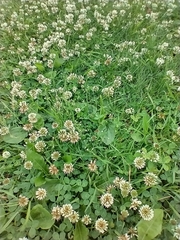
  • White CloverEats

    A common legume grazed by sheep.

  • HumansDepends on

    Humans provide food, shelter, and medical care for these livestock.

Safety

Danger 1/5 · Very low

Always be kind and gentle around sheep. They are friendly but can be startled easily, so approach calmly from the side, never from directly behind. Wash your hands with soap and water after touching sheep or their pens, and before you eat.

Traits

Collections

Classification

Kingdom
Animalia
Phylum
Chordata
Class
Mammalia
Order
Artiodactyla
Family
Bovidae
Genus
Ovis

Sources for these Suffolk sheep facts

31 studies and references · checked
  1. Banks MS, Sprague WW, Schmoll J, Parnell JA, Love GD (2015). Why do animal eyes have pupils of different shapes? Science Advances 1:e1500391.
  2. EFSA Panel on Animal Health and Animal Welfare (2024). Welfare of sheep and goats during killing for purposes other than slaughter. EFSA Journal 22:e8835.
  3. Schoenian S. Sheep senses. Sheep 101.
  4. Grandin T. Understanding flight zone and point of balance for low stress handling of cattle, sheep, and pigs.
  5. Suffolk Sheep Society. History.
  6. Wikipedia contributors. Suffolk sheep. Wikipedia.
  7. Schoenian S. Sheep breeds M–N (Norfolk Horn). Sheep 101.
  8. Schoenian S. Sheep behaviour. Sheep 101.
  9. Searby A, Jouventin P (2003). Mother-lamb acoustic recognition in sheep: a frequency coding. Proceedings of the Royal Society B 270:1765–1771.
  10. Schoenian S. Ruminants (cud chewing). Sheep 101.
  11. Schoenian S. Wool qualities. Sheep 101.
  12. Guinness World Records (2015). 'Chris' the shaggiest sheep ever is rescued by RSPCA and given a world record haircut.
  13. ABC News (2015). Wool world record: 40kg fleece shorn off overgrown sheep in Canberra, RSPCA says.
  14. Dwyer CM, Lawrence AB, Brown HE, Simm G (1996). Effect of ewe and lamb genotype on gestation length, lambing ease and neonatal behaviour of lambs. Reproduction, Fertility and Development 8:1123–1129.
  15. Kendrick KM, da Costa AP, Leigh AE, Hinton MR, Peirce JW (2001). Sheep don't forget a face. Nature 414:165–166.
  16. Knolle F, Goncalves RP, Morton AJ (2017). Sheep recognize familiar and unfamiliar human faces from two-dimensional images. Royal Society Open Science 4:171228.
  17. Morton AJ, Avanzo L (2011). Executive decision-making in the domestic sheep. PLoS ONE 6:e15752.
  18. Schoenian S. Shearing. Sheep 101.
  19. Schoenian S. Reproduction in the ewe. Sheep 101.
  20. Schoenian S. Lambing. Sheep 101.
  21. King AJ, Wilson AM, Wilshin SD, Lowe J, Haddadi H, Hailes S, Morton AJ (2012). Selfish-herd behaviour of sheep under threat. Current Biology 22:R561–R562.
  22. Schoenian S. Sheep basics. Sheep 101.
  23. Mereu P, Pirastru M, Scarpa F, et al. (2025). Mouflon and domestic sheep phylogeny: ancestry, domestication, and evolutionary dynamics. Life 15:1446.
  24. Harvey AG, Payne S (2002). The management of unwanted pre-sleep thoughts in insomnia: distraction with imagery versus general distraction. Behaviour Research and Therapy 40:267–277.
  25. Chessa B, Pereira F, Arnaud F, et al. (2009). Revealing the history of sheep domestication using retrovirus integrations. Science 324:532–536.
  26. Suffolk Sheep Society. Home page.
  27. Schoenian S. Sheep breeds S (Southdown, Spanish Merino). Sheep 101.
  28. Schoenian S. Sheep breeds D–F (Dorset). Sheep 101.
  29. IUCN Red List. Ovis gmelini (mouflon), Near Threatened. Status confirmed via Wikidata Q190294 (P141, P627 = 54940218).
  30. US Centers for Disease Control and Prevention (2026). Farm animals. Healthy Pets, Healthy People.
  31. Health and Safety Executive. Preventing or controlling ill health from animal contact at visitor attractions or open farms.

Frequently Asked Questions

How to identify Suffolk Sheep?

Compare ears, muzzle, tail, feet and coat markings. Size is hard to judge without something nearby for scale, and young mammals may not have adult coloring yet. Mammal Identifier: upload a photo and compare the visible details.

How long is Suffolk Sheep?

100-150 cm

How much does Suffolk Sheep weigh?

80-160 kg

How long does Suffolk Sheep live?

10-12 years

What does Suffolk Sheep eat?

Suffolk Sheep are plant-eaters that love to munch on grass and other plants.

Where is Suffolk Sheep usually found?

Farm

How many babies does Suffolk Sheep usually have?

1-3

Why do Suffolk sheep have black faces?

The black, wool-free face comes from the breed's Norfolk Horn ancestors, which also have black faces and legs. Early on, the breed was even called 'Black faces'.

Do Suffolk sheep have horns?

No. Suffolks are polled: neither ewes nor rams grow horns.

What are Suffolk sheep used for?

Mainly meat. Suffolk rams are widely used as terminal sires on other ewes to produce fast-growing lambs.

How much does a Suffolk sheep weigh?

In one study, adult Suffolk ewes averaged about 80 kg. Rams are usually heavier.

Can sheep really recognise faces?

Yes. Sheep remembered 50 sheep faces for more than 2 years, and trained sheep recognised celebrities from photos.

How far around can a sheep see?

Measured fields of view range from 190° to 306°, so sheep can see behind themselves without turning their heads. Only a narrow zone straight ahead is seen with both eyes.

Why do sheep need to be shorn?

Most sheep's wool keeps growing. Without shearing it gets heavy and dirty: one sheep unshorn for more than 5 years carried 41.1 kg of wool.

Is it safe to touch sheep on a farm visit?

Usually, if you follow the farm's rules and the staff's advice. Animals can carry germs that make people ill, so wash your hands with soap and water after touching sheep or their pens, and before you eat. Approach calmly from the side, never from directly behind.

Where to spot

Take the discovery with you

Found Suffolk Sheep?

Snap it with Snappit to identify it, learn what makes it special, and add the discovery to your collection.

  1. 1Spot it
  2. 2Snap it
  3. 3Keep the discovery

More Mammals