Tailed Cellar Spider
crossopriza lyoni
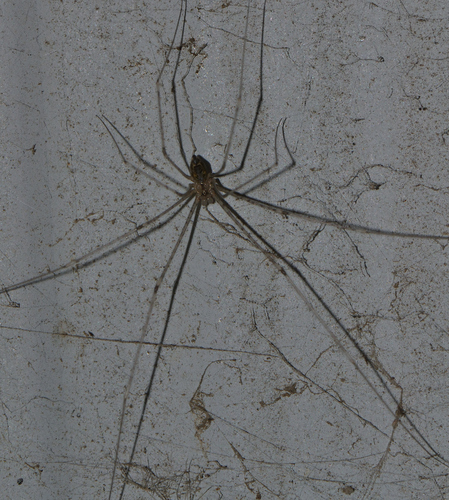
The Tailed Cellar Spider has long, skinny legs and a body that looks like it has a little tail! These spiders love to hang out in dark, cozy places like basements and caves.
Habitat: They live in dark, damp places like basements, caves, and under rocks.
The Tailed Cellar Spider has a pale brownish to grayish, slender body with long, delicate legs. Its most distinctive feature is a segmented, tail-like abdomen that tapers to a point, visually differentiating it from other cellar spiders.
Category
InvertebrateRarity
Common
Danger
1/5 · Very low
Snaps
2
Female Tailed Cellar Spiders carry their eggs in their jaws until they hatch!
If a Tailed Cellar Spider loses a leg, it can grow a new one back!
Some Tailed Cellar Spiders live in groups, sharing a web like a community!
They don't build neat spiral webs; instead, they spin a tangled, messy "cobweb"!
Tailed Cellar Spider has a flexible, segmented "tail" that helps them balance and quickly reorient themselves during movement or web repair.
Tailed Cellar Spider can sense tiny vibrations in their messy, irregular webs because of sensitive leg hairs that help them locate trapped prey.
Tailed Cellar Spider can play dead by freezing and dropping from its web, because this trick helps them escape from approaching predators.
Tailed Cellar Spider can hunt other spiders, even dangerous ones, because they are quick and wrap prey in silk from a safe distance.
These stealthy hunters mostly eat insects and other spiders caught in their messy webs.
Musca domestica
Frequently captures house flies in its web.
Latrodectus mactans
Known to hunt and kill dangerous black widow spiders.
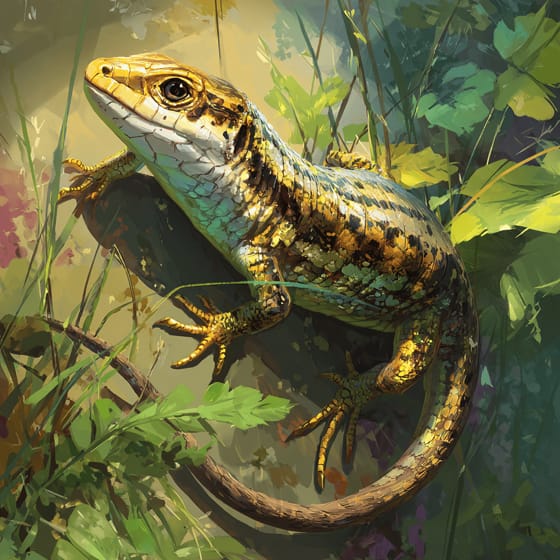
Podarcis muralis
Lizards may prey on cellar spiders encountered in homes.
Solitary animals live alone for most of their lives, only interacting with others for mating or parental care.
Camouflaged describes organisms that possess coloring or patterns that allow them to blend into their environment.
Forest habitats are terrestrial environments dominated by dense tree cover, supporting a high diversity of plant and animal life.
This trait identifies organisms whose diet consists entirely or primarily of animal tissue.

Nocturnal animals are primarily active during the nighttime hours, typically resting or sleeping during the day.
Danger
1/5 · Very low
No special safety notes yet.
The easiest way to identify Tailed Cellar Spider is to use the Snappit nature identifier app.
3 mm
50 mm
3 years
These stealthy hunters mostly eat insects and other spiders caught in their messy webs.
They live in dark, damp places like basements, caves, and under rocks.
Ambush
Zoom in to split clusters and explore where this object has been snapped.
Apr 24, 2025
Crowley Historic DistrictPhoto attribution
(c) Shannon Foreman, some rights reserved (CC BY)
License: CC BY 4.0 ↗
Image may be shown cropped inside the card frame.

Louisiana, US
You might spot Pectoral Sandpiper, Sprague's Pipit, and Anole.
View guide →

Georgia, US
You might spot Brown Anole, Northern Mockingbird, and Northern Cardinal.
View guide →
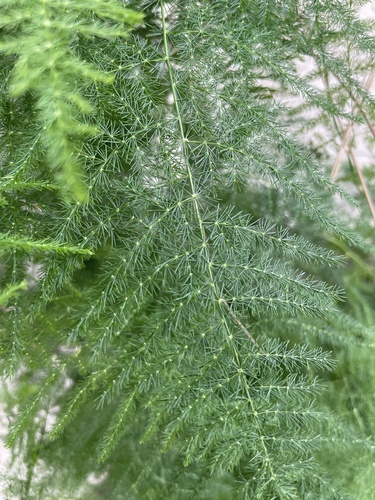
Florida, US
You might spot Common Asparagus Fern, Great Egret, and Baldcypress.
View guide →
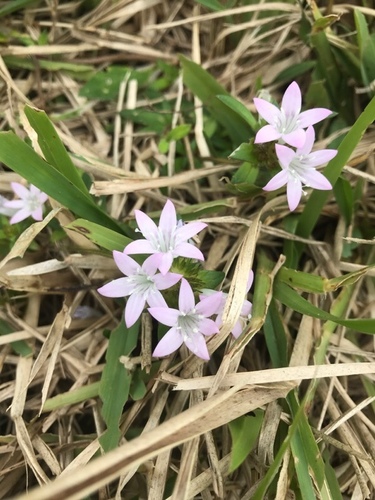
Florida, US
You might spot Largeflower Mexican Clover and Loggerhead Shrike.
View guide →
Take the discovery with you
Snap it with Snappit to identify it, learn what makes it special, and add the discovery to your collection.