




Tall False Hawksbeard
youngia thunbergiana
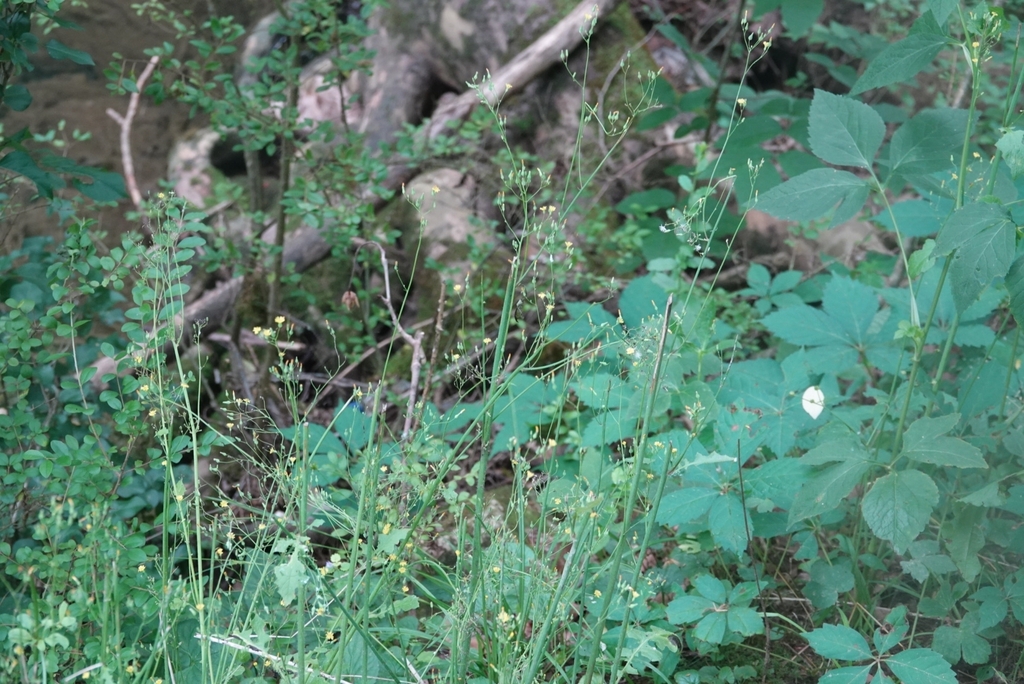
The Tall False Hawksbeard is a beautiful plant that can grow tall and has bright yellow flowers. It’s often found in meadows, bringing color and joy to the nature around us!
Habitat: Meadows and open fields
The Tall False Hawksbeard has bright yellow, dandelion-like flowers clustered on branched stems that can grow quite tall. Its leaves are often lobed or toothed, forming a basal rosette, and it stands out with its airy flower display.
Category
PlantsRarity
Common
Danger
0/5 · No known danger
Snaps
Be the first to snap!
Break its stem and a sticky, white 'milk' oozes out!
It's sometimes called 'oriental false hawksbeard' in English.
Its seeds have tiny 'parachutes' to fly far on the wind!
Often mistaken for a common dandelion, but it grows much taller.
Tall False Hawksbeard has tiny seeds with feathery tufts that help them float far on the wind, spreading to new places.
Tall False Hawksbeard can quickly grow back even if cut down, thanks to its strong, deep root system.
Tall False Hawksbeard produces a bitter, white latex sap that can deter hungry animals from taking a bite.
Apis mellifera
Visits flowers to collect nectar and pollen.
Aphis gossypii
Feeds on the plant's sap, potentially weakening it.
Carduelis sinica
Enjoys dining on its small, abundant seeds.
Colorful describes organisms or objects displaying a wide range of bright and distinct colors.
Grassland habitats are terrestrial biomes dominated by grasses and herbaceous plants, supporting a variety of grazing animals.
This trait characterizes organisms whose diet consists entirely or primarily of plant material.
Diurnal animals are primarily active during daylight hours, typically resting or sleeping at night.
Describes organisms that transfer pollen, enabling the fertilization and reproduction of plants.
Danger
0/5 · No known danger
No special safety notes yet.
Start with the whole plant, then compare leaf arrangement, leaf edges, stems and any flowers or fruit. Opposite leaves grow in pairs; alternate leaves come one at a time along the stem. These details tell you far more together than a single green leaf does. Plant Identifier: upload a photo and compare the visible details.
30-90 cm
20-40 cm
1-2.5 cm
Summer-fall
No
None
Perennial
Zoom in to split clusters and explore where this object has been snapped.
Recent snaps will appear here as new observations are added.
Take the discovery with you
Snap it with Snappit to identify it, learn what makes it special, and add the discovery to your collection.