





True Toads
Bufonidae
True toads are bumpy-skinned frogs that love to hop around! They can be found in many places and are known for their loud croaking sounds, especially at night.
Habitat: Wetlands
The True Toads have robust bodies and characteristically dry, warty skin, often appearing in shades of brown, green, or grey for camouflage. They typically possess horizontal pupils and prominent parotoid glands behind their eyes, which are distinct from the smooth skin of frogs.
Category
AmphibiansRarity
Common
Danger
2/5 · Low
Snaps
Be the first to snap!
Instead of jumping, many true toads walk or take short, deliberate hops.
Some toads hibernate underground or aestivate during hot, dry periods.
They absorb water through their skin, so they don't need to drink with their mouths.
Toad eggs are laid in long, jelly-like strings, not in clumps like most frogs.
True Toads have special glands behind their eyes that release a milky poison, helping them defend against predators.
True Toads can swallow their prey whole using their sticky tongues because they do not possess teeth to chew food.
True Toads can dig themselves backward into soft soil with strong hind legs, which helps them hide and escape heat.
They mostly eat insects and other small invertebrates they can swallow whole.
Age differences: Tadpoles are primarily detritivores, feeding on algae and decaying matter.
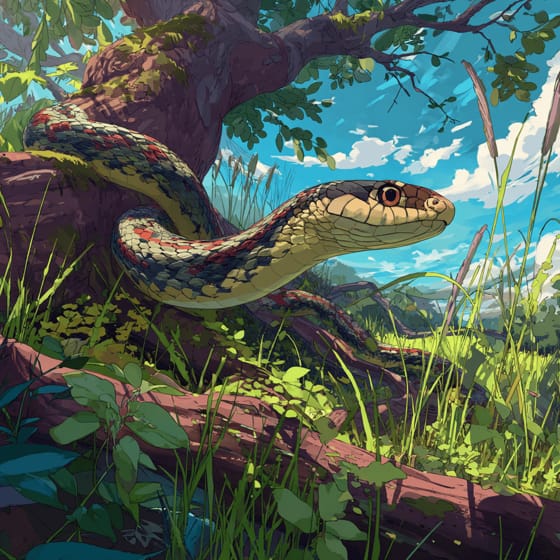
Thamnophis sirtalis
A common predator of toads.

Procyon lotor
Known to eat amphibians.
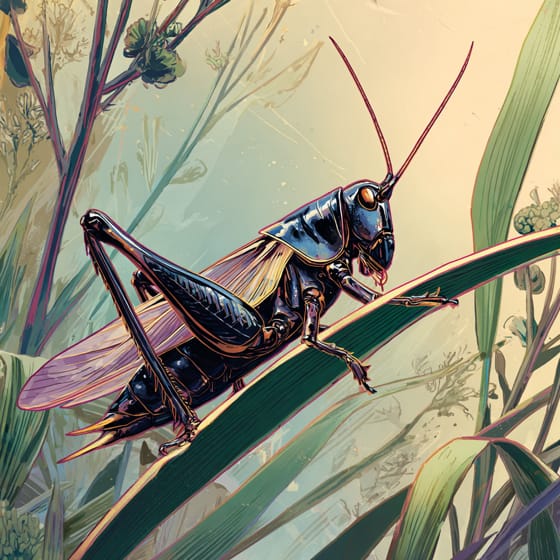
Gryllus assimilis
A primary insect prey.
Arion vulgaris
Toads consume various slugs.
Solitary animals live alone for most of their lives, only interacting with others for mating or parental care.
Camouflaged describes organisms that possess coloring or patterns that allow them to blend into their environment.
This trait identifies organisms whose diet primarily consists of insects and other small invertebrates.
This trait characterizes organisms with an exceptionally long lifespan compared to others of their kind.

This habitat trait identifies species found in wetlands, which are areas of land saturated with water, either permanently or seasonally, including marshes, swamps, and bogs.

Describes a species whose presence and role have a disproportionately large effect on its environment.

Nocturnal animals are primarily active during the nighttime hours, typically resting or sleeping during the day.
No aliases listed yet.
Danger
2/5 · Low
Always wash your hands after touching a toad, as they can have special skin that might not be safe to touch.
The easiest way to identify True Toads is to use the Snappit nature identifier app.
2-20 cm
0.01-1 kg
5-15 years
2 km/h
They mostly eat insects and other small invertebrates they can swallow whole.
Wetlands
Ambush
Zoom in to split clusters and explore where this object has been snapped.
Recent snaps will appear here as new observations are added.
Take the discovery with you
Snap it with Snappit to identify it, learn what makes it special, and add the discovery to your collection.








.JPG&width=800)



.jpg&width=800)