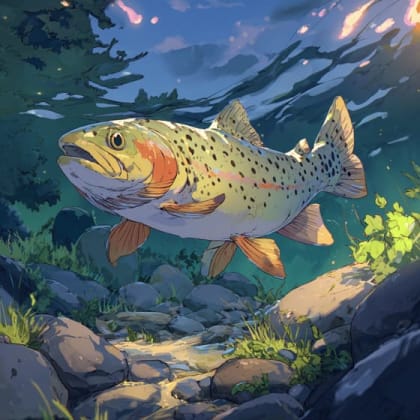
Turbot
Scophthalmus maximus
Turbot is a flat fish that has a thick body and is known for its delicious taste. They live on the seabed and love to hide!
Habitat: Ocean floor
The Turbot has a unique, almost circular or diamond-shaped, very flat body. Its skin is mottled brown, grey, or greenish, often covered in bony, wart-like tubercles. Both eyes are on its left, upper side, allowing it to rest camouflaged on the seafloor.
Category
FishRarity
Common
Danger
2/5 · Low
Snaps
Be the first to snap!
As they grow, one eye actually travels over their head to the other side! Wow!
Did you know Turbot start life swimming upright, just like regular fish?
These fish can grow super big, sometimes weighing more than a large dog!
Turbot are a type of 'flatfish,' perfectly designed to live on the ocean floor.
Turbot can quickly change its skin color to perfectly match the sandy or gravelly seabed, helping it hide from predators and ambush prey.
Turbot has a super flat body that lets it bury itself partly or completely into the sand, becoming invisible to others.
Turbot has both eyes on one side of its head, allowing it to scan for food and danger while lying flat on the ocean floor.
A sneaky bottom-dweller that ambushes small fish and crustaceans from its sandy hideout.
Age differences: Young turbot primarily eat small invertebrates; as they grow, their diet shifts mainly to small fish.
Halichoerus grypus
Seals hunt Turbot as a common part of their varied marine diet.
Squalus acanthias
These small sharks prey on Turbot and other bottom-dwelling fish.
Ammodytes marinus
Turbot ambush sandeels hiding in the sand for a quick meal.
Crangon crangon
Turbot also feasts on shrimp, snapping them up from the seafloor.
Wildlife encompasses all undomesticated animal and plant life existing in their natural habitats.
Solitary animals live alone for most of their lives, only interacting with others for mating or parental care.
Camouflaged describes organisms that possess coloring or patterns that allow them to blend into their environment.
Piscivorous organisms are animals that primarily subsist on a diet of fish.

Aquatic habitats encompass environments where organisms live predominantly in water, including oceans, rivers, lakes, and wetlands.

Giant describes organisms or objects of significantly larger size than average for their species or type.

Marine habitats encompass all saltwater environments of the Earth's oceans, supporting an immense diversity of aquatic life.
Danger
2/5 · Low
Watch quietly from a distance and never try to feed or chase wild animals.
The easiest way to identify Turbot is to use the Snappit nature identifier app.
50-100 cm
5-25 kg
15-25 years
A sneaky bottom-dweller that ambushes small fish and crustaceans from its sandy hideout.
8 km/h
Ocean floor
Ambush
Zoom in to split clusters and explore where this object has been snapped.
Recent snaps will appear here as new observations are added.
Take the discovery with you
Snap it with Snappit to identify it, learn what makes it special, and add the discovery to your collection.