





Turfgrass Ant
lasius neoniger
Turfgrass ants are tiny but mighty! They work together in big groups to build their homes underground.
Habitat: They live in gardens, lawns, and grassy areas.
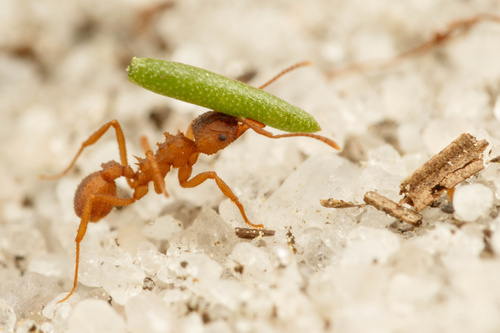
The Turfgrass Ant is a small, dark brown to black insect with a shiny, compact body. Its uniform dark color helps it blend in with soil, making it distinct from ants with multiple colors or fuzzier bodies.
Category
InsectsRarity
Common
Danger
1/5 · Very low
Snaps
3
A single queen can live over 15 years, starting huge colonies!
Ants often 'dance' with their antennae to greet and recognize friends.
Their nests can dive several feet deep to escape winter's chill.
They 'milk' tiny insects called aphids for a sugary liquid treat.
Turfgrass Ant can survive freezing temperatures by digging deep underground to hibernate through winter.
Turfgrass Ant has a special "farming" skill that helps them protect aphids for their sweet honeydew.
Turfgrass Ant can communicate using invisible scent trails that helps them find food and guide nestmates.
Turfgrass Ant can build vast underground tunnels that help aerate the soil and create safe homes.
Mainly enjoys sweet aphid honeydew, but also eats tiny insects and seeds.
Aphis fabae
tends for honeydew
Rhopalosiphum maidis
protects aphid colonies on corn
Spodoptera frugiperda
preys on larvae for protein
.jpg&width=800)
Dendroica coronata
is a food source for birds
Social animals live in organized groups, cooperating for survival benefits such as foraging, defense, and raising offspring.
Burrowing animals dig tunnels and chambers in the ground, using these subterranean structures for shelter, hunting, or breeding.
Grassland habitats are terrestrial biomes dominated by grasses and herbaceous plants, supporting a variety of grazing animals.
Describes organisms that break down dead organic material, recycling nutrients back into the ecosystem.

Diurnal animals are primarily active during daylight hours, typically resting or sleeping at night.
Danger
1/5 · Very low
No special safety notes yet.
The easiest way to identify Turfgrass Ant is to use the Snappit nature identifier app.
2-9 mm
365-7300 days
Mainly enjoys sweet aphid honeydew, but also eats tiny insects and seeds.
They live in gardens, lawns, and grassy areas.
Foraging
6
50000
Zoom in to split clusters and explore where this object has been snapped.

Ohio, US
You might spot Blue-Fronted Dancer, American Rubyspot, and Fowler's Toad.
View guide →

Ohio, US
You might spot Brown-Belted Bumble Bee and Eastern Carpenter Bee.
View guide →

Ohio, US
You might spot Spotted Lanternfly, Virginia Springbeauty, and Blue Phlox.
View guide →

New Jersey, US
You might spot African Elephant, White Rhinoceros, and Grant's Zebra.
View guide →
New York, US
You might spot Northern Fungus-Farming Ant and Bronzed Tiger Beetle.
View guide →
Take the discovery with you
Snap it with Snappit to identify it, learn what makes it special, and add the discovery to your collection.







.jpg&width=800)




