Carpenter Ant
Upload a close-up of one ant to check its antennae, waist and wings, even if it might be a termite. Then dig into the Snappit field guide to learn more.
Identify and collect animals with your phone.


Drag a photo here, or choose one below.
JPG, PNG or WebP · Up to 10 MB

Get a sharp side-on close-up with the antennae and narrow waist in view. Don't dig into a colony to find queens or winged ants.


Compare the suggested name with what you see in your photo. Then open its field-guide entry for fun facts and look-alikes to rule out.

Browse the field guide here, or save your finds as collectible cards in the Snappit app. Build collections and learn something new together.
Real ant cards from the Snappit field guide. Tap one to see how the colony lives.
For a tiny ant indoors, one well-lit ant tells you more than a photo of the whole trail. Look for bent antennae, the narrow waist and any small waist nodes you can see. Winged ants need one more check against termites, which have a different body shape and wing proportions.

Ants have a pinched waist with one or two small bumps, called nodes, between the middle section and the abdomen. In a clear side view, those bumps help separate many ant groups. In a blurry top view they can vanish, so this clue only works when the angle cooperates.

Ant antennae bend like an elbow: a long first segment, then a sharp angle. That bend is one of the quickest ways to tell an ant from a termite. Tiny antennae blur easily, so look for the overall kink instead of trying to count segments.

Body proportions matter more than whether an ant looks red or black. Some ants have huge heads, some have a long narrow middle, and some look compact and blocky. Comparing head size, waist length and abdomen shape often narrows things down even when fine texture and tiny hairs don't show.

Winged ants are reproductive males and queens, not a separate kind of household bug. When wings show, check whether the front pair is longer than the hind pair and whether the body still has a narrow waist. Folded or broken wings can hide those clues, so a full-body view helps.
Compare real field-guide examples: Carpenter Ant · Field Ant · Odorous House Ant

Winged ants and termites get mixed up all the time. Ants have elbowed antennae, a clearly narrow waist and front wings longer than the hind wings. Termites look evenly thick through the body, with straight, beaded antennae and two pairs of wings about the same length.

A small wasp can look a lot like an ant, especially if it's dark. Ants have obvious elbowed antennae and one or two waist nodes that look like little bumps. Many tiny wasps have a smoother, threadlike waist and a slimmer, glossier outline, though there's some overlap.

Workers are the wingless ants you see on the ground or marching across the kitchen. Reproductive ants, the queens and males, usually have wings. A queen that has shed her wings may keep small wing scars and a bulky middle section. Size alone doesn't make an ant a queen.

Indoor photos often catch very small ants crossing counters, windowsills or the edge of the bathtub. Here, color is usually the weakest clue, because lighting can turn brown ants nearly black or make dark ants look rusty red. Start instead with the elbowed antennae, the pinched waist, and whether the body looks evenly sized or clearly split into head, middle and abdomen. If you already suspect a local species, check that idea against a regional guide.
Photos of trails, dirt piles or bits of wood rarely identify an ant on their own. To link a nest entrance to a type of ant, you need ants visible near it and ideally one sharp close-up. A mound in the soil, a crack in the mortar or sawdust-like debris is worth noticing, but none of these proves which insect made it. The ant's body shape usually tells you more than the scene around it.

When a photo shows a big ant with wings, the first question is usually worker or reproductive. Winged reproductives have a bulkier middle section than workers because the flight muscles sit there, so the body looks deeper between the head and abdomen. Queens are often larger and heavier than workers of the same species, while males also have wings and tend to look slimmer. A clear side or top view lets you judge the narrow waist, the antenna bend and the wing lengths together.
A queen that has dropped her wings is trickier. She may still look oversized, but the best clue is usually that enlarged middle section left over from her mating flight, sometimes with small wing scars if the photo is crisp. From a single image you can often get a confident answer like ant, winged ant or termite, but naming the exact species may need magnified details, such as tiny surface sculpturing or hairs, that a normal phone photo won't capture.
Pick one sharp ant instead of a whole moving trail. A close side view or slight angle shows the waist nodes and antenna bend better than a wide shot.

Shoot from the side or slightly above if you can. Those angles show the pinched waist and elbowed antennae much better than a straight head-on shot.

For flying ants, a top view with both pairs of wings visible is especially useful. If you took several shots, upload the clearest one.
Check the antennae, waist and wings together. Flying ants have elbowed antennae, a narrow pinched waist and front wings longer than the hind wings. Termites look thick through the middle, with straight, beaded antennae and two pairs of wings that are about the same length.
Photograph one ant up close in good light rather than the whole trail. A side view or slight angle shows the antenna bend and waist nodes best. Countertops, grout lines or windowsills give a sense of scale, but body shape is still the stronger clue.
Not reliably. Lighting, white balance and shiny bodies can make the same ant look red-brown or almost black in photos. Color helps when you combine it with size and structure, but head shape, waist nodes and wings matter more.
Rarely on its own. Soil mounds, wall cracks and wood debris look similar no matter which insect made them. The most useful nest photo shows actual ants near the entrance, plus at least one sharp close-up of a single ant.
It's a reproductive ant, but not necessarily a queen. Queens usually have a larger, deeper middle section and a heavier body overall. Males have wings too and can be dark and ant-like, so look at the whole body shape, not just size.
No, a photo of a bite or rash can't pin it on ants. Lots of insects and other irritants leave similar marks. A photo of the insect itself can help tell an ant from a termite or wasp, but it's not a way to diagnose a bite.
Workers never have wings and have a slimmer middle section. Winged queens and males have a bulkier middle section built for flight. After a queen sheds her wings, that bulky middle and small wing scars often stay visible, so compare several features instead of assuming every big ant is a queen.
Yes, Snappit – Identify Anything for iPhone and Android identifies ants, other insects, plants, birds and more from a photo. Each find becomes a collectible card with a rarity tier and kid-friendly facts, saved privately with no ads or chat. It's free to download with free daily IDs; a subscription unlocks unlimited snaps.
The Snappit appAges 4+ · No ads
Take what you learn here into Snappit and turn your next walk or day out into a shared adventure.
Save your discoveries as collectible cards in the app, with rarity tiers and themed collections to explore.
Short, friendly facts give young readers something to notice, ask about, and remember. The app is made for ages 4 and up, without ads.
Discover new collection themes, try the daily discovery, and earn badges as you keep exploring together.


Open a place guide to see its species checklist and plan what to look for on your next visit.
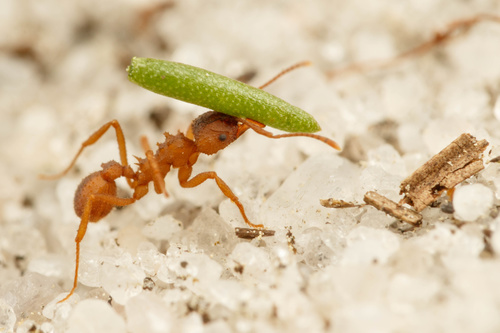
New York, US
You might spot Northern Fungus-Farming Ant and Davis' Big-Headed Ant.
View guide →

British Columbia, CA
You might spot Manica and Western Thatching Ant.
View guide →

New York, US
You might spot Winnow Ant and Yellow-Footed Ant.
View guide →