

Typical Boobies
sula
Typical Boobies of the genus Sula are iconic seabirds celebrated for their comical courtship rituals and remarkable hunting prowess. Spending much of their lives soaring over tropical and subtropical seas, these birds are instantly recognizable by their streamlined bodies and vibrantly colored feet. They breed in large, noisy colonies on isolated islands, where pairs engage in elaborate dancing displays—stepping slowly and lifting their colorful feet to impress prospective mates. Their survival is intimately tied to the health of marine ecosystems, making them key indicator species for ocean conservation. Beyond their humorous land-based antics, they are elite athletes of the avian world, possessing extraordinary physiological adaptations designed for high-impact plunge-diving. Watching a flock of boobies dive in unison is one of nature's most thrilling spectacles, capturing the raw energy of the open ocean.
Habitat: Found nesting on isolated tropical and subtropical rocky islands, coastal cliffs, and coral atolls, while spending their foraging time over open marine waters.
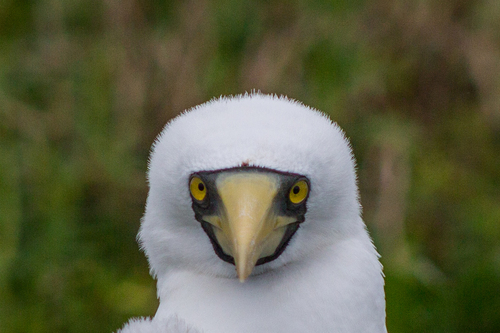
Typical Boobies are large, streamlined seabirds characterized by long, pointed wings, a wedge-shaped tail, and a stout, conical bill. They possess striking, species-specific foot coloration ranging from vibrant electric blue to intense red or bright yellow. Their plumage is typically a combination of clean white underparts and dark brown or black on the back and wings, accented by naked, colorful skin around the face and throat.
Category
BirdsRarity
Common
Danger
1/5 · Very low
Snaps
Be the first to snap!
The intensity of the blue color in the Blue-footed Booby's feet is a direct reflection of its current health; it is derived from carotenoid pigments in the fresh fish they eat, acting as an honest signal to potential mates.
The name 'booby' is believed to originate from the Spanish word 'bobo', meaning stupid or clownish, which early sailors used to describe the birds' lack of fear and clumsy behavior on land.
To survive the incredible pressure of plunge-diving, boobies lack external nostrils on their bills, instead breathing through the corners of their mouths.
Boobies can plunge-dive into the ocean from heights of up to 30 meters, reaching speeds of nearly 100 kilometers per hour to catch fish deep below the surface.
They possess specialized air sacs beneath the skin of their face and chest that inflate to cushion the brain and body from the massive impact of hitting the water.
Lacking a traditional brood patch, these birds use their large, highly vascularized webbed feet to wrap around and warm their eggs.
These birds are specialized piscivores that feed almost exclusively on small schooling fish and squid captured through dramatic, high-speed aerial dives.
Age differences: Chicks are fed regurgitated, partially digested fish by both parents, gradually transitioning to solid, whole fish as they mature.
Fregata magnificens
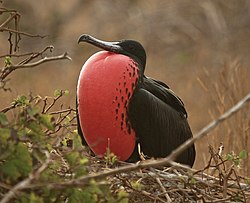
Magnificent Frigatebirds routinely harass flying boobies in mid-air, biting their tails and wings to force them to regurgitate their fish catch, which the frigatebirds then steal.
Sardinops sagax
Boobies are highly dependent on healthy schools of Pacific Sardines as a foundational food source, particularly during the energetic breeding and nesting seasons.
Felis catus
Introduced Feral Cats on nesting islands are highly destructive predators that kill and consume vulnerable booby eggs and ground-nesting chicks.
No trait badges are assigned for this object yet.
Collections for this object will appear here as more themes are added.
Danger
1/5 · Very low
No special safety notes yet.
Compare the silhouette, bill shape, tail length, wing bars and markings around the eyes. The same small brown bird at your feeder can look quite different in breeding plumage, winter plumage or its first year. Bird Identifier: upload a photo and compare the visible details.
0.8+ kg
97 km/h
These birds are specialized piscivores that feed almost exclusively on small schooling fish and squid captured through dramatic, high-speed aerial dives.
Found nesting on isolated tropical and subtropical rocky islands, coastal cliffs, and coral atolls, while spending their foraging time over open marine waters.
Pursuit
3000 km
Zoom in to split clusters and explore where this object has been snapped.
Recent snaps will appear here as new observations are added.

Hawaii, US
You might spot Yellow ʻilima, Red-Tailed Tropicbird, and White Leadtree.
View guide →

Hawaii, US
You might spot Bottlenose Dolphin, Sea Lion, and Sea Turtle.
View guide →
Take the discovery with you
Snap it with Snappit to identify it, learn what makes it special, and add the discovery to your collection.