
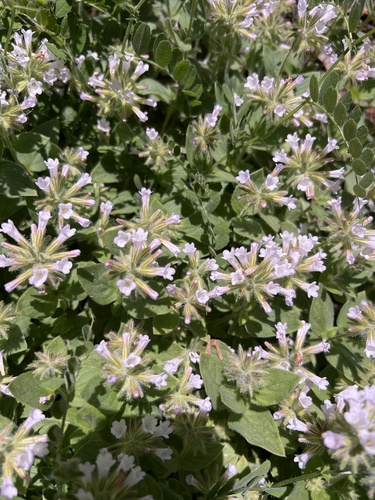


Violet Draperia
draperia systyla
The Violet Draperia (Draperia systyla) is a captivating, low-growing perennial herb native to the rich montane forests of southern Oregon and northern California. As the sole member of its genus, this unique botanical gem forms spreading carpets of soft green foliage on the shady forest floor, nestled beneath towering conifers. It is highly valued by native pollinators who rely on its nectar during the warm summer months. This resilient plant has intrigued botanists due to its monotypic status and its specialized survival mechanisms in fire-prone ecosystems. Its delicate appearance belies a hardy nature, allowing it to thrive in rugged, rocky terrains where other wildflowers struggle. Encountering a patch of its pale purple blossoms is a true delight for hikers exploring the Klamath and Sierra Nevada ranges.
Habitat: Typically found on shaded forest floors, dry ridges, and rocky slopes of montane conifer forests.
This low-growing perennial herb typically reaches heights of 10 to 40 centimeters, forming soft, sprawling mats. It features opposite, oval-shaped leaves with prominent veins, entirely covered in soft, glandular, sticky hairs that give the plant a fuzzy texture. The flowers are small, bell-shaped, and arranged in coiled, one-sided clusters. They range in color from pale lavender and light violet to nearly white, blooming prominently from May to August.
Category
PlantsRarity
Common
Danger
1/5 · Very low
Snaps
Be the first to snap!
Fuzzy Armor: The sticky hairs covering the plant act as a natural defense system, trapping small insects and deterring larger grazing animals.
Only One of Its Kind: Violet Draperia is a monotypic species, meaning it is the single, unique species residing within the genus Draperia.
Post-Fire Pioneer: While wildfire can destroy the surface foliage, the plant's deep roots allow it to be among the first wildflowers to sprout back in scorched areas.
Utilizes underground rhizomes to survive wildfires and quickly resprout, colonizing disturbed forest floors.
Produces dense, sticky hairs on its stems and leaves to reduce transpiration and discourage herbivores.
Possesses a highly specialized evolutionary lineage adapted to thriving in competitive, nutrient-poor montane soils.
Uses photosynthesis to convert sunlight, water, and carbon dioxide into sugars, while drawing essential nutrients through its roots.
Bombus vosnesenskii
Forages on the flowers for nectar, facilitating pollination for the plant.
Odocoileus hemionus
Occasionally browses on the leaves and stems, though discouraged by the plant's sticky hairs.
No trait badges are assigned for this object yet.
No aliases listed yet.
Collections for this object will appear here as more themes are added.
Danger
1/5 · Very low
No special safety notes yet.
Start with the whole plant, then compare leaf arrangement, leaf edges, stems and any flowers or fruit. Opposite leaves grow in pairs; alternate leaves come one at a time along the stem. These details tell you far more together than a single green leaf does. Plant Identifier: upload a photo and compare the visible details.
10+ cm
Uses photosynthesis to convert sunlight, water, and carbon dioxide into sugars, while drawing essential nutrients through its roots.
Typically found on shaded forest floors, dry ridges, and rocky slopes of montane conifer forests.
Zoom in to split clusters and explore where this object has been snapped.
Recent snaps will appear here as new observations are added.
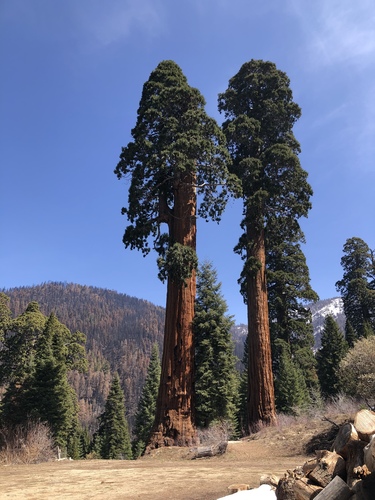
California, US
You might spot Sequoia, Mountain Misery, and Black Bear.
View guide →

California, US
You might spot Sequoia, California Incense-Cedar, and White Fir.
View guide →

California, US
You might spot Sequoia, Mule Deer, and Black Bear.
View guide →

California, US
You might spot Sequoia, Mule Deer, and Black Bear.
View guide →

California, US
You might spot California Ground Squirrel and Western Fence Lizard.
View guide →
Take the discovery with you
Snap it with Snappit to identify it, learn what makes it special, and add the discovery to your collection.

















