




Sequoia

Black Mountain Grove offers an awe-inspiring journey into a world of ancient giants.
Black Mountain Grove offers an awe-inspiring journey into a world of ancient giants.
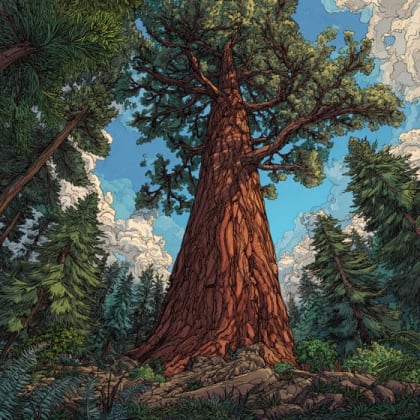
This magnificent giant sequoia grove, nestled within the Giant Sequoia National Monument in California, is home to over 500 colossal trees, making it one of the world's six largest sequoia groves by specimens. Spanning more than 1,000 acres, it presents a stunning landscape where venerable old-growth giants stand alongside regenerating younger trees, creating a diverse and captivating forest environment. The grove's remote and attractive setting, characterized by its dense clusters of sequoias in sheltered ravines, provides a profound connection to nature's grandeur.
Visitors to Black Mountain Grove can encounter several individually notable giant sequoias, each with its own unique character and story. Among these are the "Black Mountain Beauty," recognized as the largest tree within the grove and the 19th largest in the entire Giant Sequoia National Monument, and "Patriarch II," the grove's second-largest specimen. The "Blasted Mammoth," despite its broken top, remains a significant and living giant, while the "Flower Pot Tree" boasts a Pacific dogwood growing from its canopy, adding a touch of botanical intrigue. Other distinctive trees like "Snaggle-Top" and "Twisted Harlequin" with its striking red and pink-colored bark further enrich the photographic opportunities and sense of discovery within this ancient forest. Beyond the giant sequoias, the grove also features a rich tapestry of other tree species, including ponderosa pine, willow, dogwood, white fir, black oak, incense cedar, and even the rare and impressive sugar pine.
Exploring Black Mountain Grove is an unforgettable experience, whether by driving its well-maintained dirt road, cycling, or embarking on foot to discover its hidden treasures. The sheer scale and majesty of these ancient trees invite contemplation and appreciation for their resilience and ecological significance. It's a place where history, conservation, and natural beauty converge, offering a serene escape and a profound encounter with some of the planet's most monumental living beings. Enhance your adventure: download the Snappit app to identify the local species you encounter.
Black Mountain Grove holds a significant place in the history of giant sequoia conservation. It was a pivotal site in the movement to halt the logging of sequoia groves, playing a crucial role in the eventual establishment of the Giant Sequoia National Monument. In the early 1970s, some of the earliest timber harvesting in giant sequoia groves occurred here, initially intended to improve grove health. However, larger-scale harvesting in 1985-1986 ignited a national controversy regarding the U.S. Forest Service's management of these irreplaceable groves. This widespread concern led to a 1987 lawsuit filed by the Sierra Club against the Solo Timber Sale, advocating for the restoration of the groves to their natural state. The subsequent 1990 Mediated Settlement Agreement extended grove boundaries and prohibited timber harvesting within them. In 1992, President Bush further reinforced these protections, fully shielding the sequoias from harvesting, mining, and development. The grove has also faced challenges from wildfires, with significant events in 1928, 2008, and the 2017 Pier Fire, which tragically impacted some of its large sequoias. Today, stewards, including the Tule River Indian Tribe, actively manage the grove through prescribed burning, thinning, and monitoring to enhance its resilience against ongoing environmental threats.
Drive or cycle the 9-mile dirt road that winds through the grove, stopping at pullouts to take short walks into the sequoia clusters. Engage in photography, nature observation, and simply marvel at the scale of these ancient trees. Look for unique specimens like the Flower Pot Tree or Twisted Harlequin.
Summers are typically dry and hot, carrying a higher risk of wildfires. Winters are cold and fresh, with snow often limiting access to snowmobiles. Spring brings melting snow, which can result in muddy road conditions. Fall offers crisp air and can be a good time to avoid peak summer crowds.
The grove is primarily accessed via a well-maintained, drivable dirt road. While this allows for car-based exploration, venturing deeper into the sequoia clusters may involve uneven, unpaved terrain. There are no explicitly mentioned paved trails or specific accessibility features for wheelchairs within the grove's core.
The main highlights are the individual named giant sequoias such as Black Mountain Beauty, Patriarch II, and Blasted Mammoth, as well as the dense clusters of these magnificent trees found in various ravines.
Each card links to a full Explore page with photos, traits, and fun facts.
Start with the big picture, then zoom in to explore individual wildlife observations around this place.
Check Road Conditions
Before heading out, confirm the status of the dirt roads leading into the grove, especially outside of peak summer months, as they can be impacted by weather.
Bring Essentials
The grove is remote, so pack sufficient water, snacks, and any other supplies you might need. There are no services directly within the grove.
Wear Appropriate Footwear
While some areas are accessible by car, exploring the sequoia clusters often involves walking on unpaved, uneven terrain. Sturdy hiking shoes are recommended.
Practice Leave No Trace
Help preserve the natural beauty of Black Mountain Grove by packing out everything you pack in, including all trash.
Be Fire Aware
During dry periods, particularly in summer, wildfire risk is high. Be mindful of any fire restrictions in place.
Look for Wildlife
The grove supports diverse wildlife. Keep an eye out for birds and small mammals. While not always seen, black bears are present in the wider Giant Sequoia National Monument area, so practice bear-safe habits.
Mar 14, 2026
Photo attribution
no rights reserved
License: CC0 1.0 ↗
Image may be shown cropped inside the card frame.
Mar 10, 2026
Photo attribution
(c) Corey Shake, some rights reserved (CC BY)
License: CC BY 4.0 ↗
Image may be shown cropped inside the card frame.
Jun 2, 2026
Jun 2, 2026
May 25, 2026

Maryland, US
You might spot White-Tailed Deer and Eastern Gray Squirrel.
View guide →
.jpg)
District of Columbia, US
You might spot Eastern Gray Squirrel, Duck, and House Sparrow.
View guide →

Illinois, US
You might spot American Robin, Canada Goose, and House Sparrow.
View guide →

Virginia, US
You might spot Spotted Lanternfly and Northern Cardinal.
View guide →
Take the discovery with you
Identify the wildlife you spot, learn as you go, and keep a collection of the adventure.