




Sequoia
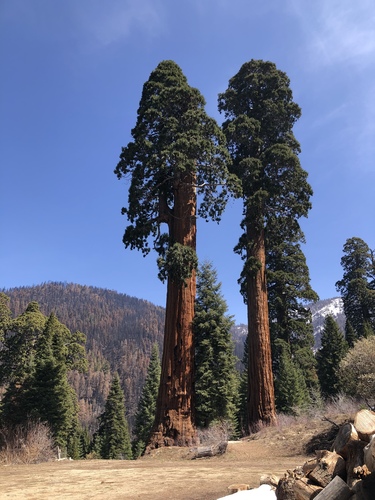
Atwell Mill Grove offers a majestic encounter with some of Earth's largest living organisms.
Atwell Mill Grove offers a majestic encounter with some of Earth's largest living organisms. This stunning giant sequoia grove, nestled within Sequoia National Park, provides a more secluded and rugged experience compared to other, more heavily visited groves. Visitors can immerse themselves in a serene forest setting where ancient giants tower, creating an awe-inspiring atmosphere of timeless natural beauty.
The grove is home to several exceptional sequoias, including the Diamond Tree, which stands nearly 290 feet tall and is the largest in the grove. Other notable trees include the Dean Tree, ranking among the top 30 giant sequoias globally with a volume of over 32,000 cubic feet, and the Arm Tree, known for having the largest limb of any tree worldwide, measuring approximately 12 feet in diameter. The unique Atwell Tunnel Tree also offers a fascinating sight with its internal cavity large enough to "hold three Volkswagen Bugs." Hiking through the grove reveals not only these monumental trees but also the East Fork of the Kaweah River and diverse mixed-conifer forests featuring ponderosa pines, sugar pines, Jeffrey pines, white firs, and incense cedars.
Visiting Atwell Mill Grove is an unforgettable journey into the heart of an ancient forest, providing a profound sense of scale and natural wonder. It’s a perfect destination for those seeking tranquility, impressive photographic opportunities, and a deep connection with nature away from the main park crowds. The challenging drive to the grove only enhances the feeling of discovering a hidden gem, rewarding adventurers with unparalleled views and a unique perspective on these magnificent trees. Be ready to snap and learn! Get the Snappit app to identify any nature species you find here.
Atwell Mill Grove, also known as the Skinner Grove of Big Trees, has a history intertwined with early California settlement and conservation efforts. The grove was originally home to a sawmill, Atwell Mill, built in 1879. This mill processed giant sequoia logs into lumber for local homes and shingles. The property eventually came into the possession of A.J. Atwell and later D.E. Skinner, who donated the land to the Department of the Interior. Though initially excluded, Atwell Mill Grove became part of Sequoia National Park with the park's expansion on October 1, 1890, protecting it from further logging. Despite its early history of logging, many magnificent sequoias remain, and visitors today can still see enormous stumps from this era, now often surrounded by younger sequoias, offering a poignant reminder of the grove's past and its resilience.
Hiking among the giant sequoias, photography, exploring historic logging remnants, and enjoying the tranquility of the East Fork of the Kaweah River. The Atwell-Hockett Trail begins here, providing access to more extensive backcountry hikes.
Summer (June-August): Warm, sunny weather, all roads and facilities typically open. Higher visitor numbers.
Fall (September-October): Cooler temperatures, fewer crowds, potential for early snow later in the season. Mineral King Road closes in late October.
Winter (November-April): Road access is closed due to snow.
Spring (May): Road opens, but can still have snow; potable water may not be available at the campground.
Atwell Mill Campground features an accessible campsite (Site 12) with a paved parking space, level tent pad, accessible picnic table, and grill. An accessible vault toilet and water spigot are also available. An accessible restroom with flush toilets and running water is located 8 miles before the campground on Mineral King Road. The Paradise Ridge Trail starts from the campground, but sections can be steep.
The tallest in the grove, standing at almost 290 feet.
One of the top 30 largest giant sequoias in the world by volume.
Famous for having the world's largest known tree limb.
A sequoia with an impressive internal cavity.
Each card links to a full Explore page with photos, traits, and fun facts.
Start with the big picture, then zoom in to explore individual wildlife observations around this place.
Prepare for the drive
Mineral King Road is narrow, winding, and unpaved in sections, with steep grades. Allow extra time (approximately 1.5 hours from Highway 198) and avoid taking RVs or trailers.
Check road conditions
Mineral King Road is seasonal and typically closes from late October through late May due to snow. Always check the official Sequoia National Park website for current road conditions before your visit.
Bring bear-safe food storage
This is bear country. Store all food and scented items in provided bear lockers or bear-resistant containers.
Pack layers and water
Even in summer, mountain weather can change quickly. Bring layers of clothing, rain gear, and plenty of water, as potable water might be seasonal at the campground.
Wear sturdy hiking shoes
The terrain in the grove and on trails can be steep and uneven.
Download maps offline
Cell service and internet connectivity are not available in the area.
Aug 29, 2025
Photo attribution
(c) Cayman Lanzone, some rights reserved (CC BY)
License: CC BY 4.0 ↗
Image may be shown cropped inside the card frame.
Apr 30, 2026
Apr 30, 2026
Apr 30, 2026
Apr 30, 2026

Maryland, US
You might spot White-Tailed Deer and Eastern Gray Squirrel.
View guide →
.jpg)
District of Columbia, US
You might spot Eastern Gray Squirrel, Duck, and House Sparrow.
View guide →

Illinois, US
You might spot American Robin, Canada Goose, and House Sparrow.
View guide →

Virginia, US
You might spot Spotted Lanternfly and Northern Cardinal.
View guide →
Take the discovery with you
Identify the wildlife you spot, learn as you go, and keep a collection of the adventure.