





Virginia spiderwort
Tradescantia virginiana
Virginia spiderwort is a beautiful flower with long, green leaves and bright blue or purple blooms. It loves to grow in sunny spots and can be found in gardens and fields.
Habitat: Fields and gardens
The Virginia spiderwort has striking three-petaled flowers, typically vibrant purple-blue, but sometimes pink or white. These delicate blossoms emerge from grass-like, linear leaves, forming clumps in gardens and wild spaces. Its unique flower shape helps it stand out.
Category
PlantsRarity
Common
Danger
1/5 · Very low
Snaps
7
Each flower lasts one day, but fresh new ones grow every morning!
Its sticky sap stretches like spiderwebs when stems break, earning its name!
Its tiny stamen hairs are fantastic for seeing plant cells under a microscope!
You can eat its fresh leaves and flowers; they taste a bit like spinach!
Virginia spiderwort has delicate flowers that quickly dissolve after blooming, making way for fresh new ones each day!
Virginia spiderwort has sticky sap in its stems that helps deter hungry insects from taking a bite.
Its vibrant flowers open and close daily, protecting delicate parts from strong sun and conserving energy.
Apis mellifera
collects nectar and pollen

Bombus impatiens
feeds on rich nectar
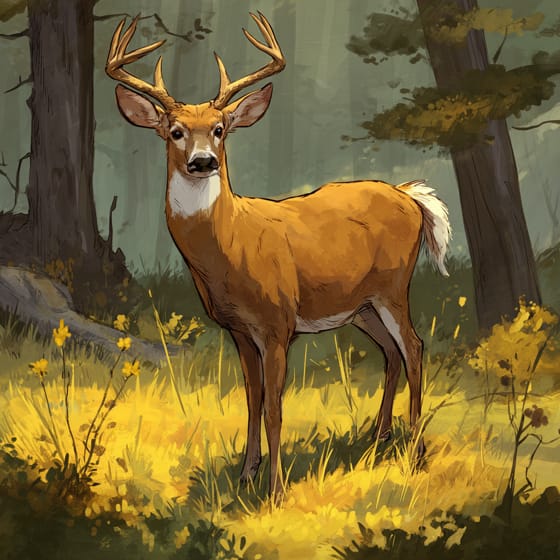
Odocoileus virginianus
sometimes browses on foliage
Flowering plants are any plants that produce flowers as part of their reproductive cycle.
Spring blooming plants produce their flowers during the spring season, often signifying the end of winter and the start of new growth.
Fragrant flowers emit a pleasant aroma, often to attract pollinators or for defense.
Colorful describes organisms or objects displaying a wide range of bright and distinct colors.

Grassland habitats are terrestrial biomes dominated by grasses and herbaceous plants, supporting a variety of grazing animals.

Describes plants that are particularly attractive and beneficial to a wide range of pollinating organisms.

This habitat trait indicates species that can coexist with humans in urban and suburban environments, utilizing man-made structures and green spaces.
No aliases listed yet.
Danger
1/5 · Very low
Always look but don't touch flowers without asking an adult.
The easiest way to identify Virginia spiderwort is to use the Snappit nature identifier app.
30-90 cm
30-60 cm
2-4 cm
Spring to early summer
Yes
None
Perennial
Zoom in to split clusters and explore where this object has been snapped.

New Jersey, US
You might spot Eastern Gray Squirrel and Canada Goose.
View guide →
.jpg)
Maryland, US
You might spot Ivy-Leaved Toadflax, Duck, and Spotted Lanternfly.
View guide →

Virginia, US
You might spot Canada Goose, Duck, and Great Blue Heron.
View guide →

Maryland, US
You might spot Duck, Red-Winged Blackbird, and American Bullfrog.
View guide →

Virginia, US
You might spot Duck, Canada Goose, and Red Deadnettle.
View guide →

New Jersey, US
You might spot White-Tailed Deer, American Robin, and Spotted Lanternfly.
View guide →
Take the discovery with you
Snap it with Snappit to identify it, learn what makes it special, and add the discovery to your collection.








.jpg&width=800)


_001.jpg&width=800)




