.jpg&width=800)





Virginian Tiger Moth
Spilosoma virginica
The Virginian Tiger Moth is a fluffy, white moth with beautiful orange and black spots. It loves to fly around at night and is often seen in gardens and fields.
Habitat: Urban areas
The Virginian Tiger Moth is primarily pure white with a fuzzy body. It often has small, scattered black spots on its wings. Its vibrant abdomen is yellowish-orange with distinct rows of black dots.
Category
InsectsRarity
Common
Danger
1/5 · Very low
Snaps
27
Adult Virginian Tiger Moths don't have mouths to eat; they live off stored energy!
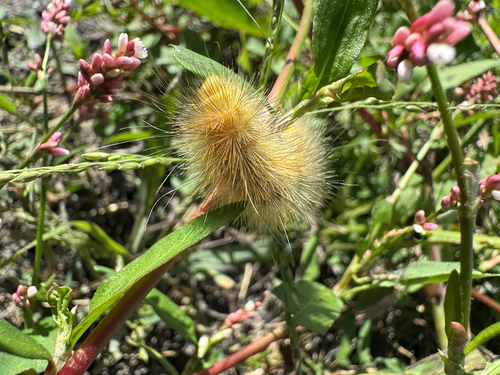
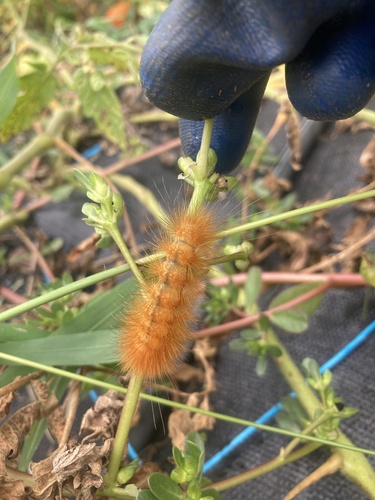
Its fluffy caterpillar, called a "woolly bear," loves to munch on over 100 plant types!
Some Virginian Tiger Moth caterpillars can change their fur color to match what they eat!
This moth's white wings are perfect camouflage, reflecting moonlight to blend in!
Virginian Tiger Moth has feathery antennae that are super sensitive, helping it smell mates and navigate in the dark of night.
Virginian Tiger Moth can hear the high-pitched sounds of hunting bats using special organs, helping them quickly dive to avoid being caught.
Caterpillars are expert plant eaters, munching on a huge variety of leaves!
Age differences: Adult moths do not feed; they rely on energy stored from their caterpillar stage.
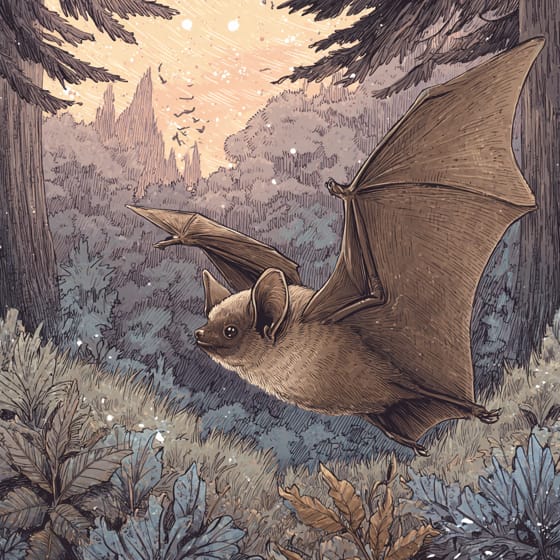
Myotis lucifugus
Eats adult moths flying at night.
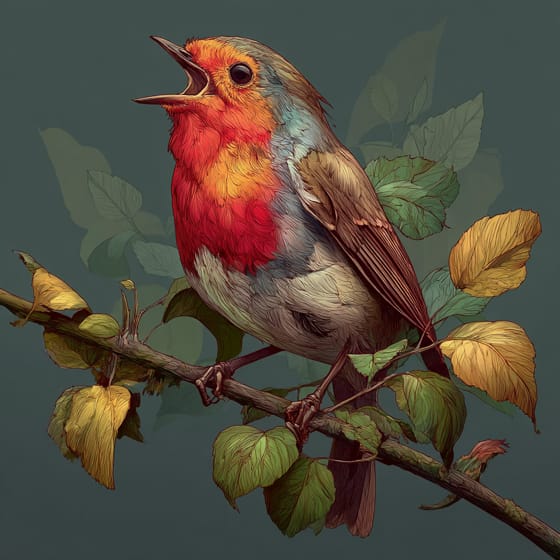
Turdus migratorius
Forages for caterpillars and moths.

Taraxacum officinale
Caterpillars feed on its leaves.
Archytas apicifer
Lays eggs on or near caterpillars.
Furry describes animals possessing a dense covering of soft hair or fur.
Colorful describes organisms or objects displaying a wide range of bright and distinct colors.
This trait characterizes organisms whose diet consists entirely or primarily of plant material.
This habitat trait indicates species that can coexist with humans in urban and suburban environments, utilizing man-made structures and green spaces.

Nocturnal animals are primarily active during the nighttime hours, typically resting or sleeping during the day.

Describes organisms that transfer pollen, enabling the fertilization and reproduction of plants.
No aliases listed yet.
Danger
1/5 · Very low
Don't touch moths, as they can be delicate and might fly away quickly.
The easiest way to identify Virginian Tiger Moth is to use the Snappit nature identifier app.
35-45 mm
15-20 mm
5-10 days
Caterpillars are expert plant eaters, munching on a huge variety of leaves!
Urban areas
Foraging
6
Zoom in to split clusters and explore where this object has been snapped.
Oct 3, 2025
Dawson County CourthousePhoto attribution
(c) Nick T., some rights reserved (CC BY-SA)
License: CC BY-SA 4.0 ↗
Image may be shown cropped inside the card frame.
Sep 17, 2025
Fox Chase FarmPhoto attribution
no rights reserved
License: CC0 1.0 ↗
Image may be shown cropped inside the card frame.

New York, US
You might spot American White Waterlily, Buttonbush, and Common Milkweed.
View guide →

Massachusetts, US
You might spot Common Eastern Bumble Bee and Asian Lady Beetle.
View guide →

Pennsylvania, US
You might spot Canada Goose, American Robin, and Red-Winged Blackbird.
View guide →

South Carolina, US
You might spot American Alligator, Great Blue Heron, and Anhinga.
View guide →

Maryland, US
You might spot Duck, Red-Winged Blackbird, and American Bullfrog.
View guide →

Massachusetts, US
You might spot American Bison, Domestic Bactrian Camel, and Black Bear.
View guide →
Take the discovery with you
Snap it with Snappit to identify it, learn what makes it special, and add the discovery to your collection.







.jpg&width=800)



