





common dandelion
Taraxacum officinale
The common dandelion is a bright yellow flower that grows in many places. Its fluffy seed heads are fun to blow and make wishes on!
Habitat: Urban areas
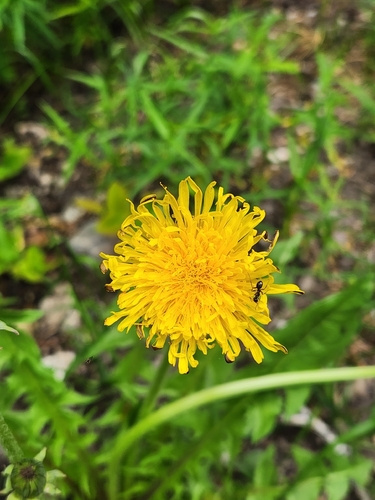
The common dandelion has a bright yellow, solitary flower head atop a hollow, leafless stem. Its deeply lobed, toothy green leaves form a basal rosette, growing flat against the ground. Later, it forms a spherical puffball of white, parachute-like seeds.
Category
PlantsRarity
Common
Danger
1/5 · Very low
Snaps
34
Dandelion leaves help scientists know about air pollution by absorbing it!
Every yellow 'petal' is actually a tiny flower, making one big bloom!
Its tough taproot can grow over a foot deep, reaching hidden water!
The name 'dandelion' means 'lion's tooth' because of its jagged leaves!
Common dandelion can regrow its entire plant from just a tiny piece of its deep taproot, helping it survive being pulled.
Common dandelion has fluffy, parachute-like seeds that catch the wind, helping it spread far and wide.
Common dandelion can produce seeds without needing pollination, creating exact copies of itself to quickly spread.
Apis mellifera
Its early flowers provide vital nectar and pollen.
Ovis aries
Sheep enjoy grazing on its nutritious leaves.
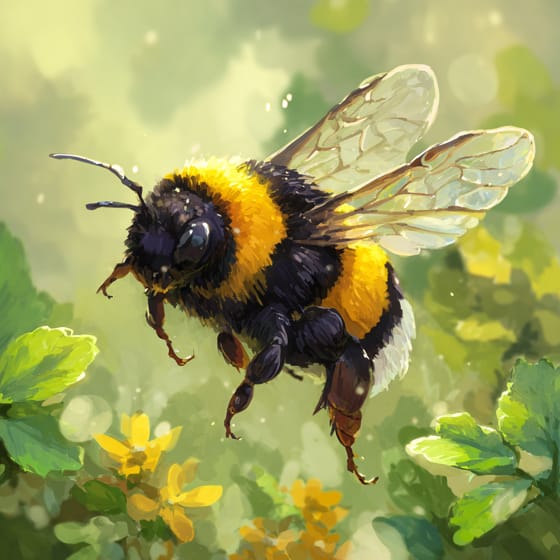
Bombus impatiens
An essential early spring food source for many bees.
Flowering plants are any plants that produce flowers as part of their reproductive cycle.
Spring blooming plants produce their flowers during the spring season, often signifying the end of winter and the start of new growth.
Broadleaf trees are angiosperms characterized by flat, wide leaves that are typically shed annually in temperate climates.
Medicinal plants possess chemical compounds that can be used for therapeutic purposes to treat illnesses or maintain health.

Edible plants are those parts of a plant that are considered safe for human consumption.

Describes plants that are particularly attractive and beneficial to a wide range of pollinating organisms.

Rapid growing plants exhibit accelerated growth rates, quickly increasing in size and biomass within a short period.

Describes a species whose presence and role have a disproportionately large effect on its environment.

This habitat trait indicates species that can coexist with humans in urban and suburban environments, utilizing man-made structures and green spaces.
Danger
1/5 · Very low
Always check with an adult before picking flowers.
The easiest way to identify common dandelion is to use the Snappit nature identifier app.
5-40 cm
10-30 cm
2-5 cm
Spring to Fall
Yes
None
Perennial
Zoom in to split clusters and explore where this object has been snapped.
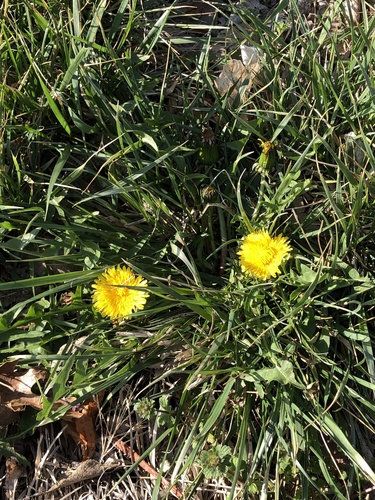
Mar 29, 2026
Central Springfield Historic DistrictPhoto attribution
(c) Y. Liu, some rights reserved (CC BY)
License: CC BY 4.0 ↗
Image may be shown cropped inside the card frame.
Jul 2, 2023
Johnson Lake Mine Historic DistrictPhoto attribution
(c) Cristhian Mace, some rights reserved (CC BY)
License: CC BY 4.0 ↗
Image may be shown cropped inside the card frame.

Illinois, US
You might spot Brown-Belted Bumble Bee and Eastern Gray Squirrel.
View guide →

Iowa, US
You might spot Common Eastern Bumble Bee and Eastern Cottontail.
View guide →

US
You might spot Bald Eagle, Common Raven, and Salmonberry.
View guide →

Colorado, US
You might spot Eastern Fox Squirrel, Bee, and Duck.
View guide →

New Mexico, US
You might spot Pronghorn, Great-Tailed Grackle, and Redstem Stork's-Bill.
View guide →

Illinois, US
You might spot Eastern Fox Squirrel, Amur Honeysuckle, and Poison Hemlock.
View guide →
Take the discovery with you
Snap it with Snappit to identify it, learn what makes it special, and add the discovery to your collection.








.jpg&width=800)


_001.jpg&width=800)



