





water beard grass
Polypogon viridis
Water beard grass is a soft, green plant that grows near water. It has long, flowing leaves that look like hair blowing in the wind. This grass is great for helping the soil and providing homes for tiny creatures.
Habitat: Wetlands
The water beard grass has slender green stems and flat leaves. Its distinctive feature is a dense, soft, beard-like flower cluster that can appear green, purplish, or reddish-brown as it matures, making it stand out among other grasses.
Category
PlantsRarity
Common
Danger
1/5 · Very low
Snaps
Be the first to snap!
Even though it's a grass, its tiny flowers are packed together like a miniature forest!
Its fluffy flower heads sometimes look like soft, green caterpillars or bottle brushes.
This grass loves water so much it can often grow right in shallow puddles!
You can find it worldwide, hitchhiking to new places on boots and tires!
Water beard grass can thrive in waterlogged soil and shallow water, allowing it to grow where many other plants cannot.
This grass has strong, fibrous roots that help hold soil together, preventing it from washing away during floods.
Water beard grass produces many tiny seeds, allowing it to quickly spread and colonize new wet areas.
Anas platyrhynchos
Ducks graze on leaves and consume its tiny seeds.
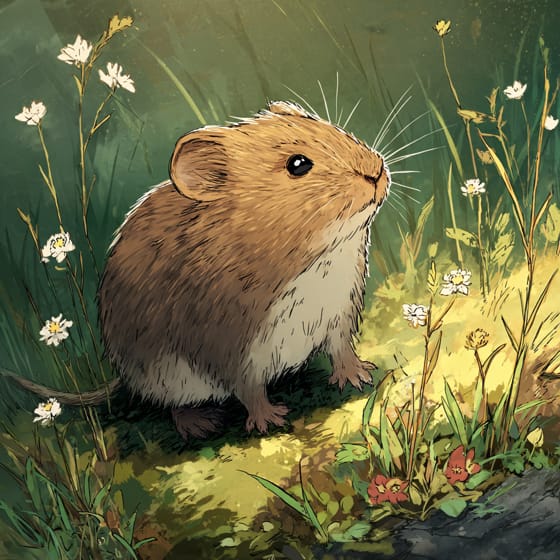
Microtus arvalis
Small voles may feed on the tender shoots and seeds.
Coccinella septempunctata
Ladybugs sometimes hide among the dense grass clumps.
Grass-like plants are herbaceous plants that visually resemble true grasses, typically having long, narrow leaves.
Shade tolerant plants are adapted to grow and thrive in areas with low light levels, requiring less direct sunlight.
Rapid growing plants exhibit accelerated growth rates, quickly increasing in size and biomass within a short period.
Describes organisms that break down dead organic material, recycling nutrients back into the ecosystem.

This habitat trait identifies species found in wetlands, which are areas of land saturated with water, either permanently or seasonally, including marshes, swamps, and bogs.

Freshwater habitats include non-saline aquatic environments such as rivers, lakes, ponds, and wetlands, vital for numerous species.

Describes a species whose presence and role have a disproportionately large effect on its environment.
No aliases listed yet.
Danger
1/5 · Very low
Always stay on paths when exploring near water to stay safe.
The easiest way to identify water beard grass is to use the Snappit nature identifier app.
10-60 cm
10-30 cm
Summer
No
None
Perennial
Wind
Zoom in to split clusters and explore where this object has been snapped.
Recent snaps will appear here as new observations are added.
Take the discovery with you
Snap it with Snappit to identify it, learn what makes it special, and add the discovery to your collection.









.jpg&width=800)



_001.jpg&width=800)



