





Water Tupelo
Nyssa aquatica
The Water Tupelo is a special tree that loves to grow in wet places like swamps. It has big, green leaves and can grow very tall, providing homes for many animals.
Habitat: Wetlands
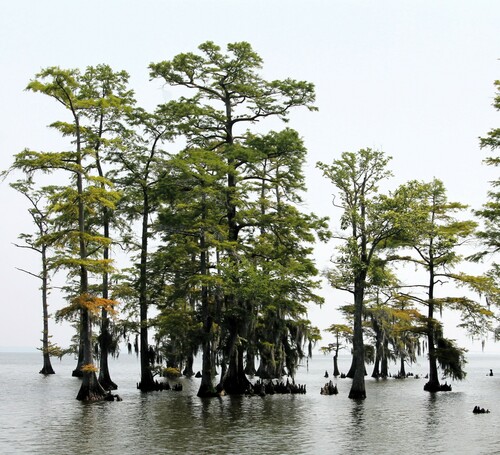
The Water Tupelo is a tall, straight tree often seen growing directly in water with a noticeably swollen, buttressed base. Its glossy green leaves turn attractive shades of yellow and red in fall, and it produces small, dark purple, olive-like fruits.
Category
TreesRarity
Common
Danger
1/5 · Very low
Snaps
2
Honey made from tupelo flowers is famous for being delicious and very clear.
It can grow in water up to 2 meters deep for months without drowning!
Its wood is so light it's sometimes called 'liquid balsa wood'!
The Water Tupelo's fruits are called 'swamp limes' because they taste super tart!
Water Tupelo has specialized roots that can absorb oxygen even when submerged, helping it thrive in flooded swamps.
It has a unique swollen base that helps anchor the tree firmly in soft, muddy wetland soils.
It has spongy, air-filled tissue in its trunk, helping it survive long periods in deep water.
Apis mellifera
visits its small flowers for nectar.
Ursus americanus
enjoys the tart fruits in late summer.
Anas platyrhynchos
eats fallen fruit floating on water.
Lepomis gulosus
hides among its submerged roots.
Deciduous plants periodically shed all their leaves, typically during autumn or dry seasons.
Spring blooming plants produce their flowers during the spring season, often signifying the end of winter and the start of new growth.
Broadleaf trees are angiosperms characterized by flat, wide leaves that are typically shed annually in temperate climates.
Fragrant flowers emit a pleasant aroma, often to attract pollinators or for defense.

Describes plants that are particularly attractive and beneficial to a wide range of pollinating organisms.

Timber refers to wood that has been prepared for use in building and carpentry.

This trait characterizes organisms with an exceptionally long lifespan compared to others of their kind.

This habitat trait identifies species found in wetlands, which are areas of land saturated with water, either permanently or seasonally, including marshes, swamps, and bogs.
No aliases listed yet.
Danger
1/5 · Very low
Stay on paths when exploring near water to keep safe from slippery areas.
The easiest way to identify Water Tupelo is to use the Snappit nature identifier app.
15-30 m
9-15 m
Yes
90-150 cm
100-600 years
Wetlands
Drupe
Zoom in to split clusters and explore where this object has been snapped.

Arkansas, US
You might spot Water Tupelo, Banded Watersnake, and Prothonotary Warbler.
View guide →
Tennessee, US
You might spot Baldcypress, Plain-Bellied Watersnake, and Water Tupelo.
View guide →

North Carolina, US
You might spot Baldcypress, Southern Cricket Frog, and Green Treefrog.
View guide →
Take the discovery with you
Snap it with Snappit to identify it, learn what makes it special, and add the discovery to your collection.










