





Western Gorilla
Gorilla gorilla
Western Gorillas are large, gentle giants that live in the forests of Africa. They are very social animals and love to spend time with their families in groups called troops.
Habitat: Forests
The Western Gorilla has a stocky build with thick, dark grey or black fur. Males develop a reddish-brown cap on their head and a silver back as they age, making them visually distinct from other gorilla species.
Category
MammalsRarity
Rare
Danger
3/5 · Moderate
Snaps
Be the first to snap!
A male gorilla's back turns silver when he gets older, earning him the name 'silverback'. Wow!
Despite their huge size, Western Gorillas are generally shy and peaceful, preferring to avoid trouble. Wow!
Just like humans have fingerprints, each Western Gorilla has a totally unique nose print! Wow!
They give each other a gentle 'kiss' as a way to greet and show comfort within their family group. Wow!
Western Gorillas can walk on their knuckles because it helps them move quickly and efficiently through dense forest environments.
Western Gorillas have a wide range of vocalizations, gestures, and facial expressions that help them talk to each other.
Western Gorillas build a new, cozy nest every evening, either in trees or on the ground, that helps them sleep safely.
Western Gorillas mostly munch on leaves, stems, and fruits, but sometimes enjoy a few tasty bugs!
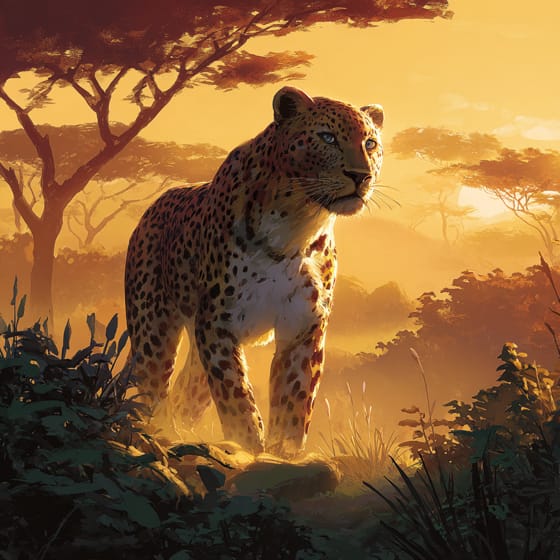
Panthera pardus
Juvenile gorillas can be prey for leopards.
Spondias mombin
Gorillas eat its fruits and help spread its seeds.
Marantochloa congensis
This is a common leafy plant in their diet.
Furry describes animals possessing a dense covering of soft hair or fur.
Social animals live in organized groups, cooperating for survival benefits such as foraging, defense, and raising offspring.
This trait characterizes organisms whose diet consists entirely or primarily of plant material.
This trait describes organisms that manipulate external objects to achieve a specific goal.

Forest habitats are terrestrial environments dominated by dense tree cover, supporting a high diversity of plant and animal life.

Diurnal animals are primarily active during daylight hours, typically resting or sleeping at night.

Describes a species whose presence and role have a disproportionately large effect on its environment.

Giant describes organisms or objects of significantly larger size than average for their species or type.

Endangered status indicates a species is at a very high risk of extinction in the wild in the near future.
No aliases listed yet.
Danger
3/5 · Moderate
Always observe gorillas from a safe distance and never approach them in the wild.
The easiest way to identify Western Gorilla is to use the Snappit nature identifier app.
120-170 cm
60-270 kg
30-50 years
40 km/h
Western Gorillas mostly munch on leaves, stems, and fruits, but sometimes enjoy a few tasty bugs!
Forests
Foraging
Zoom in to split clusters and explore where this object has been snapped.
Recent snaps will appear here as new observations are added.
Take the discovery with you
Snap it with Snappit to identify it, learn what makes it special, and add the discovery to your collection.




.jpg&width=800)


.JPG&width=800)


.jpg&width=800)
