





Western Green Lizard
Lacerta bilineata
The Western Green Lizard is a bright green lizard that loves to bask in the sun. It has a long body and can be very fast when it runs away from danger.
Habitat: Grasslands
The Western Green Lizard is a striking reptile with a bright emerald green body, often featuring small black flecks and a pale yellow belly. Males may develop brilliant blue throats during breeding season, setting them apart visually from their plainer counterparts.
Category
ReptilesRarity
Common
Danger
1/5 · Very low
Snaps
1
Believe it or not, these lizards sometimes eat their own shed skin to get back valuable nutrients!
Look out! Male Western Green Lizards flash a bright blue chin to impress females and warn rivals!
When it gets cold, Western Green Lizards dig into the ground to hibernate all winter long!
Wow! These lizards can live up to 15 years, much longer than many other small reptiles!
Western Green Lizards can drop their tail if a predator grabs it, because it keeps them safe while the tail regrows.
Western Green Lizards can control their body temperature by basking in the sun, which helps them stay active.
Western Green Lizards have bright blue throats in males during breeding season that helps them attract a mate.
These lizards mostly feast on insects and spiders, but they also enjoy juicy fruits and berries!
Age differences: Young lizards eat smaller insects; adults hunt larger prey and consume more plant matter.
Hieraaetus pennatus
A key aerial predator, snatching these lizards from sunny basking spots.
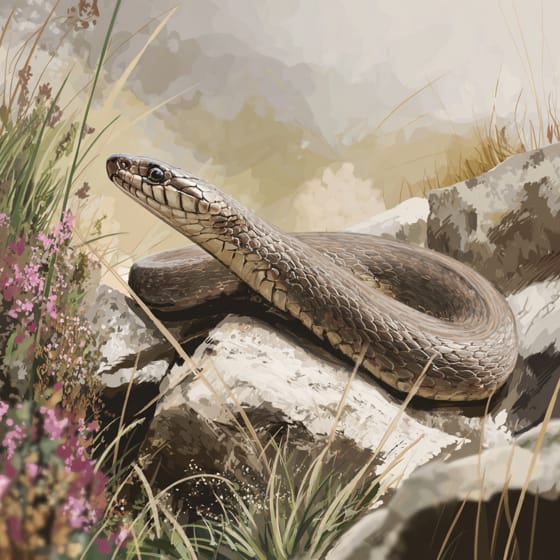
Coronella austriaca
This non-venomous snake is a specialist predator, hunting various lizards.
Tenebrio molitor
Actively pursues and consumes various beetles and their larval forms.
.jpg&width=800)
Rubus idaeus
Supplements its insect diet with ripe, soft berries and fruits when available.
Camouflaged describes organisms that possess coloring or patterns that allow them to blend into their environment.
Colorful describes organisms or objects displaying a wide range of bright and distinct colors.
Grassland habitats are terrestrial biomes dominated by grasses and herbaceous plants, supporting a variety of grazing animals.
This trait identifies organisms whose diet primarily consists of insects and other small invertebrates.

Diurnal animals are primarily active during daylight hours, typically resting or sleeping at night.

This trait identifies organisms that exhibit exceptional swiftness in movement for hunting, escape, or travel.
No aliases listed yet.
Danger
1/5 · Very low
Do not try to catch or hold lizards; they are best admired from a distance.
The easiest way to identify Western Green Lizard is to use the Snappit nature identifier app.
25-40 cm
0.02-0.1 kg
5-15 years
20 km/h
These lizards mostly feast on insects and spiders, but they also enjoy juicy fruits and berries!
Grasslands
Pursuit
Zoom in to split clusters and explore where this object has been snapped.
Take the discovery with you
Snap it with Snappit to identify it, learn what makes it special, and add the discovery to your collection.













