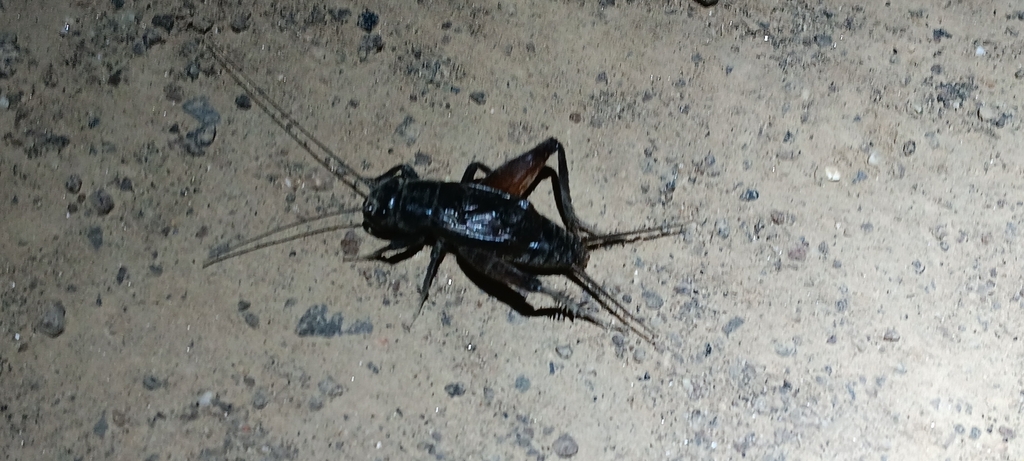





Western Rock-loving Field Cricket
Gryllus saxatilis
The Western Rock-loving Field Cricket is a small, chirpy insect that loves to hide among rocks and grass. They are known for their loud songs, especially during warm nights, making them a fun part of nature's orchestra!
Habitat: Grasslands
The Western Rock-loving Field Cricket is a robust, dark brown to black insect, perfectly camouflaged against rocky terrain. It has a rounded head and relatively short wings that often do not fully cover its abdomen, differentiating it from longer-winged crickets.
Category
InsectsRarity
Common
Danger
1/5 · Very low
Snaps
Be the first to snap!
Female crickets have a special tube to lay their eggs.
Male crickets sing different songs for dating or danger.
Some cricket species don't even have wings to fly.
They have ears on their front legs, near their knees!
Western Rock-loving Field Cricket can leap powerfully using its strong hind legs, helping it escape predators among rocky habitats.
Western Rock-loving Field Cricket has a dark, mottled body that helps it blend seamlessly with the rocks and soil where it lives.
Western Rock-loving Field Cricket can rub its wings together to create unique chirping songs, used to attract mates after dark.
This cricket munches on dead plants, tiny bugs, and other decaying bits it finds.
Social animals live in organized groups, cooperating for survival benefits such as foraging, defense, and raising offspring.
This trait identifies organisms whose diet includes both plant and animal matter.
Singing animals produce complex vocalizations, often for purposes of attracting mates, defending territory, or communicating within their species.
Camouflaged describes organisms that possess coloring or patterns that allow them to blend into their environment.
Grassland habitats are terrestrial biomes dominated by grasses and herbaceous plants, supporting a variety of grazing animals.
This trait characterizes organisms with an exceptionally long lifespan compared to others of their kind.
Nocturnal animals are primarily active during the nighttime hours, typically resting or sleeping during the day.
No aliases listed yet.
Danger
1/5 · Very low
Crickets are harmless, but it's best to observe them without touching.
Look for six legs, antennae, three body sections and the shape of the wings. Beetles have hardened front wings; flies have just one working pair. Tiny insects may need a close view before their group is clear. Insect Identifier: upload a photo and compare the visible details.
18-25 mm
60-180 days
This cricket munches on dead plants, tiny bugs, and other decaying bits it finds.
Grasslands
Foraging
6
Zoom in to split clusters and explore where this object has been snapped.
Recent snaps will appear here as new observations are added.
Take the discovery with you
Snap it with Snappit to identify it, learn what makes it special, and add the discovery to your collection.