





Cheatgrass
Bromus tectorum
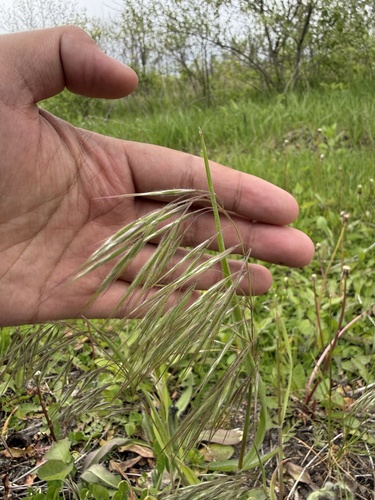
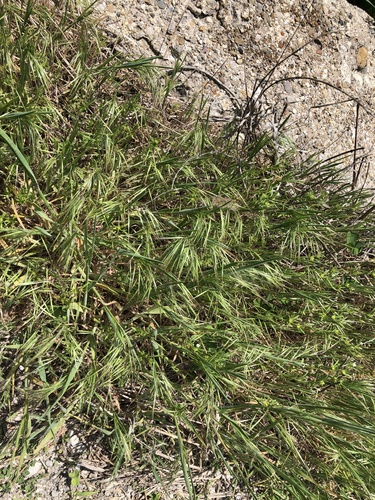
Cheatgrass is a tall, green grass that grows in many places. It has long, slender leaves and can turn golden brown in the summer. It's often found in fields and along roadsides.
Habitat: Grasslands
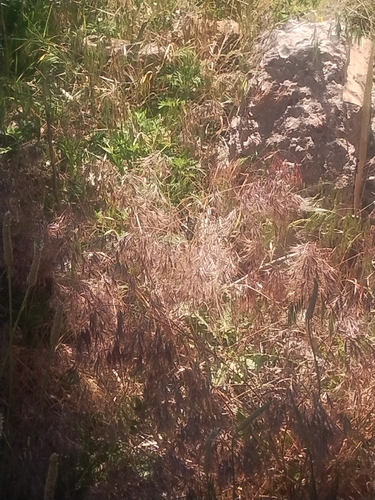
The Cheatgrass is a slender, annual grass that typically grows in dense patches. Its soft, downy leaves can appear green, often turning purplish before drying to a distinct golden-brown. It has characteristic drooping, feathery seed heads.
Category
PlantsRarity
Common
Danger
1/5 · Very low
Snaps
14
Cheatgrass loves disturbed soil, often popping up after construction or fires.
It turns entire hillsides reddish-purple before drying to a golden brown.
Its early growth provides food, but dried seeds hurt grazing animals.
One tiny cheatgrass plant can make hundreds of sharp, barbed seeds!
Cheatgrass dries early and quickly, creating lots of fine fuel that helps fires spread faster and more often.
Its seeds have tiny barbs that hook onto animal fur and clothes, helping them travel far and colonize new places.
Cheatgrass can grow incredibly fast, quickly sprouting and outcompeting many native plants for water and nutrients.
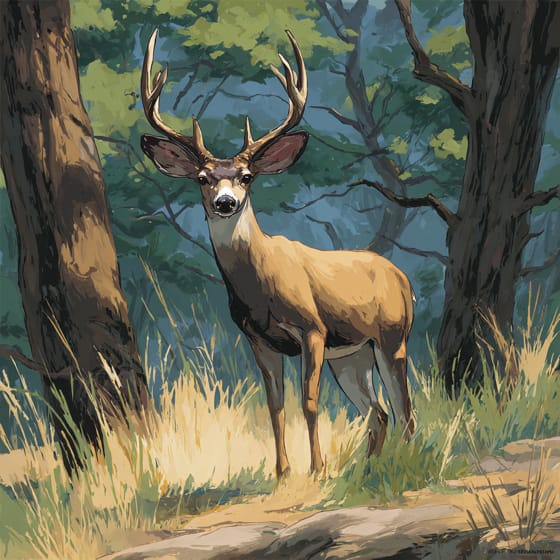
Odocoileus hemionus
Graze on young shoots.
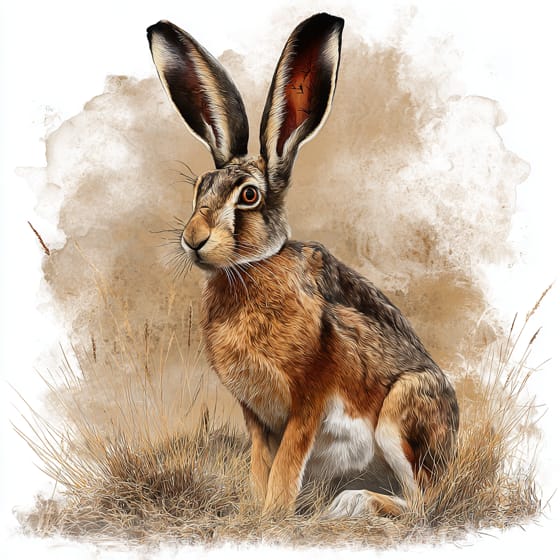
Lepus californicus
Feeds on green plants.
_(40059471280).jpg&width=800)
Callipepla californica
Eats fallen seeds.
Microtus ochrogaster
Consumes leaves and seeds.
Grass-like plants are herbaceous plants that visually resemble true grasses, typically having long, narrow leaves.
Drought-tolerant plants can survive and flourish in conditions with limited water availability.
This human use trait describes species cultivated or domesticated by humans for agricultural purposes, including crops and livestock.
Edible plants are those parts of a plant that are considered safe for human consumption.

Fall color refers to the seasonal change in foliage pigmentation, primarily in deciduous plants, displaying vibrant hues.

Grassland habitats are terrestrial biomes dominated by grasses and herbaceous plants, supporting a variety of grazing animals.

Rapid growing plants exhibit accelerated growth rates, quickly increasing in size and biomass within a short period.

Invasive species are non-native organisms that cause harm to the environment, economy, or human health.
No aliases listed yet.
Danger
1/5 · Very low
Be careful not to touch sharp grass blades, as they can be pointy.
The easiest way to identify Cheatgrass is to use the Snappit nature identifier app.
15-60 cm
5-15 cm
1-2 cm
Spring-early summer
Yes
None
Annual
Zoom in to split clusters and explore where this object has been snapped.
Jun 4, 2026
Lock and Dam No. 15Photo attribution
no rights reserved
License: CC0 1.0 ↗
Image may be shown cropped inside the card frame.
May 12, 2026
Richard Bong State Recreation AreaPhoto attribution
(c) Brandon Corder, some rights reserved (CC BY)
License: CC BY 4.0 ↗
Image may be shown cropped inside the card frame.
Apr 26, 2026
Delphi Courthouse Square Historic DistrictPhoto attribution
(c) Y. Liu, some rights reserved (CC BY)
License: CC BY 4.0 ↗
Image may be shown cropped inside the card frame.

Indiana, US
You might spot Common Reed, Rosepink, and Bearberry.
View guide →

Wisconsin, US
You might spot Eastern Forktail and Brown-Belted Bumble Bee.
View guide →

British Columbia, CA
You might spot Oregon Grape, Shinyleaf Meadowsweet, and Bush Penstemon.
View guide →

Arizona, US
You might spot Golden Eagle, Black Bear, and Cougar.
View guide →

Montana, US
You might spot Tiger, Grizzly Bear, and Red Panda.
View guide →
Illinois, US
You might spot Eastern Gray Squirrel, Duck, and Canada Goose.
View guide →
Take the discovery with you
Snap it with Snappit to identify it, learn what makes it special, and add the discovery to your collection.









.jpg&width=800)


_001.jpg&width=800)



