





White-faced Saki
Pithecia pithecia
The White-faced Saki is a playful monkey with a fluffy white face and a long tail. They love to swing through the trees and eat fruits and seeds. These monkeys are very social and often live in groups!
Habitat: Forests
The White-faced Saki has long, shaggy fur, which is entirely black for females and young, while adult males sport a striking white or pale-yellow face contrasting sharply with their dark bodies. Their bushy, non-prehensile tails are about as long as their bodies.
Category
MammalsRarity
Common
Danger
2/5 · Low
Snaps
Be the first to snap!
Baby sakis cling tightly to their mother's belly for their first few months of life!
Male and female sakis look so different, people once thought they were different species!
These monkeys live almost entirely in the rainforest canopy, rarely touching the ground!
White-faced Sakis are shy, often staying hidden, making them tricky to spot.
White-faced Saki can jump up to 10 meters between trees using powerful legs, helping them escape danger and find food.
White-faced Saki has specialized teeth and strong jaws to crack open tough seeds, helping them access nutrient-rich food.
White-faced Saki has dark, shaggy fur, blending perfectly into rainforest shadows and dense foliage, protecting them from predators.
White-faced Saki can sleep hanging upside down by its feet, a unique posture helping them hide from canopy predators.
They munch on juicy fruits, crack open tough seeds, and sometimes snack on tasty insects!

Harpia harpyja
A powerful bird of prey in their canopy home.
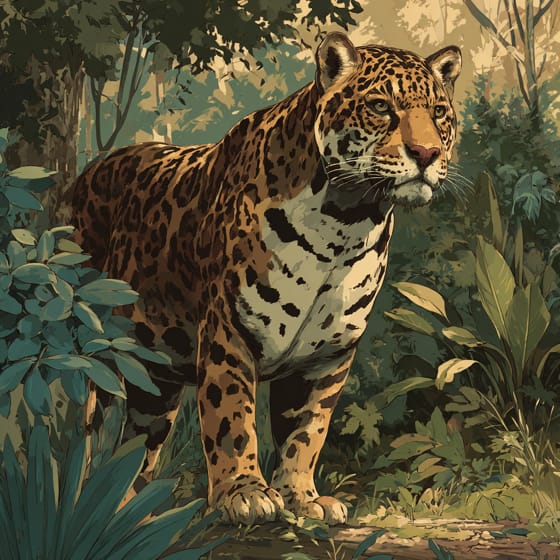
Panthera onca
A stealthy big cat that hunts in their forest.
Ficus insipida
They consume the fruits and seeds of this large fig.
Pouteria caimito
They enjoy the sweet, fleshy fruits of this tree.
Furry describes animals possessing a dense covering of soft hair or fur.
Social animals live in organized groups, cooperating for survival benefits such as foraging, defense, and raising offspring.
Arboreal animals live primarily in trees, utilizing them for shelter, food, and protection from predators.
This trait characterizes organisms whose diet consists entirely or primarily of plant material.

Forest habitats are terrestrial environments dominated by dense tree cover, supporting a high diversity of plant and animal life.

Diurnal animals are primarily active during daylight hours, typically resting or sleeping at night.

This trait identifies organisms that exhibit exceptional swiftness in movement for hunting, escape, or travel.

Endangered status indicates a species is at a very high risk of extinction in the wild in the near future.
No aliases listed yet.
Danger
2/5 · Low
Always watch from a distance and don't try to touch wild animals.
The easiest way to identify White-faced Saki is to use the Snappit nature identifier app.
30-50 cm
1.5-2.5 kg
15-20 years
25 km/h
They munch on juicy fruits, crack open tough seeds, and sometimes snack on tasty insects!
Forests
Foraging
Zoom in to split clusters and explore where this object has been snapped.
Recent snaps will appear here as new observations are added.

Pennsylvania, US
You might spot Giraffes, Jaguar, and Red Panda.
View guide →

Texas, US
You might spot Penguin, Great White Shark, and Box Jellyfish.
View guide →

South Moravian Region, CZ
You might spot Polar Bear, Tiger, and Equus Ferus Przewalskii.
View guide →
Take the discovery with you
Snap it with Snappit to identify it, learn what makes it special, and add the discovery to your collection.




.jpg&width=800)

.JPG&width=800)


.jpg&width=800)
