





White-tailed titi
Callicebus discolor
The white-tailed titi is a small monkey with a fluffy tail and a sweet face. They love to swing in the trees and are very social, often seen playing together with their friends.
Habitat: Forests
The White-tailed titi is a small primate with reddish-brown fur, a distinctive white tail tip, and a black face framed by white eyebrows. Its long, fluffy tail is often longer than its body, helping it balance while moving through trees.
Category
MammalsRarity
Common
Danger
1/5 · Very low
Snaps
Be the first to snap!
Baby titi monkeys are born with their eyes open and can hold on tightly.
Families sleep huddled together with tails intertwined for warmth.
Titi monkeys mate for life, a rare trait in the animal kingdom!
Titi parents carry their single baby everywhere for the first few weeks.
White-tailed titi has a long, bushy tail that helps them balance and make incredible leaps between trees with ease.
White-tailed titi can perform complex morning duets because of their strong vocal cords, strengthening family bonds.
White-tailed titi can entwine tails with family members because of their strong social bonds, showing affection and unity.
These omnivores enjoy a mix of fruits, leaves, insects, and seeds found in their forest home.
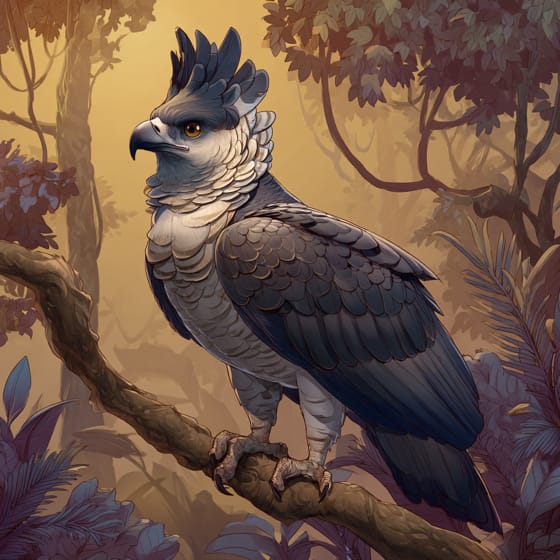
Harpia harpyja
a top aerial predator in their forest habitat
Boa constrictor
can be predated by this large arboreal snake
Ficus insipida
relies on its fruits for a major part of its diet
Ceiba pentandra
uses its branches for resting and moving through the canopy
Furry describes animals possessing a dense covering of soft hair or fur.
Social animals live in organized groups, cooperating for survival benefits such as foraging, defense, and raising offspring.
Singing animals produce complex vocalizations, often for purposes of attracting mates, defending territory, or communicating within their species.
Arboreal animals live primarily in trees, utilizing them for shelter, food, and protection from predators.

This trait characterizes organisms whose diet consists entirely or primarily of plant material.

Forest habitats are terrestrial environments dominated by dense tree cover, supporting a high diversity of plant and animal life.

Diurnal animals are primarily active during daylight hours, typically resting or sleeping at night.

Endangered status indicates a species is at a very high risk of extinction in the wild in the near future.
No aliases listed yet.
Danger
1/5 · Very low
Always watch from a distance and never try to touch wild animals.
The easiest way to identify White-tailed titi is to use the Snappit nature identifier app.
28-35 cm
0.8-1.4 kg
10-15 years
20 km/h
These omnivores enjoy a mix of fruits, leaves, insects, and seeds found in their forest home.
Forests
Foraging
Zoom in to split clusters and explore where this object has been snapped.
Recent snaps will appear here as new observations are added.
Take the discovery with you
Snap it with Snappit to identify it, learn what makes it special, and add the discovery to your collection.




.jpg&width=800)

.JPG&width=800)


.jpg&width=800)
