





Wild Goat
Capra aegagrus
Wild goats are strong animals that love to climb steep mountains. They have thick fur to keep warm and can jump really high to escape from danger.
Habitat: Mountain regions
The Wild Goat has a stocky build with a short tail and often a shaggy coat, ranging in color from reddish-brown to greyish-brown, frequently with a darker stripe down its back. Males sport impressive, large, scimitar-shaped horns with distinct ridges, while females have smaller, backward-curving horns.
Category
MammalsRarity
Common
Danger
2/5 · Low
Snaps
Be the first to snap!
Baby wild goats, called kids, can stand and walk just minutes after being born.
Some male wild goats grow long, impressive beards that make them look very wise.
Their eyes have rectangular pupils, giving them a super wide view of their surroundings!
Wild goats communicate using different bleats, snorts, and even warning whistles.
Wild Goat can scale incredibly steep mountain faces and rocky cliffs because of their specially adapted, rubbery hooves for grip.
Wild Goat can digest tough, woody plants and thorny shrubs that most other animals avoid, thanks to their robust digestive system.
Wild Goat has incredible balance that helps them navigate narrow ledges and precarious rocky outcrops with surprising agility.
Wild Goats are plant-eaters that munch on a wide variety of grasses, leaves, and tough shrubs.
Canis lupus
A primary predator of wild goats in many regions.
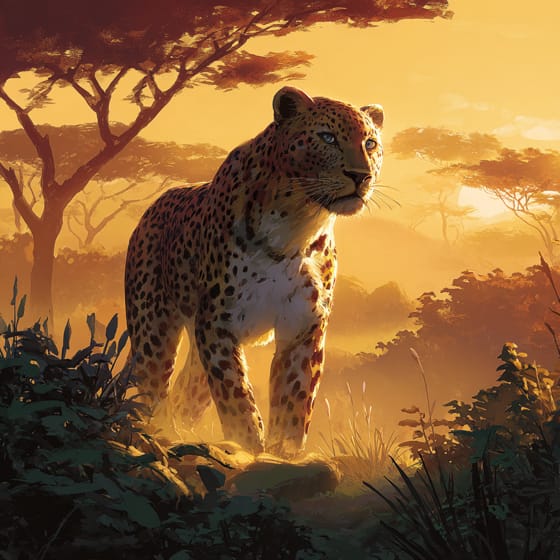
Panthera pardus
Preys on both adult and young goats in its range.

Aquila chrysaetos
Actively preys on young goat kids from the air.
Juniperus excelsa
Browses on its leaves and berries for food.
Furry describes animals possessing a dense covering of soft hair or fur.
Social animals live in organized groups, cooperating for survival benefits such as foraging, defense, and raising offspring.
Characterized by having one or more hard, permanent, pointed projections on the head.
This trait characterizes organisms whose diet consists entirely or primarily of plant material.

This habitat trait identifies species found in mountainous regions, characterized by high elevation, steep slopes, and varying climate zones.

Diurnal animals are primarily active during daylight hours, typically resting or sleeping at night.

Describes a species whose presence and role have a disproportionately large effect on its environment.

This trait identifies organisms that exhibit exceptional swiftness in movement for hunting, escape, or travel.
No aliases listed yet.
Danger
2/5 · Low
If you see a wild goat, watch from a distance and don't try to get too close.
The easiest way to identify Wild Goat is to use the Snappit nature identifier app.
120-160 cm
30-95 kg
10-14 years
60 km/h
Wild Goats are plant-eaters that munch on a wide variety of grasses, leaves, and tough shrubs.
Mountain regions
Foraging
Zoom in to split clusters and explore where this object has been snapped.
Recent snaps will appear here as new observations are added.
Take the discovery with you
Snap it with Snappit to identify it, learn what makes it special, and add the discovery to your collection.




.jpg&width=800)


.JPG&width=800)


.jpg&width=800)
