





Willow Leaf Beetle
Plagiodera versicolora
The Willow Leaf Beetle is a small, shiny beetle that loves to munch on willow leaves. They are bright green and can often be found in gardens and parks where willows grow.
Habitat: Wetlands
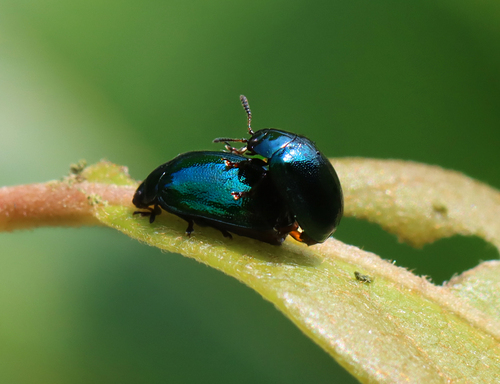
The Willow Leaf Beetle is a small, oval-shaped insect, typically 4-6mm long, with a striking iridescent metallic blue-green or bronze sheen. Its glossy, dome-shaped wing covers truly make it sparkle among the green leaves, differentiating it from duller leaf beetles.
Category
InsectsRarity
Common
Danger
1/5 · Very low
Snaps
6
Adult beetles hibernate in winter, hiding in soil or under leaf litter to stay safe!
Female beetles lay hundreds of tiny yellow eggs on the underside of willow leaves!
These beetles can skeletonize leaves, leaving only veins behind like delicate lace patterns!
Young willow leaf beetles are called larvae, and they look completely different from the adults!
Willow Leaf Beetle can release a stinky chemical because of special glands, which helps them warn off predators.
Willow Leaf Beetle has strong mandibles that help them chew through tough willow leaves as both larvae and adults.
Willow Leaf Beetle can fly quickly away from danger because of its functional wings, helping it escape predators fast.
Willow Leaf Beetle has a speedy life cycle that helps them lay many eggs quickly, ensuring more beetles hatch.
These hungry beetles munch exclusively on willow leaves, both as larvae and adults.
Salix alba
Feeds on the leaves of this common willow tree.
%2C_Parc_de_Woluw%C3%A9%2C_Brussels_(13042792905).jpg&width=800)
Parus major
A tasty snack for this common European bird.
Araneus diadematus
Often caught in the webs of these orb-weaving spiders.
Tetrastichus julis
Wasp larvae develop inside willow leaf beetle larvae.
Solitary animals live alone for most of their lives, only interacting with others for mating or parental care.
Camouflaged describes organisms that possess coloring or patterns that allow them to blend into their environment.
This trait characterizes organisms whose diet consists entirely or primarily of plant material.
This habitat trait identifies species found in wetlands, which are areas of land saturated with water, either permanently or seasonally, including marshes, swamps, and bogs.

Diurnal animals are primarily active during daylight hours, typically resting or sleeping at night.

Pertaining to species that are significantly smaller than typical or average for their kind.

Describes organisms that transfer pollen, enabling the fertilization and reproduction of plants.
No aliases listed yet.
Danger
1/5 · Very low
These beetles are not harmful, but it's best to look and not touch them.
The easiest way to identify Willow Leaf Beetle is to use the Snappit nature identifier app.
8-12 mm
4-6 mm
30-60 days
5 km/h
These hungry beetles munch exclusively on willow leaves, both as larvae and adults.
Wetlands
Grazing
Zoom in to split clusters and explore where this object has been snapped.
Jun 8, 2025
Sharon Valley Historic DistrictPhoto attribution
(c) Christine Young, some rights reserved (CC BY)
License: CC BY 4.0 ↗
Image may be shown cropped inside the card frame.

New York, US
You might spot American White Waterlily, Buttonbush, and Common Milkweed.
View guide →

New Jersey, US
You might spot Mountain Laurel, Pink Lady's Slipper, and Fowler's Toad.
View guide →

New Jersey, US
You might spot Eastern Tiger Swallowtail.
View guide →

Maryland, US
You might spot Eastern Tiger Swallowtail and White-Tailed Deer.
View guide →

Maryland, US
You might spot Eastern Tiger Swallowtail and White-Tailed Deer.
View guide →

Michigan, US
You might spot Swamp Rose Mallow, Amur Honeysuckle, and Great Blue Heron.
View guide →
Take the discovery with you
Snap it with Snappit to identify it, learn what makes it special, and add the discovery to your collection.







.jpg&width=800)




