





woodland madia
Anisocarpus madioides
Woodland madia is a bright yellow flower that loves to grow in sunny spots. It attracts butterflies and bees, making it a cheerful part of the forest!
Habitat: Forests
The woodland madia has bright yellow, daisy-like flowers with many thin petals and a darker yellow center. Its stems and leaves are covered in sticky glandular hairs, giving it a somewhat fuzzy, resinous appearance.
Category
PlantsRarity
Common
Danger
1/5 · Very low
Snaps
3
Even though it's sticky, many different bees and flies still visit its bright yellow flowers for nectar!
Its name "Madia" comes from a Chilean word for an oily plant, a clue to its sticky feel!
The sticky hairs on its stem can trap tiny insects, like a natural flypaper!
Touch its leaves, and you might get a pleasant, pine-like scent on your fingers!
woodland madia has glandular hairs that create a sticky surface, helping to deter small browsing insects.
woodland madia can produce fragrant, resinous compounds that may protect it from pests and diseases.
woodland madia can complete its life cycle quickly, allowing it to thrive in disturbed areas by producing seeds fast.
Apis mellifera
collecting nectar and pollen from its flowers.
Bombus vosnesenskii
an important native pollinator for its blooms.
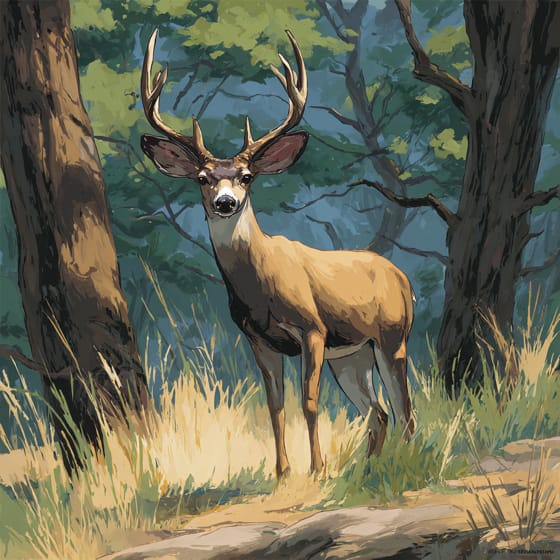
Odocoileus hemionus
browsing on its leaves and young stems.
Deciduous plants periodically shed all their leaves, typically during autumn or dry seasons.
Flowering plants are any plants that produce flowers as part of their reproductive cycle.
Summer blooming plants produce their flowers during the summer season, often providing vibrant color when many other plants have finished.
Colorful describes organisms or objects displaying a wide range of bright and distinct colors.

Describes plants that are particularly attractive and beneficial to a wide range of pollinating organisms.

Rapid growing plants exhibit accelerated growth rates, quickly increasing in size and biomass within a short period.

Forest habitats are terrestrial environments dominated by dense tree cover, supporting a high diversity of plant and animal life.
No aliases listed yet.
Danger
1/5 · Very low
Always look but don't touch plants unless you know they are safe.
The easiest way to identify woodland madia is to use the Snappit nature identifier app.
30-90 cm
1-2 cm
Late Spring - Fall
No
None
Annual
Insect
Zoom in to split clusters and explore where this object has been snapped.

California, US
You might spot Redwood Sorrel, Redwood, and Button's Banana Slug.
View guide →

California, US
You might spot Evergreen Huckleberry and Golden Chinquapin.
View guide →
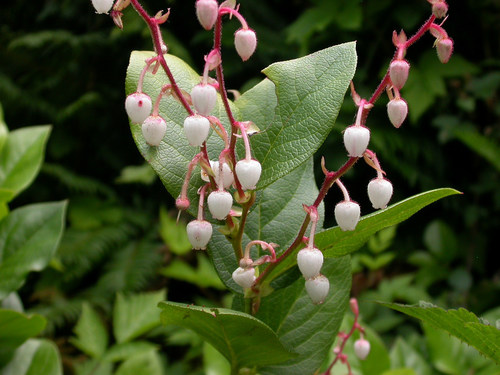
British Columbia, CA
You might spot Salal, Small Ground-Cone, and Evergreen Huckleberry.
View guide →
Take the discovery with you
Snap it with Snappit to identify it, learn what makes it special, and add the discovery to your collection.






.jpg&width=800)



_001.jpg&width=800)




