





Rose of Sharon
Hibiscus syriacus
The Rose of Sharon is a special kind of hibiscus that blooms beautifully in summer. Its flowers are often large and stunning!
Habitat: Gardens and sunny areas
The Rose of Sharon has large, trumpet-shaped flowers that bloom in white, pink, purple, or blue, often with a contrasting deep red or purple eye. These vibrant blossoms sit on an upright, multi-stemmed shrub.
Category
PlantsRarity
Common
Danger
1/5 · Very low
Snaps
9
Despite its name, it's not a rose at all; it's a member of the hibiscus family!
Its stunning, trumpet-shaped flowers can be as big as a child's hand!
Some varieties create a striking "eye" of contrasting color at the flower's center!
This tough plant can grow over 10 feet tall, almost like a small tree!
Rose of Sharon can produce abundant, showy flowers all summer long, ensuring many chances for pollination and seed production.
Has thick, tough leaves that help it reduce water loss, allowing it to thrive even during dry spells.
Develops sturdy seed pods that burst open to release seeds, helping new plants grow far and wide.
Apis mellifera
Bees collect nectar and pollen, aiding in reproduction.
Bombus impatiens
Bumblebees are vital pollinators for its showy flowers.
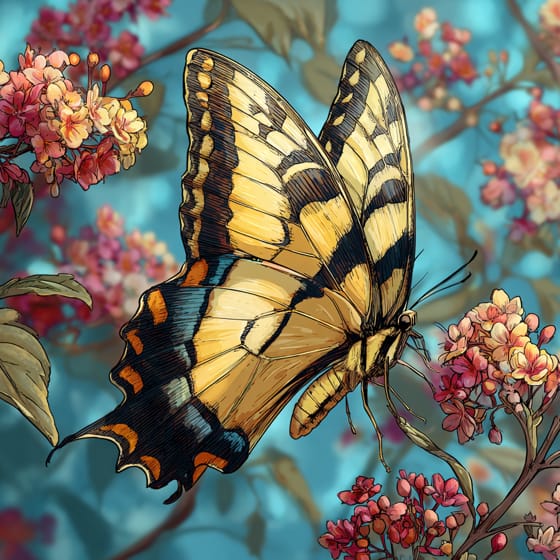
Papilio glaucus
Butterflies sip nectar, transferring pollen between flowers.

Odocoileus virginianus
Deer browse on its leaves and tender stems.
Deciduous plants periodically shed all their leaves, typically during autumn or dry seasons.
A shrub is a woody plant smaller than a tree, typically with multiple stems branching from or near the ground.
Summer blooming plants produce their flowers during the summer season, often providing vibrant color when many other plants have finished.
Fragrant flowers emit a pleasant aroma, often to attract pollinators or for defense.

Pertaining to plants that have stems covered with sharp, pointed projections for defense.

Edible plants are those parts of a plant that are considered safe for human consumption.

This habitat trait indicates species that can coexist with humans in urban and suburban environments, utilizing man-made structures and green spaces.
Danger
1/5 · Very low
Explore with care and ask an adult if you’re unsure what to do.
The easiest way to identify Rose of Sharon is to use the Snappit nature identifier app.
200-400 cm
150-300 cm
5-10 cm
Summer-fall
Yes
None
Perennial
Zoom in to split clusters and explore where this object has been snapped.
.jpg)
Virginia, US
You might spot Great Blue Heron and Canada Goose.
View guide →

North Carolina, US
You might spot Northern Cardinal, Carolina Wren, and Tufted Titmouse.
View guide →

Indiana, US
You might spot Eastern Fox Squirrel, Duck, and Canada Goose.
View guide →

Georgia, US
You might spot Eastern Gray Squirrel, Domestic Cat, and American Robin.
View guide →
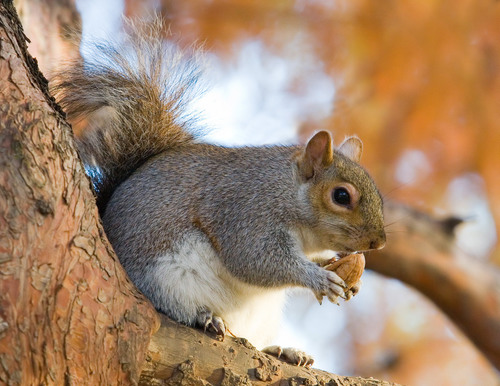
Georgia, US
You might spot Eastern Gray Squirrel, Domestic Cat, and American Robin.
View guide →

Georgia, US
You might spot Eastern Gray Squirrel, Domestic Cat, and Anole.
View guide →
Take the discovery with you
Snap it with Snappit to identify it, learn what makes it special, and add the discovery to your collection.








.jpg&width=800)


_001.jpg&width=800)



