




Woolly Locoweed
Astragalus mollissimus
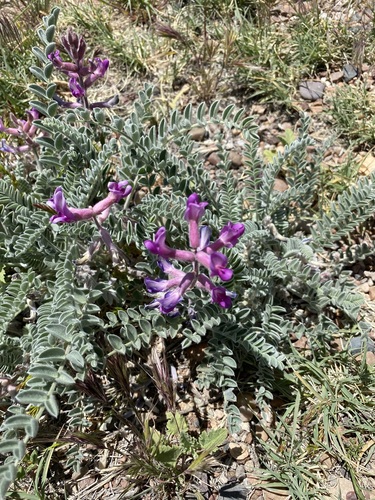
Woolly Locoweed is a soft, fuzzy plant that grows in the wild. It has beautiful purple flowers and is often found in grassy areas. This plant is special because it can survive in tough places where other plants might not grow.
Habitat: Grasslands
The Woolly Locoweed has distinct silvery-green, fuzzy leaves that form a low-growing clump. Its vibrant purple or magenta pea-like flowers bloom on stalks, creating a striking contrast against its woolly foliage, making it stand out in dry landscapes.
Category
PlantsRarity
Common
Danger
3/5 · Moderate
Snaps
3
Its name 'locoweed' comes from 'loco,' meaning crazy in Spanish, because animals act strangely after eating it!
Some Native American tribes traditionally used parts of the plant for ceremonial purposes, despite its toxicity.
The seeds can lie hidden in the soil for decades, waiting for just the right time to sprout!
Woolly Locoweed works with tiny soil bacteria to help enrich the dirt with nitrogen, a vital plant nutrient!
Woolly Locoweed has a deep taproot to find water far below ground, helping it survive in very dry places.
Its fuzzy, woolly leaves reflect harsh sunlight and trap moisture, keeping the plant cool and hydrated in hot climates.
Woolly Locoweed can produce toxic compounds that protect it from being eaten by most grazing animals.
Bombus bifarius
visits flowers for nectar
Rhizobium leguminosarum
lives in roots, fixes nitrogen

Equus caballus
grazing can cause locoism
Furry describes animals possessing a dense covering of soft hair or fur.
Flowering plants are any plants that produce flowers as part of their reproductive cycle.
Describes organisms capable of converting atmospheric nitrogen into compounds usable by plants.
Medicinal plants possess chemical compounds that can be used for therapeutic purposes to treat illnesses or maintain health.

Drought-tolerant plants can survive and flourish in conditions with limited water availability.

Grassland habitats are terrestrial biomes dominated by grasses and herbaceous plants, supporting a variety of grazing animals.

Describes plants that are particularly attractive and beneficial to a wide range of pollinating organisms.

Endangered status indicates a species is at a very high risk of extinction in the wild in the near future.
No aliases listed yet.
Danger
3/5 · Moderate
Don't touch or eat plants without asking an adult first.
The easiest way to identify Woolly Locoweed is to use the Snappit nature identifier app.
10-30 cm
15-30 cm
1.5-2.5 cm
Spring to early summer
No
High
Perennial
Zoom in to split clusters and explore where this object has been snapped.
Apr 29, 2026
Painted Desert Community Complex Historic DistrictPhoto attribution
no rights reserved
License: CC0 1.0 ↗
Image may be shown cropped inside the card frame.

Colorado, US
You might spot Common Side-Blotched Lizard and Eastern Collared Lizard.
View guide →

New Mexico, US
You might spot Common Side-Blotched Lizard and Kingcup Cactus.
View guide →

New Mexico, US
You might spot Pinkflower Hedgehog Cactus and Kingcup Cactus.
View guide →

Arizona, US
You might spot Common Raven, Plateau Fence Lizard, and Fourwing Saltbush.
View guide →

Colorado, US
You might spot Common Side-Blotched Lizard and Eastern Collared Lizard.
View guide →
Take the discovery with you
Snap it with Snappit to identify it, learn what makes it special, and add the discovery to your collection.








.jpg&width=800)



_001.jpg&width=800)




