





Domestic Horse
Equus caballus
Domestic horses are gentle and strong animals that have been friends with people for a long time. They come in many colors and sizes, and they love to run and play in fields.
Habitat: Grasslands
The Domestic Horse is a large, hoofed mammal with a long head and muscular body. They have a flowing mane and tail, and coats come in almost every color, from black and white to shades of brown, red, and gold, often with unique markings.
Category
MammalsRarity
Common
Danger
3/5 · Moderate
Snaps
7
A horse's age can be estimated by looking at the wear and changes in their teeth!
A horse's eyes are on the sides of their head, giving them nearly 360-degree vision!
Horses cannot vomit, which means they have a very unique digestive system!
Horses only walk on one 'toe' on each foot, protected by a hard hoof!
Domestic Horse can run swiftly and powerfully because of their strong, muscled legs that help them cover long distances quickly.
Domestic Horse has large, flat molars that help them grind tough plant material like grass and hay into digestible bits.
Domestic Horse has wide-set eyes, excellent hearing, and a keen sense of smell that help them detect threats and food.
Domestic Horses are herbivores that munch on grasses, hay, and other plant matter to get their energy.
Age differences: Young horses, called foals, drink their mother's milk before transitioning to solid plant foods.
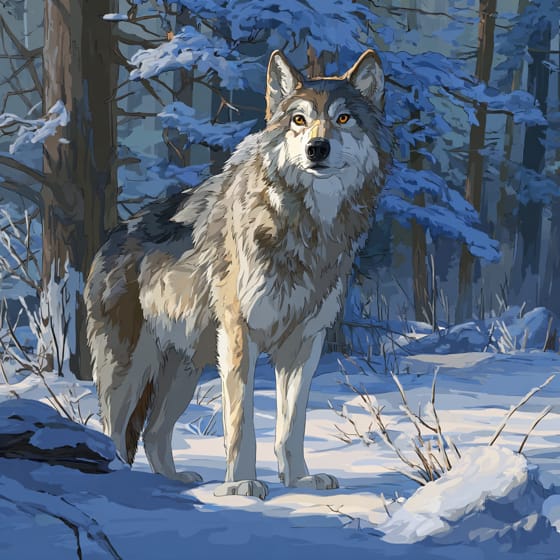
Canis lupus
Wild or feral horses can be prey for large predators.
Puma concolor
In some wild or feral ranges, pumas may hunt horses.

Homo sapiens
Humans have a long history of working with and caring for horses.

Poa pratensis
A common pasture grass that forms a main part of their diet.
Furry describes animals possessing a dense covering of soft hair or fur.
Social animals live in organized groups, cooperating for survival benefits such as foraging, defense, and raising offspring.
Grassland habitats are terrestrial biomes dominated by grasses and herbaceous plants, supporting a variety of grazing animals.
This trait characterizes organisms whose diet consists entirely or primarily of plant material.

Domesticated refers to species that have been selectively bred and tamed by humans for specific purposes.

Diurnal animals are primarily active during daylight hours, typically resting or sleeping at night.

Describes a species whose presence and role have a disproportionately large effect on its environment.

This trait identifies organisms that exhibit exceptional swiftness in movement for hunting, escape, or travel.
No aliases listed yet.
Danger
3/5 · Moderate
Always stay calm and quiet around horses, and ask an adult before getting close.
The easiest way to identify Domestic Horse is to use the Snappit nature identifier app.
140-250 cm
350-1000 kg
25-30 years
70 km/h
Domestic Horses are herbivores that munch on grasses, hay, and other plant matter to get their energy.
Grasslands
Grazing
Zoom in to split clusters and explore where this object has been snapped.

US
You might spot Firewheel, Domestic Horse, and Atlantic Horseshoe Crab.
View guide →

California, US
You might spot Greasewood, Osprey, and Alkali Fly.
View guide →

Montana, US
You might spot Bighorn Sheep and Curlleaf Mountain Mahogany.
View guide →

North Carolina, US
You might spot Firewheel, Domestic Horse, and Atlantic Horseshoe Crab.
View guide →

Montana, US
You might spot Black Bear, Moose, and Lodgepole Pine.
View guide →

Maryland, US
You might spot Domestic Horse, Sanderling, and Atlantic Ghost Crab.
View guide →
Take the discovery with you
Snap it with Snappit to identify it, learn what makes it special, and add the discovery to your collection.




.jpg&width=800)


.JPG&width=800)

.jpg&width=800)
