





devil's walkingstick
Aralia spinosa
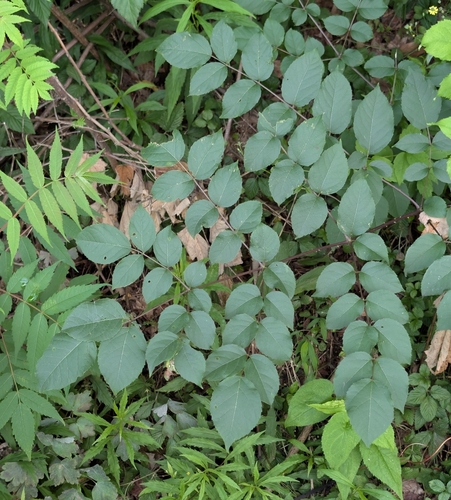
The devil's walkingstick is a tall shrub with spiky stems and big, green leaves. It can grow very tall and has small white flowers that turn into dark berries. It's a unique plant that stands out in the forest!
Habitat: Forests
The devil's walkingstick has a thick, often unbranched stem covered in numerous sharp, stout spines. Its massive, twice-compound leaves, reaching up to 4 feet long, create a tropical canopy, topped by large umbrella-like clusters of creamy white flowers. Dark purple to black berries follow in fall.
Category
PlantsRarity
Common
Danger
2/5 · Low
Snaps
13
Early settlers used its roots to make remedies for various ailments.
It is a cousin to ginseng, a famous medicinal root!
Its spooky name comes from its spiky stem, resembling a thorny walking stick!
Though it looks like a tree, it's actually one of the largest shrubs in its family!
The devil's walkingstick has sharp spines all over its stem that help it defend against hungry herbivores.
It produces clusters of dark berries that attract many birds, helping it spread its seeds far and wide.
This plant can send up new shoots from its roots, allowing it to quickly form dense thickets and outcompete other plants.
Apis mellifera
gathers nectar from its abundant flowers
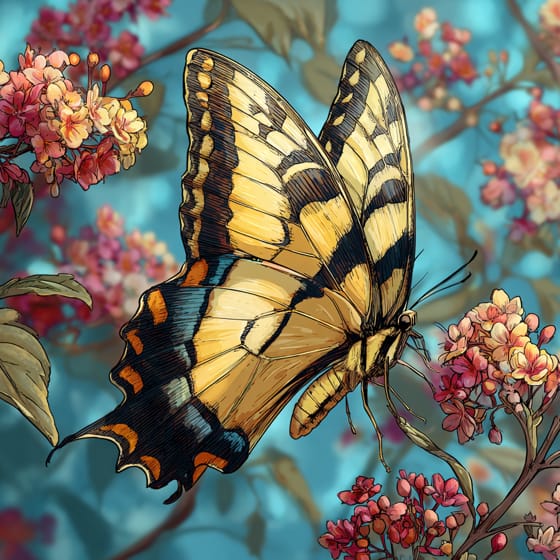
Papilio glaucus
visits flowers for nectar
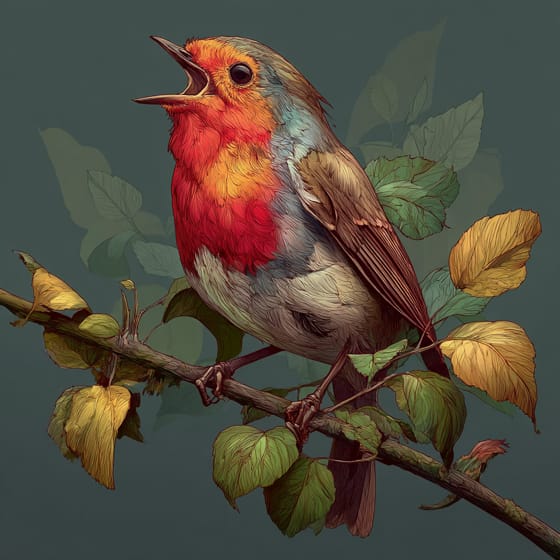
Turdus migratorius
eats the plant's dark berries
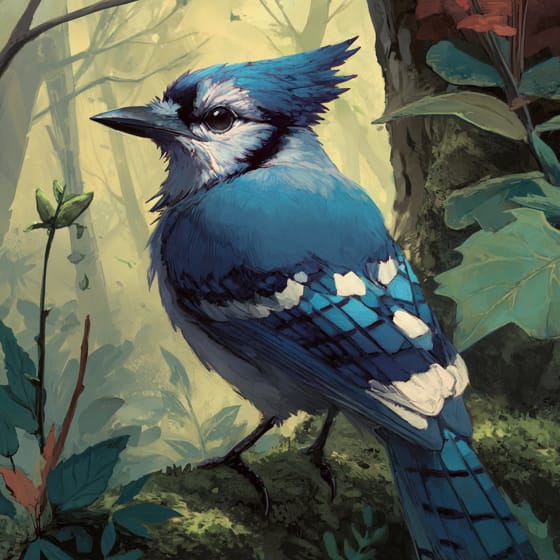
Cyanocitta cristata
disperses seeds by consuming berries
Deciduous plants periodically shed all their leaves, typically during autumn or dry seasons.
Flowering plants are any plants that produce flowers as part of their reproductive cycle.
A shrub is a woody plant smaller than a tree, typically with multiple stems branching from or near the ground.
Fruit-bearing plants produce fruits, which are the mature ovaries of flowering plants containing seeds.

Medicinal plants possess chemical compounds that can be used for therapeutic purposes to treat illnesses or maintain health.

Pertaining to plants that have stems covered with sharp, pointed projections for defense.

Describes plants that are particularly attractive and beneficial to a wide range of pollinating organisms.

Forest habitats are terrestrial environments dominated by dense tree cover, supporting a high diversity of plant and animal life.

Possessing sharp, pointed projections or spines on the body or surface.
No aliases listed yet.
Danger
2/5 · Low
Stay away from the sharp spines on the stems to avoid getting hurt.
The easiest way to identify devil's walkingstick is to use the Snappit nature identifier app.
300-1000 cm
200-500 cm
0.2-0.3 cm
Late summer
No
Mild
Perennial
Zoom in to split clusters and explore where this object has been snapped.
May 31, 2026
Arrowmont School of Arts and CraftsPhoto attribution
(c) Nick Kleinschmidt, some rights reserved (CC BY)
License: CC BY 4.0 ↗
Image may be shown cropped inside the card frame.

Florida, US
You might spot Anole, Eastern Box Turtle, and Golden Silk Spider.
View guide →

Tennessee, US
You might spot Black Bear, Yellow Wakerobin, and Pipevine Swallowtail.
View guide →

Kentucky, US
You might spot Multiflora Rose, Eastern Newt, and American Beech.
View guide →

Georgia, US
You might spot American Beautyberry, Muscadine, and Virginia Creeper.
View guide →

Alabama, US
You might spot Duck, Canada Goose, and Pinkladies.
View guide →

Florida, US
You might spot Resurrection Fern and Evans' Deer Moss.
View guide →
Take the discovery with you
Snap it with Snappit to identify it, learn what makes it special, and add the discovery to your collection.






.jpg&width=800)



_001.jpg&width=800)




