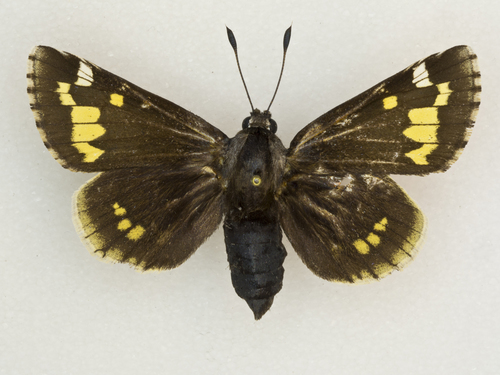


Yucca Giant-Skipper
megathymus yuccae
The Yucca Giant-Skipper (Megathymus yuccae) is a fascinating, robust butterfly that blurs the lines between butterflies and moths for many casual observers. Belonging to the family Hesperiidae, this impressive insect is intrinsically tied to the yucca plants of the southern United States and northern Mexico. Its unique life cycle is a marvel of adaptation, with larvae spending nearly their entire development hidden within the tough stems and root systems of yuccas. Unlike the delicate fluttering of typical butterflies, the Yucca Giant-Skipper powers through the air with a rapid, darting flight pattern. Because the adults have reduced mouthparts and rarely feed, their entire aerial existence is a brief, energetic rush to mate and lay eggs, fueled entirely by the fat reserves built up during their long larval stage deep inside the desert flora.
Habitat: Found primarily in dry, sandy scrublands, coastal plains, and desert environments where various species of yucca plants are abundant.
This large butterfly features a notably thick, hairy body and an exceptionally robust build, making it look much like a moth. It boasts a wingspan of 5 to 8 centimeters, with forewings that are primarily dark brown to blackish, accented by striking yellow, gold, or whitish spots and bands near the edges. The hindwings are generally darker and less patterned but may have a lighter fringe. When resting, it holds its wings partially open in a classic skipper V-shape, highlighting its large head, prominent eyes, and hooked antennae.
Category
InsectsRarity
Common
Danger
1/5 · Very low
Snaps
Be the first to snap!
Adults lack functional mouthparts, meaning they cannot eat and must survive their entire adult flying stage using the fat they stored as caterpillars.
Because of their thick, hairy bodies and extremely rapid flight, Yucca Giant-Skippers are frequently mistaken for large moths rather than butterflies.
The caterpillars build a chimney-like silk tube at the center of the yucca plant, which they use to safely dispose of their waste away from their feeding site.
The caterpillars are specialized to bore directly into the tough crowns and root systems of yucca plants to feed while safely hidden from predators.
Larvae construct a unique, chimney-like silk tube at the center of the host plant, providing a secure shelter and a safe way to expel waste.
Adults possess massive flight muscles relative to their wing size, allowing them to fly at incredible speeds with erratic, darting movements.
Larvae are obligate feeders on the roots and crowns of yucca plants, while adults rarely, if ever, feed.
Age differences: As adults, they have largely non-functional mouthparts and rely entirely on fat stores accumulated during their long larval stage.

Yucca baccata
Host plant providing food and shelter for larvae.

Campylorhynchus brunneicapillus
Insectivorous birds frequently hunt the adult butterflies.
Trichogramma minutum
Small wasps often parasitize the eggs of the skipper.
No trait badges are assigned for this object yet.
No aliases listed yet.
Collections for this object will appear here as more themes are added.
Danger
1/5 · Very low
No special safety notes yet.
Compare the wing outline, spots, bands, eyespots and wing edges. The underside can look completely different from the top. Check for tails, the antennae and where the markings sit instead of relying on color alone. Butterfly Identifier: upload a photo and compare the visible details.
3-4 cm
5-8 cm
0.001-0.003 kg
1 years
Larvae are obligate feeders on the roots and crowns of yucca plants, while adults rarely, if ever, feed.
Found primarily in dry, sandy scrublands, coastal plains, and desert environments where various species of yucca plants are abundant.
Foraging
Zoom in to split clusters and explore where this object has been snapped.
Recent snaps will appear here as new observations are added.
Take the discovery with you
Snap it with Snappit to identify it, learn what makes it special, and add the discovery to your collection.