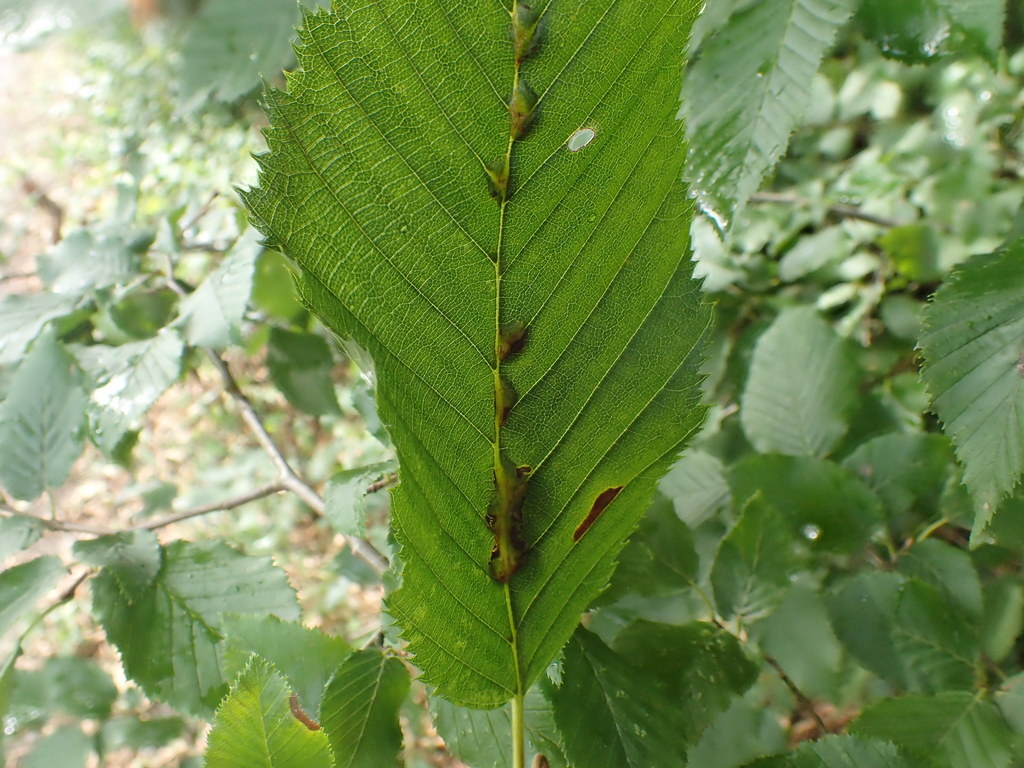





Zygiobia carpini
Zygiobia carpini
Zygiobia carpini is a tiny bug that loves to munch on leaves. It has a special way of blending in with its surroundings, making it a little tricky to spot!
Habitat: Forests
The Zygiobia carpini is a tiny, delicate insect, typically dull brown or grey in color. It has long, slender legs and antennae, with clear wings fringed with tiny hairs. Its fragile body makes it hard to spot without careful observation.
Category
InsectsRarity
Common
Danger
1/5 · Very low
Snaps
Be the first to snap!
Adult midges only live for about a week, just long enough to lay eggs.
Inside each gall, the larva slurps up tasty nutrients directly from the plant.
Many tiny Zygiobia carpini galls can cover a single hornbeam leaf, like little decorations.
The galls created by this midge are shaped like tiny horns on hornbeam leaves!
Zygiobia carpini larvae can trick hornbeam trees into growing special plant 'houses' called galls that protect them as they develop.
Adult Zygiobia carpini can detect specific chemicals from hornbeam trees to find the perfect leaf for laying their eggs.
Zygiobia carpini larvae are hidden inside plant galls, making them invisible to many predators who might want to eat them.
The larvae eat the nutritious plant sap and tissue inside galls they create on hornbeam leaves.
Age differences: Larvae feed inside galls; adult midges generally do not feed, relying on energy stored from the larval stage.

Carpinus betulus
Zygiobia carpini larvae feed on the leaves of this tree, causing galls.

Parus major
Small birds, like tits, may forage on midge larvae or pupae.
Platygaster carpini
This tiny wasp lays its eggs inside Zygiobia carpini larvae.
Solitary animals live alone for most of their lives, only interacting with others for mating or parental care.
Camouflaged describes organisms that possess coloring or patterns that allow them to blend into their environment.
This trait characterizes organisms whose diet consists entirely or primarily of plant material.
Forest habitats are terrestrial environments dominated by dense tree cover, supporting a high diversity of plant and animal life.
Diurnal animals are primarily active during daylight hours, typically resting or sleeping at night.
Pertaining to species that are significantly smaller than typical or average for their kind.
Describes organisms that transfer pollen, enabling the fertilization and reproduction of plants.
No aliases listed yet.
Danger
1/5 · Very low
It's best to look at bugs from a distance and not touch them, as some can be delicate.
Look for six legs, antennae, three body sections and the shape of the wings. Beetles have hardened front wings; flies have just one working pair. Tiny insects may need a close view before their group is clear. Insect Identifier: upload a photo and compare the visible details.
2-6 mm
1-3 mm
5-14 days
The larvae eat the nutritious plant sap and tissue inside galls they create on hornbeam leaves.
Forests
6
Zoom in to split clusters and explore where this object has been snapped.
Recent snaps will appear here as new observations are added.
Take the discovery with you
Snap it with Snappit to identify it, learn what makes it special, and add the discovery to your collection.