Snappit logo
Snappit
Get App
Generic illustration, not a photograph of this venueIllustration
ParkKanto / Tohoku, Japan

Nikko National Park

Nikko has room for both ornate shrines and a very different kind of day: open wetland, mountain-backed water and small birds moving through the trees.

About

Nikko has room for both ornate shrines and a very different kind of day: open wetland, mountain-backed water and small birds moving through the trees. For this visit, head up into Okunikko and concentrate on Yumoto, Lake Yunoko and Senjogahara. These places sit along the same bus corridor, but they are separate stops. The national park extends across Tochigi, Gunma and Fukushima; its Nasu and Shiobara areas, and the World Heritage shrines and temples in central Nikko, belong to other outings.

Begin at Nikko Yumoto Visitor Center. Its landscape model helps turn a collection of unfamiliar names into a place you can understand: lakes, river, wetland and the mountains around them. Spend time with the wildlife and plant displays, then ask what is worth looking for that day and which paths are open. The center also explains the less obvious things outside, including why trees may be wrapped in protective netting and why deer fences divide parts of the landscape. Admission is free.

Lake Yunoko makes a gentle first stop near the visitor center. Keep this to a short look from the Yumoto shore if you are also going to the marsh. In the cooler months, bring binoculars and compare the waterbirds rather than simply counting ducks: a tufted duck’s yellow eye and hanging crest look quite different from a coot’s white bill and forehead. The full lakeside circuit is a separate walk of about 3 km, normally taking 1–1.5 hours; it closes in winter. Going down to the foot of Yudaki Falls adds a steep stair connection and a different return plan.

For Senjogahara, take the road bus from Yumoto back towards Nikko and get off at Akanuma. Follow the signed nature trail towards the marsh viewing deck, pause where the view opens, then return the same way. Allow 60–90 minutes for this shorter outing, with time to watch the river and study plants from the boardwalk. It is a satisfying choice if your group wants to explore without committing to the full crossing. Sanbonmatsu has a separate roadside marsh viewpoint; it is not a shortcut across the wetland to the Akanuma trail.

The open ground has a long story. Volcanic activity blocked water here, and the former lake gradually filled with plant remains to become wetland. Look beyond the broad sweep of grass for different textures: wet ground, shrubs, woodland edges and the Yukawa River threading through the landscape. Early summer can bring the white seed heads of hare’s-tail cottongrass; later, pink flower spikes of hozaki shimotsuke add colour. In autumn, the low vegetation changes colour as well as the trees. The boardwalk lets you see this living surface without trampling it.

There is another layer of the visit in the woods. Great spotted woodpeckers, willow tits and Eurasian nuthatches are included in the local bird calendar. Stop somewhere that leaves room for other walkers, listen, then scan the trunks and branches. If you find deer browsing signs or protective fencing, use them to talk about how a native animal can become a conservation problem when its numbers rise. Wildlife is a possibility, never an appointment. Bears also live throughout Okunikko, so check the latest notices and avoid dawn, dusk and solitary walking.

A longer day can continue from Akanuma through Senjogahara to Yudaki, but treat that as the main walk rather than an automatic extra. The visitor center lists about 5 km and 2.5–3 hours for that route. As checked on 16 October 2026, the eastern path between Yudaki and Kotaki is closed for works until the end of March 2027, with a signed alternative allowing passage towards Senjogahara. Confirm the diversion before setting out, and leave time to reach your onward bus. If the weather or trail advice is unhelpful, a shorter lake-and-center visit is still worthwhile. Enhance your adventure: download the Snappit app to identify the local species you encounter.

Nikko National Park was designated on 4 December 1934. Its borders have changed over time; Oze became a separate national park in 2007. In Okunikko, the landscape’s history goes much further back: volcanic activity created dammed lakes, and Senjogahara developed as vegetation accumulated in one of them. Its name means “battlefield,” recalling a legend about the deities of Mount Nantai and Mount Akagi competing for Lake Chuzenji. That is a story attached to the landscape, not evidence of a human battle here. Lake Yunoko, the Yukawa River, Senjogahara and Odashirogahara together became the Oku-Nikko-shitsugen Ramsar site in 2005.


What to do here

Use the Yumoto Visitor Center to get your bearings, take a short waterbird-watching pause on Lake Yunoko’s Yumoto shore, then travel to Akanuma for an out-and-back on the Senjogahara nature trail. Choose one small discovery to linger over: a diving duck, the shape of a seed head, a bird moving down a trunk or the contrast between riverbank woodland and open marsh. Fit the longer Akanuma–Yudaki walk into a different, more walking-focused plan.

Seasonal info

Spring can still have snow and ice when lower Nikko feels warm. If thunder threatens, turn back early; the open marsh is a poor place to wait out a storm. Autumn traffic can greatly slow the road journey. Winter changes the outing completely: Lake Yunoko’s circuit closes, snowshoe routes need separate opening checks, some toilets close and the visitor center has fewer opening days. The usual Konsei Road winter closure is noon on 25 December to noon on 24 April; do not assume an approach from Gunma remains available.

Accessibility

A boardwalk is not automatically a step-free route. The longer marsh walk includes woodland paths, and the Lake Yunoko–Yudaki connection has steep stairs. Accessible toilet equipment is listed in front of Yumoto Visitor Center and at Akanuma, subject to facility hours. For a wheelchair or stroller visit, contact the center on +81 288-62-2321 to agree a suitable short approach and check entrance access, surfaces and any temporary works. Snow and ice can make even a short outing unsuitable.

Don't miss

1

Lake Yunoko waterbirds and mountain reflections, with a short shore visit or a separate full circuit

2

Senjogahara’s open marsh and river-edge woodland from the Akanuma nature trail

3

White cottongrass seed heads, pink summer flowers and autumn-coloured wetland vegetation

4

Visitor-center displays that explain the volcanic landscape and the work to protect it

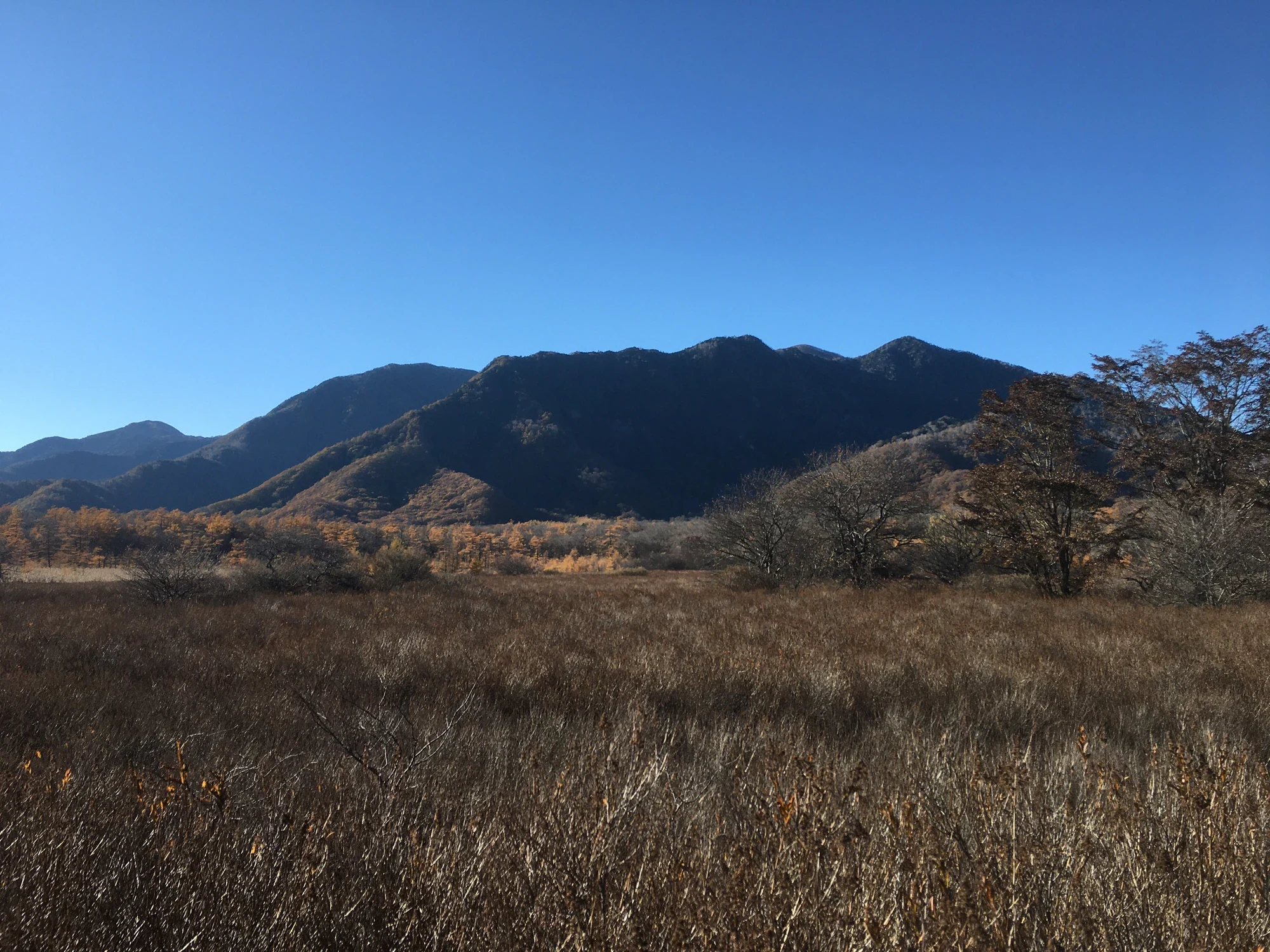
Russet wetland vegetation and scattered bare trees stretch toward a wooded mountain ridge beneath a clear blue sky.

Late-autumn colours across Senjogahara in Okunikko, photographed on 29 October 2021.

Senjogahara - autumn - oct 29 2021 various 18 53 48 934000.jpeg — Nesnad, CC BY 4.0 (https://creativecommons.org/licenses/by/4.0/). Source: https://commons.wikimedia.org/wiki/File:Senjogahara_-_autumn_-_oct_29_2021_various_18_53_48_934000.jpeg. Resized and recompressed as WebP; no crop or retouching. · Creative Commons

Walks and routes

Akanuma to the Senjogahara viewing deck and back

Start at Akanuma, follow the signed Senjogahara nature trail to the marsh viewing deck and retrace your steps. Pause where you can watch the river or open vegetation without blocking the boardwalk. Confirm the open approach locally before departure.

Boardwalk and trail surfaces; no verified continuous step-free specification. Wet wood, ice and temporary works can affect footing.

Akanuma to the Senjogahara viewing deck and back

Lake Yunoko circuit

Walk the lakeside circuit from Yumoto when it is open. It is a good alternative if you want to stay in one area rather than transfer to Akanuma. The full circuit is different from the short Yumoto-shore pause in the main plan.

Do not infer step-free access from the low overall relief. Ask staff about surfaces and any assistance needs. Going down to Yudaki’s lower viewing area adds steep stairs outside this lakeside-circuit description.

Lake Yunoko circuit

Akanuma through Senjogahara to Yudaki

A longer one-way walk through marsh and forest to the waterfall area. Plan the onward journey from Yutaki-iriguchi bus stop, allowing time for the access walk; the stop is not the waterfall platform. If you leave a car at Akanuma, arrange the road-bus return before walking.

Boardwalk, woodland paths and steps; not presented as a step-free crossing. Do not add the steep climb from the falls towards Lake Yunoko without allowing for it.

Akanuma through Senjogahara to Yudaki

A first Okunikko nature day

Take the Yumoto-bound bus from the Nikko railway stations. Visit the center and choose a short pause on the nearby lake shore. Take a Nikko-bound bus back to Akanuma, use the toilets, then walk out to the marsh viewing deck and back. Return from Akanuma on the main road bus. Allow a full day from the railway stations, and decide your return departure before walking.

Stay around Yumoto

If transfers or trail conditions make the marsh unappealing, spend time in the center and beside Lake Yunoko. In suitable snow-free conditions, replace the short shore visit with the full circuit. In poor weather, keep to the indoor exhibits and avoid stretching the day to fit a hike.

Things to try

Read the landscape before walking

At Yumoto’s landscape model, find the lake, river and marsh you will visit. Outside, see whether you can recognise their different habitats. Allow roughly 30–45 minutes in the center.

A wetland texture hunt

From the boardwalk, compare three textures: soft-looking seed heads, upright flower spikes and the leaves of marsh-edge shrubs. Photograph or sketch them without touching or collecting them.

Join a seasonal nature activity

Ask the visitor center about its current guided walks or nature sessions. Confirm the date, language, age suitability, fee and booking requirement before making one the centerpiece of your day.

Use the exhibits, then shorten the day

Spend longer with the center’s landscape and ecology displays when it is open. In thunder or heavy rain, skip exposed marsh walking rather than assuming the forest will make a long route safe.

Wildlife and habitats

Lake Yunoko

Use binoculars to look for a duck with a yellow eye and a crest hanging from the back of its head. Adult males have bold black-and-white plumage; females are browner. Watch from the shore without feeding or trying to bring birds closer.

Look for a dark waterbird with a white bill and forehead. A coot belongs to the rail family, even though its swimming can make it look duck-like at first glance.

Woodland beside the Senjogahara trail

Scan tree trunks for a black-and-white woodpecker with a red patch under the tail. Let the bird come into view naturally; do not seek a nest hole or play calls.

Trees around Yumoto and the marsh-edge woodland

Watch how the bird grips a trunk: a nuthatch’s head-down posture is a helpful clue. Its short tail gives a different outline from a woodpecker.

Senjogahara woodland edges

Look among the small woodland birds for a black cap like a little beret. A willow tit is only about 12 cm long; enjoy the activity first and ask staff for help if the identification is uncertain.

Okunikko forest and wetland margins

The fences and netting are part of the story: they protect wetland plants and tree bark from deer. Leave the protective structures undisturbed, and give any deer plenty of room.

Okunikko bear habitat

This is a safety entry, not a spotting challenge. Do not follow tracks, search bushes or approach a bear for a photograph. Check the latest reports and change your route when staff advise it.

Compare the swimming and feeding behaviour of mallards with the other waterbirds. Keep any identification tentative when plumage is unfamiliar; the lake can hold several duck species at once.

Stories and discoveries

The white fluff comes after flowering

The conspicuous white display of watasuge, or hare’s-tail cottongrass, is its seed-head stage. The local flower calendar labels it as seeds, a useful reminder that not every striking plant display is a flower.

One connected wetland system

Lake Yunoko drains over Yudaki into the Yukawa River, which flows through Senjogahara. The lake, river and two wetlands are protected together as Oku-Nikko-shitsugen under the Ramsar Convention.

A story behind the name

“Battlefield” refers to the legend of the Nantai and Akagi mountain deities disputing Lake Chuzenji. The geological story is different: an eruption-created lake gradually became wetland.

When to visit

spring

Check for lingering snow before committing to the full lake circuit or marsh trail. Look for fresh leaves and use the flower calendar to see which plants are actually in season.

summer

Choose time for plants and woodland birds, carry rain protection and check the forecast before crossing exposed ground. Leave early if thunder threatens.

autumn

Look for colour in the wetland itself as well as the surrounding trees. Bring a warm layer and leave extra travel time; foliage season can crowd buses and the Irohazaka road.

winter

Plan a separate snow-season visit. Check which marked snowshoe routes are open, whether the center is open that day, and where usable toilets remain. Never use frozen lake surfaces or cut across the marsh.

Getting there and practical advice

Nikko Yumoto Visitor Center

Free exhibits and local advice. Current Japanese hours: April–November 09:00–16:00, extended to 17:00 in July and August; December–March 09:30–16:00. Closed on weekdays in December and January, and Wednesdays in February and March. Check holiday exceptions and dated notices before travel.

Akanuma Nature Information Center

A useful second check of trail conditions before entering the marsh. The 2026 schedule lists 25 April–30 November, with the information counter 09:00–16:00; the stated closure on 27 April is already past. Winter arrangements require a new check.

Toilets at the start of the walks

Use the toilet in front of Yumoto Visitor Center during its opening hours or the Akanuma toilets before entering the trail. Accessible equipment is listed at these locations. The center-front toilet does not remain open when the center closes; the operator points other visitors to the Yumoto north car park toilet.

The main road-bus corridor

From JR Nikko or Tobu-Nikko station, use a bus whose destination is Yumoto Onsen. Yumoto and Akanuma are on this corridor; YK services also detour via Kotoku. The 2026 timetable gives roughly 10–20 minutes from Yumoto down to Akanuma, depending on the service, before any delay or wait. A bus labelled only Chuzenji Onsen stops short of both.

Choose the right bus at Akanuma

The road stop Akanuma and the nearby Akanuma-shako low-pollution-bus departure point serve different routes. The low-pollution bus heads towards Odashirogahara, Nishinoko and Senjugahama; it is not the bus back to the Nikko railway stations. This short itinerary uses the main road service.

Driving and parking

Yumoto is reached from the Nikko side on Route 120 via Irohazaka. Use signed parking and budget separately for Akanuma’s paid car park. Check current closures and winter equipment requirements before driving; the Konsei approach from Gunma normally closes in winter. A one-way hike needs a plan to retrieve the car.

Visitor-center facilities

Accessible toilet equipment is listed in front of Yumoto Visitor Center, and the Ministry lists a communication-support board. Call ahead to confirm the entrance approach, toilet availability and assistance needed, particularly in snow.

Marsh and waterfall routes

No continuous wheelchair-accessible route is promised here. A short viewing stop may suit some visitors better than the crossing, but approach gradients, boardwalk gaps and temporary works need individual checking. The lake-to-waterfall link is marked with steep stairs on the official map.

Sources and useful links

Wildlife you might spot

8

Each card links to a full Explore page with photos, traits, and fun facts.

Snap map for this place

Start with the big picture, then zoom in to explore individual wildlife observations around this place.

Loading map…

Good to know before you go

Before travelling, check the visitor center’s latest notices, trail status and bear reports; ask again on arrival. The eastern Yudaki–Kotaki path closure runs from 18 August 2026 to the end of March 2027 as currently announced. Use only the signed alternative.

For 1 September–30 November 2026, Yumoto Visitor Center is open daily 09:00–16:00. The toilet in front also closes outside those hours. Check the current opening notice before travelling.

Plan the return bus before starting to walk. Board a service marked for Yumoto Onsen from the railway stations; buses ending at Chuzenji Onsen do not reach Yumoto or Akanuma. Allow generous extra time in the autumn traffic.

Bring shoes with grip, a warm layer, waterproofs, drinking water and binoculars if you have them. Use a toilet at Yumoto or Akanuma before the walk; do not expect facilities on the marsh boardwalk.

Stay on designated paths, including for photographs. Do not pick plants, collect animals or feed wildlife. Take every scrap of litter home and leave protective fences undisturbed.

Walk with others in daylight and make your presence known where visibility is poor. A bear bell can reduce surprise encounters, but bears can also be active by day. Never approach, photograph or run from one. If it is far away, leave quietly; if close, back away slowly without turning your back. If very close, the center advises staying still until it moves away. Never approach cubs.

When the boardwalk is busy, keep right in single file and leave passing space. Set up tripods only where they will not obstruct people; the wetland beside the path is never overflow standing space.

Leave pets out of this marsh-walking plan. The visitor center excludes pets but admits guide, hearing and service dogs. If you travel with an assistance dog, discuss the intended outdoor route with staff in advance.

Frequently asked questions

No. This plan is in Okunikko, above the Irohazaka road, around Yumoto and Senjogahara. The World Heritage shrines and temples are in central Nikko, lower down the bus route. Trying to give both places a full visit in one short day leaves little time for the nature walk, especially in autumn traffic.
Yumoto and Akanuma are separate places. For the short plan, take a Nikko-bound road bus from Yumoto to Akanuma and return to the same stop after the walk. Walking from Yumoto via the lake and Yudaki is a longer outing with steep stairs and the currently signed diversion near the falls.
Choose the out-and-back from Akanuma to the marsh viewing deck, allowing about 60–90 minutes with stops. For a much shorter look, use the separate Sanbonmatsu roadside viewpoint. Neither option should be assumed wheelchair-accessible without checking current approach conditions. Do not cross the wetland between the viewpoint and the nature trail.
Yumoto Visitor Center is free. On the Tobu Bus fare page checked on 16 October 2026, adult one-way fares from the Nikko railway stations are ¥1,950 to Yumoto and ¥1,700 to Akanuma. Local transfers, parking, food and any guided activity are additional. Check the current fares and pass coverage for your actual journey.
Both live in Okunikko, but neither is a promised sighting. Deer fences and bark protection can be more useful things to notice than an animal itself. Bears are a safety consideration, not something to search for: check reports, avoid recent problem areas and follow the center’s encounter guidance if one appears.
The shorter Akanuma return walk lets you turn back without having to complete the full crossing. It still calls for close supervision on narrow or slippery boardwalks. Match the distance to the children, use toilets first and turn back early if weather or attention is fading. The longer crossing is a different commitment.
Not unchanged. The lakeside circuit closes in winter and marked snowshoe routes have their own seasonal status. Never walk onto frozen lake ice or improvise across a snow-covered marsh. In heavy rain, thunder or poor trail conditions, use the visitor-center exhibits when open and shorten or cancel the outdoor part.

Recent snaps at this place

Recent snaps will appear here as new observations are added.

View all ›

Take the discovery with you

Exploring Nikko National Park?

Identify the wildlife you spot, learn as you go, and keep a collection of the adventure.

  1. 1Spot it
  2. 2Snap it
  3. 3Keep the discovery