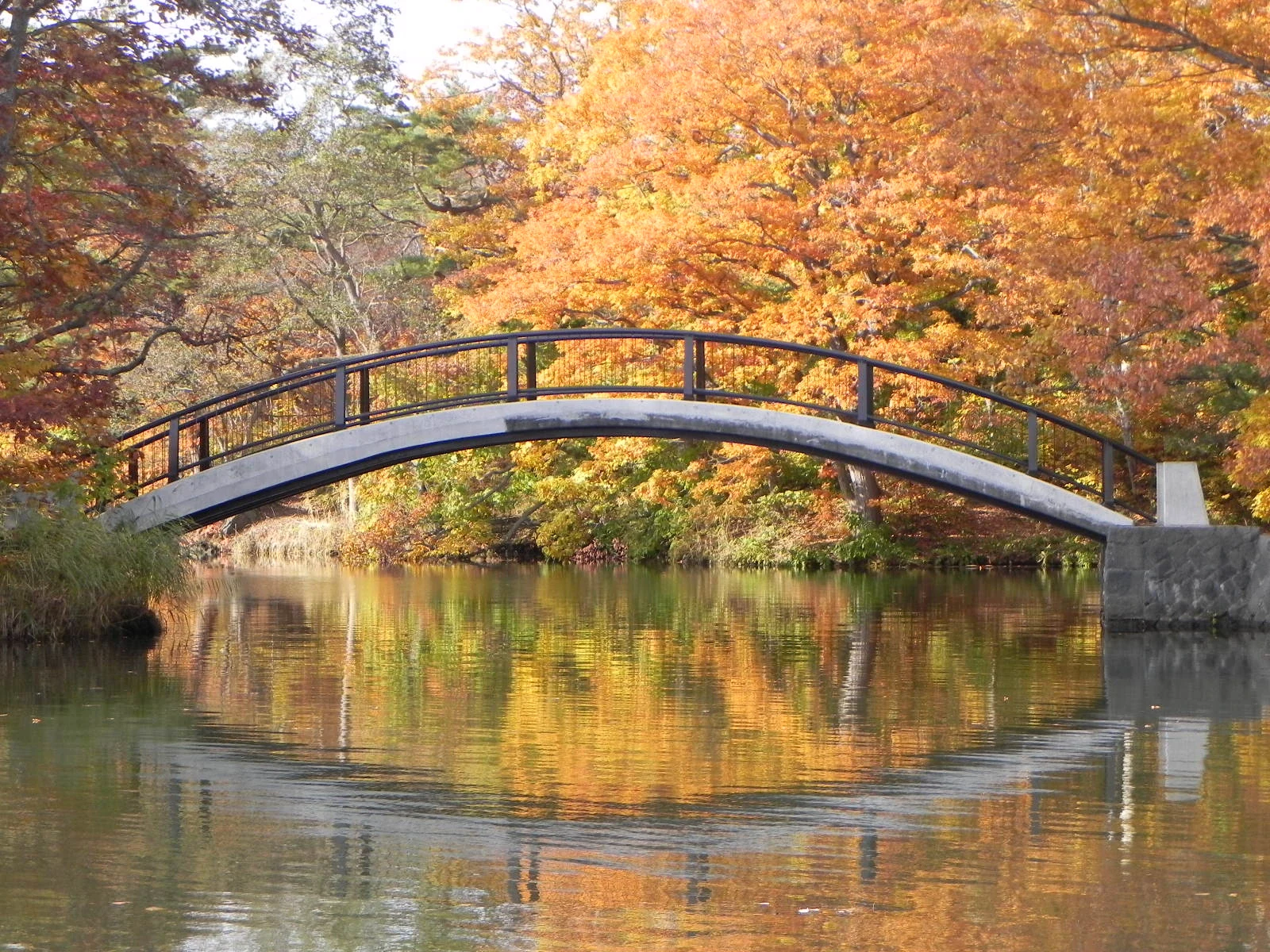
At Onuma, a short bridge can change the whole view. One moment you are beside an open stretch of lake with Mount Komagatake on the skyline; a few steps later, trees close around a sheltered inlet. The islands are small enough that the walk keeps offering another corner to explore, without asking you to climb a mountain. Moss, rough bark and reflections reward anyone who is happy to slow down.
Begin at JR Onuma-Koen Station and call into the neighboring tourist information office for a map and the day’s path advice. Park Square, the starting point for the main lake walks, is about five minutes away on foot. From here, the Shima-meguri route links seven islands by bridges. Its published walking time is 50 minutes, but give it 75–90 minutes if you want to stop, listen and take photographs. The shorter Ōshima route offers an easier first taste when energy, mobility or time is limited.
The pleasure is in switching between the big landscape and its small details. Look across the lake, then look down at the meeting of roots, rocks and water. In summer, floating leaves and water-lily flowers add another layer; in autumn, a single colorful tree can fill an entire inlet with reflections. Birds use both water and woodland, so binoculars are useful even on a short outing. Leave the plants where they grow and give animals room to carry on feeding.
This station-side visit is one small part of a much wider protected landscape. Onuma Quasi-National Park spreads across Nanae, Shikabe and Mori, taking in Lakes Onuma, Konuma and Junsainuma as well as volcanic Komagatake and its foothills. A 14 km lakeside cycle circuit, boat trips and mountain excursions each need their own decision about time and conditions. For a first visit, one good walk, lunch and perhaps a sightseeing cruise make a satisfying day. Don't forget to bring the Snappit nature identification app along to scan local species.
Komagatake’s eruptions and the debris that blocked local waterways helped shape this island-filled lake landscape. The wider area became a Hokkaido prefectural park in 1905 and was designated a quasi-national park on 1 July 1958. Onuma, Konuma and Junsainuma gained Ramsar wetland recognition on 3 July 2012, reflecting the importance of their water and habitats.