




Douglas Fir
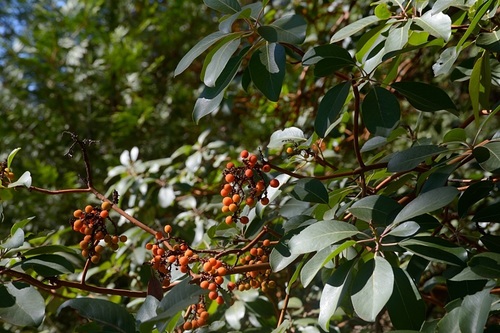
Arbutus Grove Provincial Park, a serene 22-hectare haven on Vancouver Island, British Columbia, offers a unique opportunity to immerse oneself in a distinctive West Coast ecosystem.
Arbutus Grove Provincial Park, a serene 22-hectare haven on Vancouver Island, British Columbia, offers a unique opportunity to immerse oneself in a distinctive West Coast ecosystem. Its primary purpose is to safeguard a significant stand of the Pacific madrone (also known as arbutus or *Arbutus menziesii*), Canada's only native broadleaf evergreen tree. This special tree, characterized by its reddish-brown peeling bark and lush green leaves, finds its northernmost range limits here, flourishing on rocky, well-drained soils and open bluffs. The park provides a quiet retreat where visitors can connect with nature and appreciate this iconic species.
Beyond the majestic arbutus, the park is a rich tapestry of coastal flora and fauna. Hikers can wander amidst towering Douglas-fir and western redcedar, alongside Garry oak and western hemlock. The understory thrives with various ferns like the western sword fern, and native shrubs such as salal, Evergreen Huckleberry, Red Huckleberry, and Baldhip Rose, which add splashes of color and texture. Keep an eye out for delicate wildflowers like the Pacific Dogwood, Western Starflower, and the intriguing Ghost Pipe, a parasitic plant lacking chlorophyll.
Visiting Arbutus Grove Provincial Park is an invitation to experience nature in its purest form. Without extensive facilities, it remains a tranquil space, perfect for quiet nature viewing and contemplative walks. It's a place where the distinctive beauty of the Pacific madrone defines the landscape and provides a memorable backdrop for observing the intricate relationships within this coastal forest, including the gentle Hermit Thrush or the slow-moving Pacific Banana Slug. It’s an essential stop for anyone wishing to witness the unique natural heritage of British Columbia. Wondering what that bird or insect is? Find out on your visit using the Snappit nature app.
Arbutus Grove Provincial Park was officially established on July 21, 1966. Its creation was specifically aimed at protecting a representative stand of the arbutus tree, recognizing its ecological significance as Canada's only native broadleaf evergreen. The park encompasses 22 hectares (54 acres) of this unique habitat and is situated within the broader Mount Arrowsmith Biosphere Region. BC Parks acknowledges the deep connection of Indigenous Peoples to these lands and is actively working to incorporate their teachings, traditions, and historical narratives into the park's profile.
Nature Viewing: Enjoy quiet walks, observing the unique arbutus trees and the diverse plant life, including western sword fern, salal, and various huckleberries.
Wildlife Observation: Keep an eye out for birds like the Hermit Thrush, and various insects, amphibians like the Wandering Salamander, or mollusks such as the Pacific Banana Slug.
Photography: Capture the striking beauty of the arbutus trees, especially their bark and berries, and the lush forest understory.
Spring: The forest awakens with fresh growth; wildflowers may be in bloom. Bird activity increases.
Summer: Warm, dry weather makes for pleasant hiking conditions. Foliage is at its fullest.
Fall: Observe the transition of colors in the understory and potentially spot wildlife preparing for winter.
Winter: Expect rain in the region, though temperatures generally stay above freezing.
Arbutus Grove Provincial Park has no developed facilities and no direct road access. While BC Parks is working on improving accessibility across its system, specific features for this park are not currently listed, suggesting limited accessibility for those with mobility challenges.
The primary highlight is the unique stand of Pacific madrone (arbutus) trees. Observe their distinctive reddish, peeling bark and evergreen leaves. Look for other native trees such as Douglas-fir and western redcedar.
Each card links to a full Explore page with photos, traits, and fun facts.
Start with the big picture, then zoom in to explore individual wildlife observations around this place.
Parking
As there is no direct road access into the park, visitors will need to find suitable roadside parking nearby along the adjacent Island Highway, or at a short distance and walk in.
Leave No Trace
Carry out everything you carry in. There are no garbage facilities, so proper waste disposal is crucial.
Footwear
Wear sturdy, comfortable footwear suitable for walking on natural, undeveloped trails and potentially uneven terrain.
Water & Snacks
Bring your own water and any snacks you may need, as there are no services within the park.
Binoculars & Camera
For birdwatching and capturing the unique beauty of the arbutus trees and other species, binoculars and a camera are highly recommended.
Wildlife Awareness
Be mindful of your surroundings and observe wildlife from a respectful distance. Do not feed animals.
Jan 13, 2022
Jun 19, 2021
Jun 19, 2021
Jul 9, 2019

Maryland, US
You might spot White-Tailed Deer and Eastern Gray Squirrel.
View guide →
.jpg)
District of Columbia, US
You might spot Eastern Gray Squirrel, Duck, and House Sparrow.
View guide →

Illinois, US
You might spot American Robin, Canada Goose, and House Sparrow.
View guide →

Virginia, US
You might spot Spotted Lanternfly and Northern Cardinal.
View guide →
Take the discovery with you
Identify the wildlife you spot, learn as you go, and keep a collection of the adventure.











