Snappit logo
Snappit
Get App
Generic illustration, not a photograph of this venueIllustration
ParkNorthwest Spain, Spain

Fragas do Eume Natural Park

Fragas do Eume rewards a slower kind of day out.

About

Fragas do Eume rewards a slower kind of day out. Look up into the tree canopy, then down at the layers of greenery beside your path: the river and the forest are the main event. You don’t need to reach a summit, complete a circuit or make it to the monastery to have a satisfying visit.

Start at the Caaveiro interpretation centre in Ombre, reached from Pontedeume. For a first visit, keep your plans around this entrance and the nearby recreation areas. Staff can help you choose an open waterside stretch that fits your group. Take time to compare the light above the river with the shade under the trees, and let a picnic or a few quiet stops set the pace.

Caaveiro monastery is an appealing extra, perched above the rivers, but getting there is a separate walking and access decision. The famous Os Encomendeiros path starts beyond the visitor centre and becomes more demanding after Fornelos. Choose it because you want a proper walk, rather than treating the monastery as the inevitable end of a short family stroll. Unlock an interactive field guide for this spot: get the Snappit app to identify nature on the go.

The park was declared in 1997, but the relationship between people and this valley is much older. Caaveiro has documented monastic history from the tenth century. Its buildings have been altered repeatedly, so what you see is a layered place rather than a monastery preserved at one moment in time. The provincial heritage account describes Romanesque remains, later Baroque work and nineteenth-century rebuilding. That history is worth carrying into a forest visit: the woods were also a working landscape, and the monastery was connected to the surrounding settlements. You can enjoy that context at the visitor centre even when a longer walk or access restrictions keep Caaveiro out of your day.

What to do here

Visit the interpretation centre, spend time in the woodland around the Ombre entrance and use a designated recreation area for a break. If everyone wants more walking, ask about the first section of Os Encomendeiros. Leave Caaveiro for a longer outing with the approach, climb and return agreed in advance.

Seasonal info

Wet leaves, stones and roots can make a modest walk surprisingly slippery. After heavy rain or strong wind, check path and bridge advice before setting off. For autumn 2026, Caaveiro’s owner warns that works may restrict parts of the monastery and its outdoor spaces between June and November; check the notice before making it the focus of your day.

Accessibility

Ask the Ombre centre about the exact entrance, toilet and outdoor surfaces you need before travelling. Os Encomendeiros is a forest walk involving suspension-bridge access; farther on, the official route description warns of steep sections with assistance ropes. Do not treat it as a wheelchair or pushchair route. The road alongside the river may carry vehicles; ask staff for a suitable outdoor option instead of assuming you can walk safely along it.

Don't miss

1

A small-scale woodland visit from Ombre, with time to notice the river and canopy.

2

Ferns and mosses that make the shaded forest floor worth a closer look.

3

The first section of Os Encomendeiros for walkers who want to go farther.

4

Caaveiro monastery as an optional heritage visit, subject to access and works.

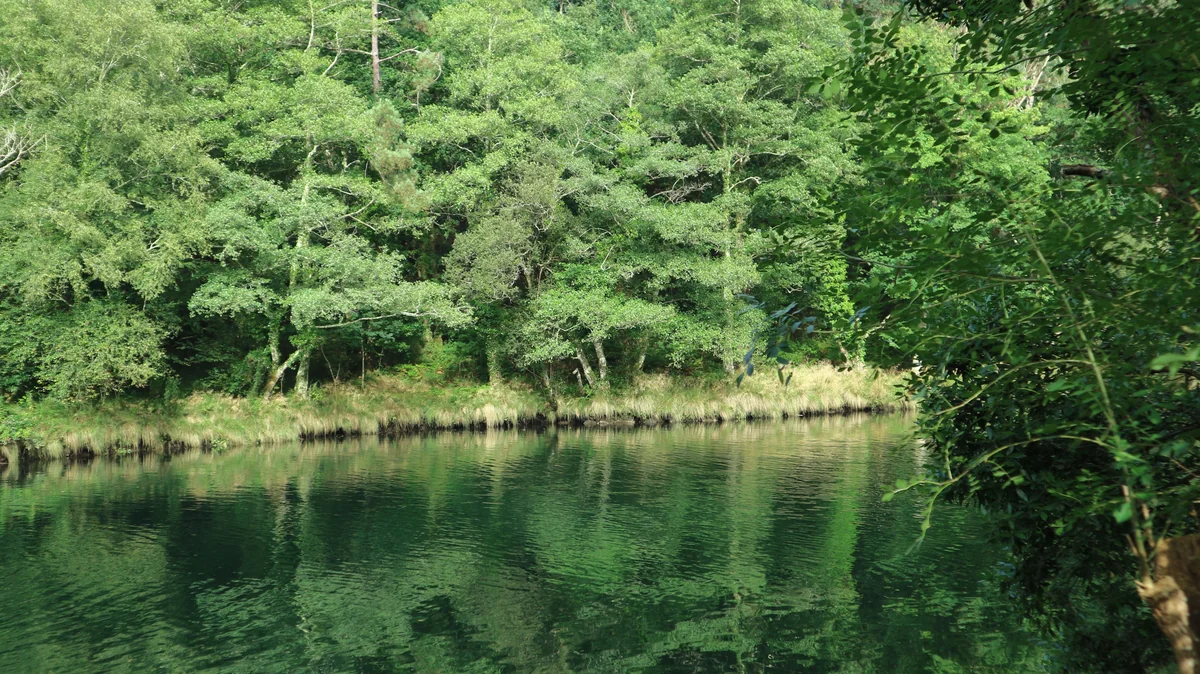
Dense green woodland lines a calm river, with leafy branches framing the water and reflections.

Woodland reflected in the Eume in Fragas do Eume Natural Park, photographed in August 2018.

Fragas do Eume treito baixo 2.jpg — Miguel Branco / Wikimedia Commons / CC BY-SA 4.0 · Creative Commons

Walks and routes

The short visit: Ombre centre and nearby woodland

Start at the Caaveiro interpretation centre at Andarúbel, on the Ombre approach. Choose a short outdoor stop in the entrance area, with staff advice on the currently open paths. Alameda is a designated recreation and parking area farther along the access road. Keep the visit flexible: a quiet half-hour outdoors is enough if children are tired or the weather is turning.

Before leaving the centre, check the surfaces and any steps on the particular outdoor stretch you intend to use. Confirm suitable parking, toilets and entrance access if you need a step-free visit.


The short visit: Ombre centre and nearby woodland

Longer option: Cal Grande to Fornelos and back

For a longer forest walk, use the first section of the signed Camiño dos Encomendeiros between Cal Grande and Fornelos, then retrace it. Check the Cal Grande suspension bridge and path status before crossing. Make Fornelos your turnaround rather than drifting onto the more demanding continuation.

This is a woodland footpath, not a step-free itinerary. The official detail rates the first section low difficulty but the complete route medium; beyond Fornelos it describes steep ups and downs with ropes. Do not continue there with the expectation of a level family stroll.

Longer option: Cal Grande to Fornelos and back

A relaxed two-hour introduction

Spend the first part of the visit at the Ombre interpretation centre, checking the day’s access and getting your bearings. Pick one short woodland or riverside stop in the visitor area, then take a break in a designated recreation area. Finish while everyone still has energy; there is no need to add a bridge walk to make the day count.

A half-day for walkers

Check in at Ombre, then reach Cal Grande only by an access arrangement that staff confirm is permitted. Walk towards Fornelos, stopping or turning around sooner if you prefer, and return the same way. Keep food and the return journey in your plan. Save the monastery for another outing rather than automatically adding it to this 6 km walk.

Things to try

Give the forest five quiet minutes

Choose a safe place on a permitted path, settle down and listen. Ask everyone to pick out a nearby sound and a more distant one. Keep a little space for other walkers and let the river provide the soundtrack instead of a speaker.

Look at the forest in layers

Compare the canopy, the smaller trees and the green growth near the ground. Sketch or photograph what you can see from the path; leave leaves and branches where they are. You can make this a short observation game without needing to identify every plant.

Add Caaveiro only if the day allows it

If the approach and return are practical for your group, ask which monastery spaces can currently be visited. The climb gives the heritage stop a different feel from the riverside, but it should not become a deadline that pushes you past a sensible turnaround time.

A centre-first day

Use the interpretation centre when it is open, then decide whether any outdoor stop is sensible. If conditions are poor, shorten the visit rather than replacing a forest path with a walk along the traffic road. The monastery is reached outdoors and is not a reliable bad-weather fallback.

Wildlife and habitats

Start with the canopy

The oak is a good starting point for understanding the woodland. Ask at the centre for help with identification, then compare trees you can see from the path without collecting leaves.

Notice the riverside trees

Alder is part of the park’s waterside woodland. Look across from a safe path or recreation area and notice how the trees frame the river; there is no need to descend onto the bank.

Look below the tallest trees

Hazel belongs to the mixed woodland here. Let it prompt a closer look at the smaller trees and layers of growth, using the centre’s identification information if you want to put names to them.

Watch quietly from the path

A kingfisher is a possible river-bird sighting. Pick a safe, unobtrusive place to pause and use binoculars if you have them. Do not leave the path or approach a bank to investigate a bird or a nest.

Think about the life you do not see

The otter is part of this river ecosystem even if it never appears during your walk. Keep the riverbanks undisturbed; you do not need to search for a den or handle traces to appreciate that the river supports wildlife.

These are wild species documented in the park, not a checklist you should expect to finish on a short visit. Enjoy what you happen to notice, keep to paths and leave animals and their shelters undisturbed.

Golden-striped salamander

This native amphibian is one of the park’s conservation species. Treat it as a reason to protect damp woodland habitats: leave stones and fallen wood in place, and never handle an amphibian you encounter.

Chain fern

The park’s flora account includes this fern among its botanical treasures. Enjoy the fern-rich woodland from established paths; rare plants are not a reason to enter gullies or search through the undergrowth.

Stories and discoveries

A forest shaped by shade and water

The park brings together oak woodland and riverside trees, with ferns, mosses and other small plants below them. Notice how the view changes when you look across the water, then back into the darker woodland: the interest is in those close-up contrasts as much as the broad scenery.

A monastery with several lives

Caaveiro’s present appearance combines different building periods and restorations. If you visit, look for changes in the stonework and the relationship between the buildings and their rocky setting, rather than expecting every wall to be medieval.

When to visit

Spring and summer

Choose a calm morning and leave time to stop. In warmer weather bring water even for the short visit, and check summer vehicle arrangements before driving farther into the valley. Shade is welcome, but it does not remove the need for suitable footwear.

Autumn and winter

Make the shorter visit your starting plan and extend it only if the ground and daylight suit. Wet leaves can hide slippery footing. Check the winter centre hours and the latest weather advice; after strong wind or heavy rain, wait for staff guidance before entering wooded paths.

Getting there and practical advice

Caaveiro interpretation centre at Ombre

The centre is at Andarúbel, km 5 of the Ombre–Caaveiro road, and lists free admission. For October–April, Xunta publishes Tuesday–Friday and Sunday 10:00–14:00, with Saturday, public-holiday and long-holiday-weekend opening 10:00–14:00 and 16:00–18:00. Monday is outside the ordinary winter schedule. Confirm before travelling on 881 880 980, especially around holidays.

Parking and picnic stops

Xunta lists Xunqueira de Arriba, Xunqueira de Abaixo and Alameda parking/recreation areas on the Ombre side. Use the designated spaces and obey any vehicle restriction. Bring your own water and snacks; ask the centre about the toilets available that day.

Food at Caaveiro

The provincial heritage page lists a tavern at the monastery, with weather-dependent hours. Treat it as an optional stop after checking it is open; carry enough food and water for your walk without it.

Arrive through Pontedeume and Ombre

For this visit, follow the signed local approach from Pontedeume towards Ombre and Caaveiro. Check your destination carefully: a different park portal can put you on the other side of a large valley. The local tourism FAQ advises a car or taxi for access; arrange the taxi return before setting out.

Vehicle restrictions and buses

Xunta warns of seasonal restrictions on the Ombre–Caaveiro road, but its displayed June–September dates do not identify a year. The provincial authority cancelled the Easter 2026 shuttle because of road conditions. Older bus descriptions therefore cannot be used as a timetable for your trip. Ask the centre about the road, parking and any service for your actual date.

Plan the centre visit first

If you use a wheelchair, walking aid or pushchair, phone with your specific needs and ask about parking-to-door access, the entrance and toilet. Then agree one manageable outdoor stop. Do not assume that a recreation area or surfaced road provides a continuous accessible route.

Bridges, slopes and the monastery

Comfort on forest surfaces and suspension bridges matters more than a route’s short headline distance. The path beyond Fornelos has rope-assisted slopes, and the monastery approach climbs. Keep these out of a step-free plan unless staff can confirm a genuinely suitable alternative for your needs.

Sources and useful links

Wildlife you might spot

5

Each card links to a full Explore page with photos, traits, and fun facts.

Snap map for this place

Start with the big picture, then zoom in to explore individual wildlife observations around this place.

Loading map…

Good to know before you go

Ask at the Ombre centre which paths and bridges are open that day, and agree a turnaround point before walking.

Choose your parking and return plan before heading farther up the valley; do not rely on a seasonal shuttle appearing.

Wear grippy shoes and bring a waterproof layer, drinking water and something to eat.

Keep children close at the river and bridges. A calm-looking river is not an invitation to paddle or swim.

Stay on permitted paths. Leave ferns, fungi, stones and fallen wood where they are, and watch wildlife without approaching it.

Use designated recreation areas for picnics, take your litter out and never light a fire.

If bringing a dog, confirm your chosen area with staff: reserve zones prohibit ordinary pet access, and other permitted zones require a lead.

Check the monastery’s current works notice and visiting arrangements before adding the uphill approach.

Frequently asked questions

No. The Ombre interpretation centre and nearby recreation areas make a worthwhile short visit. Decide whether to add a longer walk after checking conditions and how everyone feels.
No. The official detailed page describes a linear route, lists additional monastery walking separately and warns of rope-assisted slopes beyond Fornelos. The first section is 3 km one way; returning over the same path makes 6 km before any approach from your parking place.
Do not plan around one without checking. The provincial authority announced that the Easter 2026 service could not run because of road conditions, while older pages still describe buses. Ask the park about your visit date and arrange a return that does not depend on an unconfirmed service.
The local councils’ tourism service says ordinary park and monastery visits do not require advance booking. The Ombre interpretation centre lists free admission. Check current monastery admission arrangements before travelling, particularly during the works; groups and organised activities may need separate arrangements.
Check the route with park staff first. The management rules prohibit ordinary dogs in reserve zones and require leads in the limited-use and compatible-use zones, with specified working and assistance-dog exceptions. Keep your dog under control and follow any additional local restriction.
The centre is the place to start planning, but ask staff to confirm its entrance and facilities and an appropriate outdoor stop. A nearby road or a path labelled low difficulty does not establish a safe, step-free route.

Recent snaps at this place

Recent snaps will appear here as new observations are added.

View all ›

Take the discovery with you

Exploring Fragas do Eume Natural Park?

Identify the wildlife you spot, learn as you go, and keep a collection of the adventure.

  1. 1Spot it
  2. 2Snap it
  3. 3Keep the discovery