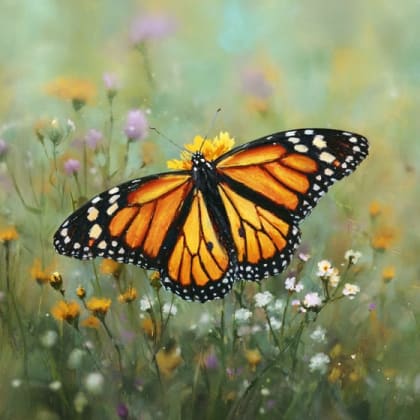





Monarch Butterfly

Franklin Falls Historic District celebrates New Hampshire's industrial and architectural past.
Franklin Falls Historic District celebrates New Hampshire's industrial and architectural past. This 75-acre National Register Historic District showcases the civic and industrial heart of Franklin, New Hampshire, particularly its significant development from the mid-19th to early 20th centuries. Centered around Central Street and the scenic Winnipesaukee River, the district invites visitors to explore a tangible link to a bygone era of manufacturing prowess and community growth.
Key highlights include impressive brick Italianate buildings along Central Street, the historic Franklin Opera House, and the elegant Franklin Free Public Library, a Carnegie-funded masterpiece. The district also encompasses the picturesque Odell Park, featuring a historic stone archway, and industrial mill complexes that once powered the local economy along the Winnipesaukee River. Visitors can enjoy walking along the Winnipesaukee River Trail, where remnants of the paper industry, like a massive flywheel, tell stories of innovation and labor.
A visit to the Franklin Falls Historic District offers a unique blend of history, architecture, and natural beauty. It's a place where the echoes of industry meet the tranquility of riverside parks, providing a memorable experience for those seeking to understand the foundational elements of New England towns. The district's charm lies in its well-preserved structures and the stories they tell of a community built on ingenuity and the power of the river. Wondering what that bird or insect is? Find out on your visit using the Snappit nature app.
The Franklin Falls Historic District's history dates back to the Penacook tribe, who occupied the area before European settlement in the late 1740s. Significant growth only began with the arrival of the railroad in 1846 and the subsequent expansion of industrial development. Walter Aiken, an inventor of a knitting machine, established a factory in 1864, kickstarting a period of prolific mill construction. Over the decades, numerous brick mill complexes were built along the Winnipesaukee River, transforming Franklin into a bustling industrial center. This prosperity led to Central Street becoming the town's major commercial and civic hub, marked by the construction of many brick Italianate buildings in the 1860s and 1870s. Civic improvements included the establishment of Odell Park in the 1890s and the construction of significant structures like the Franklin Opera House (1892) and the Franklin Free Public Library (1907). By 1970, most of the original industries had closed, but the buildings remain as a testament to this vibrant past, leading to the district's listing on the National Register of Historic Places in 1982.
Stroll along Central Street to admire the historic architecture, enjoy a walk or picnic in Odell Park, explore sections of the Winnipesaukee River Trail, and visit the Franklin Opera House if there's an event. Kayaking and tubing on the Winnipesaukee River are also popular activities in the broader Franklin area.
Spring/Summer: Ideal for walking, outdoor recreation in Odell Park and along the river. Trees are lush.
Fall: Breathtaking fall foliage complements the historic buildings and river views.
Winter: The district's charm remains, though walking conditions may be colder or snowy. Odell Park offers ice skating, weather permitting.
Many sidewalks along Central Street are likely paved. Odell Park features well-maintained walking trails, though specific accessibility information for all historic buildings would need direct inquiry.
Franklin Opera House (1892)
Franklin Free Public Library (1907)
Historic brick Italianate buildings along Central Street
Odell Park and its stone arch entrance
Each card links to a full Explore page with photos, traits, and fun facts.
Start with the big picture, then zoom in to explore individual wildlife observations around this place.
Wear comfortable shoes
The best way to experience the district is on foot, exploring Central Street and Odell Park.
Bring a camera
The historic architecture and scenic river views offer excellent photographic opportunities.
Check for events
The Franklin Opera House often hosts performances; check their schedule in advance.
Explore Odell Park
Don't miss the historic stone archway entrance and walking trails along the river within Odell Park.
Walk the Winnipesaukee River Trail
Discover historical markers and enjoy the riverfront scenery, including industrial remnants.
Visit during daylight hours
While some areas might be lit, historical details are best appreciated during the day.
May 27, 2026
May 25, 2026
May 25, 2026
May 22, 2026
May 22, 2026

Maryland, US
You might spot White-Tailed Deer and Eastern Gray Squirrel.
View guide →
.jpg)
District of Columbia, US
You might spot Eastern Gray Squirrel, Duck, and House Sparrow.
View guide →

Illinois, US
You might spot American Robin, Canada Goose, and House Sparrow.
View guide →

Virginia, US
You might spot Spotted Lanternfly and Northern Cardinal.
View guide →
Take the discovery with you
Identify the wildlife you spot, learn as you go, and keep a collection of the adventure.