


Donkey

Step back in time to the raw, untamed era of the American West.
Step back in time to the raw, untamed era of the American West. The Goldfield Historic District, a preserved boomtown in Nevada, offers an unparalleled journey into the heart of the 20th-century gold rush. Unlike fabricated tourist attractions, Goldfield’s weathered buildings and silent streets tell an authentic story of ambition, fortune, and the harsh realities of desert life, making it one of America's most genuine ghost towns. It's a place where history isn't just displayed, but genuinely felt.
Visitors can explore a remarkable collection of over 120 historic buildings dating primarily from 1904 to 1909, including the imposing Goldfield Hotel, the stately Esmeralda County Courthouse, and the striking Goldfield Historic High School. Beyond the architectural marvels, discover the poignant Goldfield Historic Cemetery with its intriguing "Paste Eater's Grave," wander through the operational Santa Fe Saloon, and witness unique art installations like the International Car Forest of the Last Church. These sites offer fascinating photographic opportunities and a tangible connection to Goldfield's vibrant past.
This historic district serves as a powerful reminder of Nevada's rapid boom-and-bust cycles, preserving the essence of a once-thriving metropolis that quickly transformed into a quiet desert town. It's a destination that captivates with its rich narrative, distinct character, and the haunting beauty of its preserved structures, inviting contemplation of the lives that once filled these streets. Be ready to snap and learn! Get the Snappit app to identify any nature species you find here.
Goldfield's story began in 1902 with the discovery of gold on Columbia Mountain. The ensuing gold rush led to an explosive population boom, transforming a small mining camp into Nevada's largest city by 1907, boasting over 20,000 residents. During its peak years, Goldfield was a bustling hub with railroads, banks, newspapers, and luxurious amenities like the Goldfield Hotel, considered the finest between Chicago and San Francisco. Notable figures like Wyatt and Virgil Earp even resided here, with Virgil serving as a deputy sheriff. However, the prosperity was short-lived. Ore production declined significantly by the 1910s, and a series of devastating events further contributed to its decline. A major flood in 1913 and catastrophic fires in 1923 (and earlier in 1906 and 1924) destroyed much of the town, leading to a dramatic reduction in population. Despite these challenges, many brick and stone buildings survived, forming the Goldfield Historic District, which was listed on the National Register of Historic Places in 1982. Today, Goldfield endures as a "living ghost town," a testament to its resilient past.
Walk Main Street, take a self-guided historic walking tour (maps available at the Visitor's Center), explore the historical society museum, photograph the iconic buildings and art installations, and soak in the atmosphere of a true ghost town.
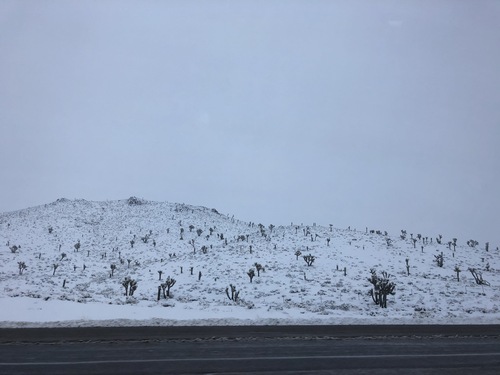
Spring offers comfortable temperatures and occasional wildflowers. Fall provides pleasant weather and excellent light for photography. Summer is very hot and dry with little shade, while winter is cold with possible snow and ice. Late July to early September can bring sudden thunderstorms.
The historic district is largely walkable, spanning a few city blocks along Main Street. However, as an authentic ghost town, some areas may have uneven terrain or gravel paths. Individual historic buildings may have limited accessibility.
A magnificent, yet haunting, four-story structure from 1908, once Nevada's most luxurious hotel. Public access is limited due to ongoing restoration, but its exterior and ghost stories captivate visitors.
An operational and beautifully preserved courthouse from 1907, featuring original Tiffany & Co. lamps and hand-written marriage records.
A grand 1908 three-story building, once serving 125 students, with ongoing preservation efforts.
A unique outdoor art installation just outside town, featuring cars, buses, and trucks stacked or planted in the ground, often painted with graffiti.
Each card links to a full Explore page with photos, traits, and fun facts.
Start with the big picture, then zoom in to explore individual wildlife observations around this place.
Bring Water and Snacks
Services in Goldfield are limited, especially food and drink options. It's wise to bring your own, especially during warmer months.
Wear Comfortable Shoes
Goldfield is best explored on foot, so comfortable walking shoes are essential for navigating streets and potentially uneven terrain.
Check Weather Forecasts
Due to extreme temperatures in summer and winter, plan your visit for spring or fall for the most pleasant experience.
Limited Cell Service
Be aware that cell phone service is extremely limited in Goldfield and surrounding areas. Download offline maps and any necessary information before arriving.
Respect Private Property
While many buildings are historic, some are private residences or businesses. Observe signage and respect privacy. Do not enter closed or fenced-off areas.
Consider Tonopah for Accommodation
For more amenities and lodging options, consider staying in Tonopah, located just 26 miles south, which serves as a practical base for exploring the area.
Nov 13, 2025
Photo attribution
(c) Jacob Saucier, some rights reserved (CC BY)
License: CC BY 4.0 ↗
Image may be shown cropped inside the card frame.
Sep 6, 2025
Photo attribution
(c) Mary Lata, some rights reserved (CC BY)
License: CC BY 4.0 ↗
Image may be shown cropped inside the card frame.
Apr 22, 2023
Photo attribution
(c) Tim Messick, some rights reserved (CC BY)
License: CC BY 4.0 ↗
Image may be shown cropped inside the card frame.
Dec 26, 2019
Photo attribution
(c) Amelia Tauber, some rights reserved (CC BY)
License: CC BY 4.0 ↗
Image may be shown cropped inside the card frame.
May 15, 2026

Maryland, US
You might spot White-Tailed Deer and Eastern Gray Squirrel.
View guide →
.jpg)
District of Columbia, US
You might spot Eastern Gray Squirrel, Duck, and House Sparrow.
View guide →

Illinois, US
You might spot American Robin, Canada Goose, and House Sparrow.
View guide →

Virginia, US
You might spot Spotted Lanternfly and Northern Cardinal.
View guide →
Take the discovery with you
Identify the wildlife you spot, learn as you go, and keep a collection of the adventure.