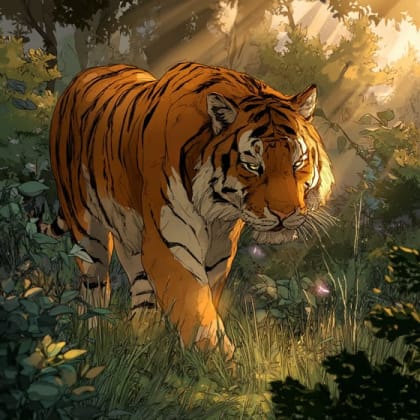





Tiger
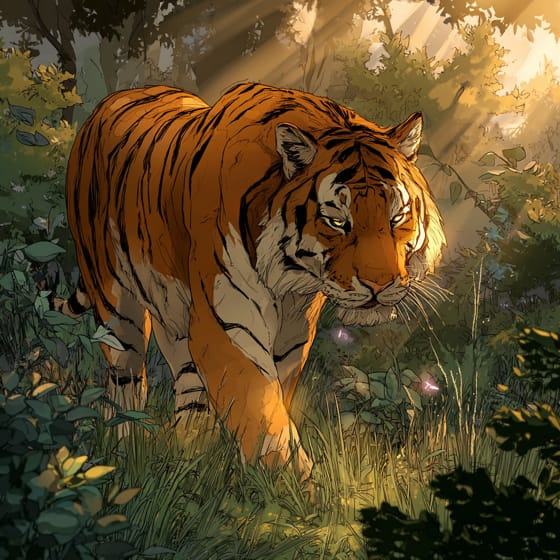
The Muskingum County Animal Farm was a private exotic animal collection in rural Zanesville, Ohio.
The Muskingum County Animal Farm was a private exotic animal collection in rural Zanesville, Ohio. Owned by Terry Thompson, a Vietnam War veteran and avid exotic animal collector, it housed a substantial number of dangerous animals, including big cats, bears, and primates, on a 73-acre property. The collection was not open to the public as a traditional zoo, but rather maintained as a private menagerie. The facility drew attention over the years for inadequate and unsafe housing conditions, as well as instances of animals escaping. The site was never intended to be a public attraction with exhibits or visitor experiences in the conventional sense of a zoo or farm. Unlock an interactive field guide for this spot: get the Snappit app to identify nature on the go.
The Muskingum County Animal Farm was established by Terry Thompson, who had been collecting exotic animals since at least 1977. His collection grew over decades, eventually including a wide array of species such as Bengal tigers, African lions, grizzly bears, black bears, mountain lions, wolves, baboons, and monkeys. Prior to the 2011 incident, Thompson had a history of legal troubles related to animal cruelty and improper housing of his collection. Authorities had received numerous complaints about the property, noting issues like malnourished animals and unsafe enclosures. On October 18, 2011, the farm became the site of a profound tragedy. Terry Thompson released nearly all of his 56 exotic animals from their enclosures before dying by suicide. The escape prompted a massive emergency response from the Muskingum County Sheriff's Office and Ohio State Highway Patrol. Due to concerns for public safety, a shoot-to-kill order was issued as night fell and dangerous animals roamed freely in the community, leading to school closures and warnings for residents to stay indoors. In the chaotic hours that followed, 48 animals were shot and killed by law enforcement, and two were presumed to have been eaten by other animals. Six animals—three leopards, a small grizzly bear, and two Celebes crested macaques—were captured alive and relocated to the Columbus Zoo and Aquarium. This event, often referred to as the 'Zanesville animal escape' or 'Zanesville Massacre,' sparked widespread media attention and ultimately led to significant legislative changes in Ohio regarding the ownership of exotic animals.
No activities are available as the venue is permanently closed. For those interested in responsible wildlife conservation in the Muskingum County area, consider visiting The Wilds in Cumberland, Ohio.
Not applicable; the venue is permanently closed.
Not applicable; the venue is permanently closed and not accessible to the public.
The site is historically significant due to the 2011 Zanesville animal escape incident.
It serves as a stark reminder of the ethical and legal complexities of private exotic animal ownership.
Each card links to a full Explore page with photos, traits, and fun facts.
Start with the big picture, then zoom in to explore individual wildlife observations around this place.
If interested in responsible wildlife conservation, consider visiting The Wilds in Cumberland, Ohio.
Research the 2011 Zanesville animal escape for a deeper understanding of the venue's history and its impact.
Understand that this location is not a public attraction and has no facilities or animals.
Recent snaps will appear here as new observations are added.

Michigan, US
You might spot African Lion, Komodo Dragon, and Brown Bear.
View guide →
.jpg)
Municipal District of Cobh, IE
You might spot Ring-Tailed Lemur, Giraffes, and Cheetahs.
View guide →

Nouvelle-Aquitaine, FR
You might spot Greater Flamingo, Giraffes, and Red Panda.
View guide →

Texas, US
You might spot Giraffes, African Lion, and Eastern Black Rhinoceros.
View guide →